If you heat with oil in New England, this week brought real news worth tracking. The federal government tapped the Northeast Home Heating Oil Reserve for only the second time in its history, prices set another record in Maine, and every state has fuel-assistance help open or on the way. Here is what happened, what it does and does not mean for your tank, and the practical steps that put you back in control.
The reserve release, explained calmly
On October 21 the U.S. Department of Energy authorized an exchange of up to 315,000 barrels of ultra-low sulfur distillate from the 1-million-barrel Northeast Home Heating Oil Reserve. This is a loan, not a sale: fuel companies draw the oil now and must return the same volume plus a premium, so the reserve is refilled before the 2027–28 winter.
The fuel comes from the reserve's storage sites in South Portland, Maine; Boston, Massachusetts; and New Haven, Connecticut. Bids are due at 11 a.m. Central on October 27 and deliveries are to be complete by November 13. Offers run 25,000 to 30,000 barrels, with no more than 150,000 barrels from any one site. The Portland Press Herald reports that borrowers must return at least 5% extra, due by April 2027, with the premium rising 2.5% a month after that.
This is only the second release in the reserve's 26-year history, Maine Public reports. The first came in 2012 after Hurricane Sandy and drew 120,000 barrels; this is the first release aimed at prices rather than a storm. Energy Secretary Chris Wright called it "a temporary measure to solve a temporary supply disruption."
What it actually means for your tank
Short version: helpful, modest, and not immediate. Sen. Susan Collins's office said 315,000 barrels is roughly 13% of New England's current supply. Michael Ferrante of the Massachusetts Energy Marketers Association told WJAR it is only two or three days' worth of Northeast supply and "may dampen prices slightly." Tom Kloza of Gulf Oil described the volume as very small, and Patrick Woodcock of the Maine State Chamber of Commerce said it mainly replenishes a tight regional reserve.
The takeaway: the oil does not reach dealers until November, so plan your buying around today's market rather than waiting for a big price drop.
Where prices stand this week
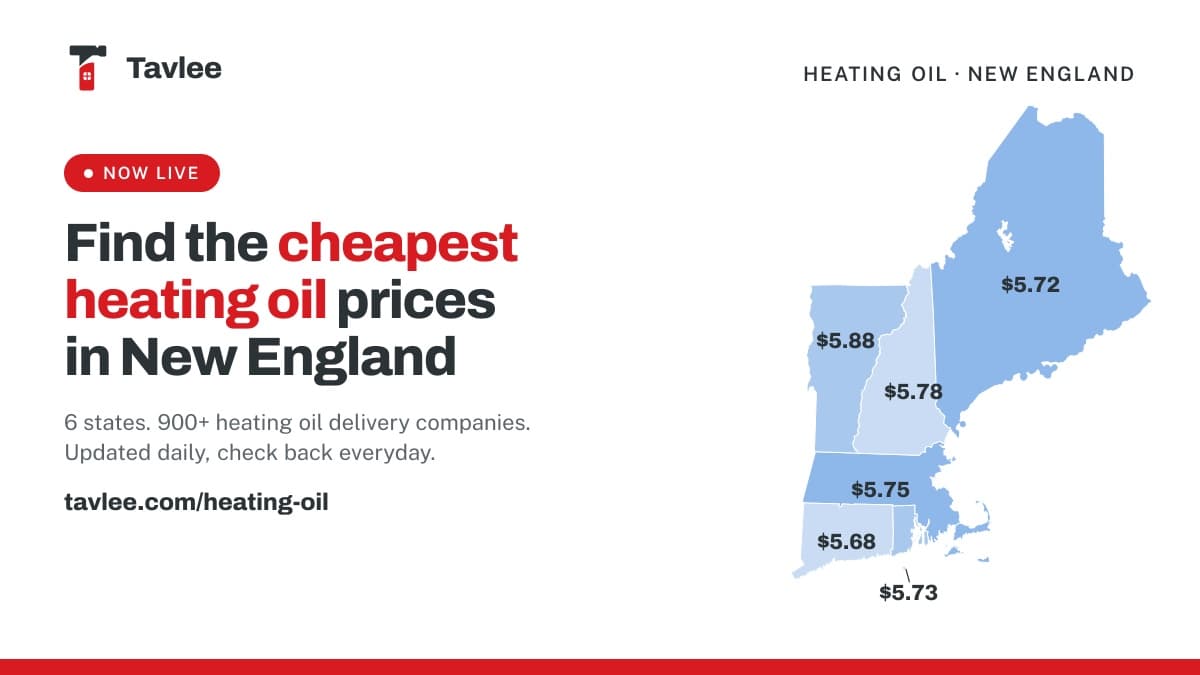
For the week of October 19, the U.S. Energy Information Administration's weekly heating oil survey put residential heating oil across New England at $6.11 per gallon, up $2.67 from a year ago. By state:
- Connecticut: $6.15
- Maine: $6.03
- Massachusetts: $6.12
- New Hampshire: $6.03
- Rhode Island: $6.38
- Vermont: $6.10
Maine's own state survey hit a record $6.04 on October 19, 83% above a year ago, the Bangor Daily News reported October 22. The state estimates a standard 275-gallon fill now costs about $750 more than it did a year ago.
WJAR's October 22 report put the Massachusetts average at about $6.23, and noted that Patriot Oil in West Warwick, Rhode Island is offering a 50-gallon minimum delivery for the first time. A smaller minimum is a genuine help for households managing cash flow week to week, so it is worth asking your own dealer whether they offer one.
Fuel assistance is open or coming in every state
Help is available across the region, and most programs are either accepting applications now or releasing benefits soon. Apply early: every agency below says the same thing, which is not to wait until you are facing an empty tank.
Connecticut
Gov. Ned Lamont released $12.7 million on October 13 to supplement the Connecticut Energy Assistance Program, which expects to serve about 94,000 households this winter. Eligibility runs to 60% of state median income, or $93,681 for a family of four. Apply now at ct.gov/heatinghelp, through a community action agency, or by calling 2-1-1. The first program-paid deliveries begin November 2, and the last day to apply is May 31, 2027.
Vermont
Gov. Phil Scott and legislative leaders are drafting an emergency aid package for the roughly 15,000 Vermont households on fuel assistance, Vermont Public reports. The Joint Fiscal Office estimates that holding out-of-pocket costs at last year's level would take more than $8 million from a $50 million reserve set aside to backfill federal cuts, while the state's $23 million federal block grant is flat. Last winter 14,872 households received an average benefit of $1,210, covering 45% of their heating costs. The Emergency Board votes Friday, October 23. Apply through the Department for Children and Families.
Maine
Maine received about $38 million in federal heating aid early this year, per the Press Herald, and about 45,000 people received assistance last winter. Apply through your local community action program or by calling 2-1-1; MaineHousing's LIHEAP page has the details.
Massachusetts
The Home Energy Assistance Program covers households at or below 60% of state median income for the season that runs November 1 to April 30. There is also the new Middle-Income Heating Oil Relief benefit, a one-time payment of up to $680 for oil-heated households between 60% and 100% of state median income, paid in December.
New Hampshire
The Fuel Assistance Program is run through the community action agencies, with a maximum winter benefit of $2,500 this year, according to the New Hampshire Bulletin. Benefits are released December 1; a household that runs low before then should call its town or city welfare office.
Rhode Island
LIHEAP applications have been open since October 1 and run through April 15, online or through your community action agency.
Practical steps for this week
A few simple moves keep you comfortable and in control of costs:
- Check the gauge and keep your tank above a quarter. Running dry means an emergency fill, a possible service call to bleed the line, and no room to wait for a better price.
- Ask dealers about minimum deliveries and budget plans. As the 50-gallon option in Rhode Island shows, flexibility is out there if you ask.
- Get any pre-buy or cap contract in writing. Massachusetts publishes a plain-language heating-oil contracts guide, and Vermont law (9 V.S.A. § 2461e) requires guaranteed-price and prepaid plans to be in writing, with the terms disclosed in plain language and security covering the committed gallons.
- Schedule your annual burner tune-up. A clean, properly adjusted system burns less fuel all winter; the ENERGY STAR maintenance checklist covers what a technician should look at.
- Compare posted per-gallon prices before you call. Tavlee's heating-oil price board lists today's posted per-gallon prices by delivery company, cheapest first, read from each company's own website, with a link to each company's profile. There is a board for each state: Massachusetts, Maine, New Hampshire, Vermont, Connecticut, and Rhode Island.
When you book a tune-up or a new burner, a quick check of the technician's license with your state is easy peace of mind, and Tavlee is a handy spot to research local pros, reviews, and licensing in one place.
The bottom line
Prices are high, but you have options. The reserve exchange should ease regional supply a little from November, state assistance is open or arriving in all six states, and smaller delivery minimums and written contracts give you flexibility now. Check your tank, line up help if you qualify, compare a few local dealers, and get your terms in writing. That is how a tough-pricing winter becomes a manageable one.