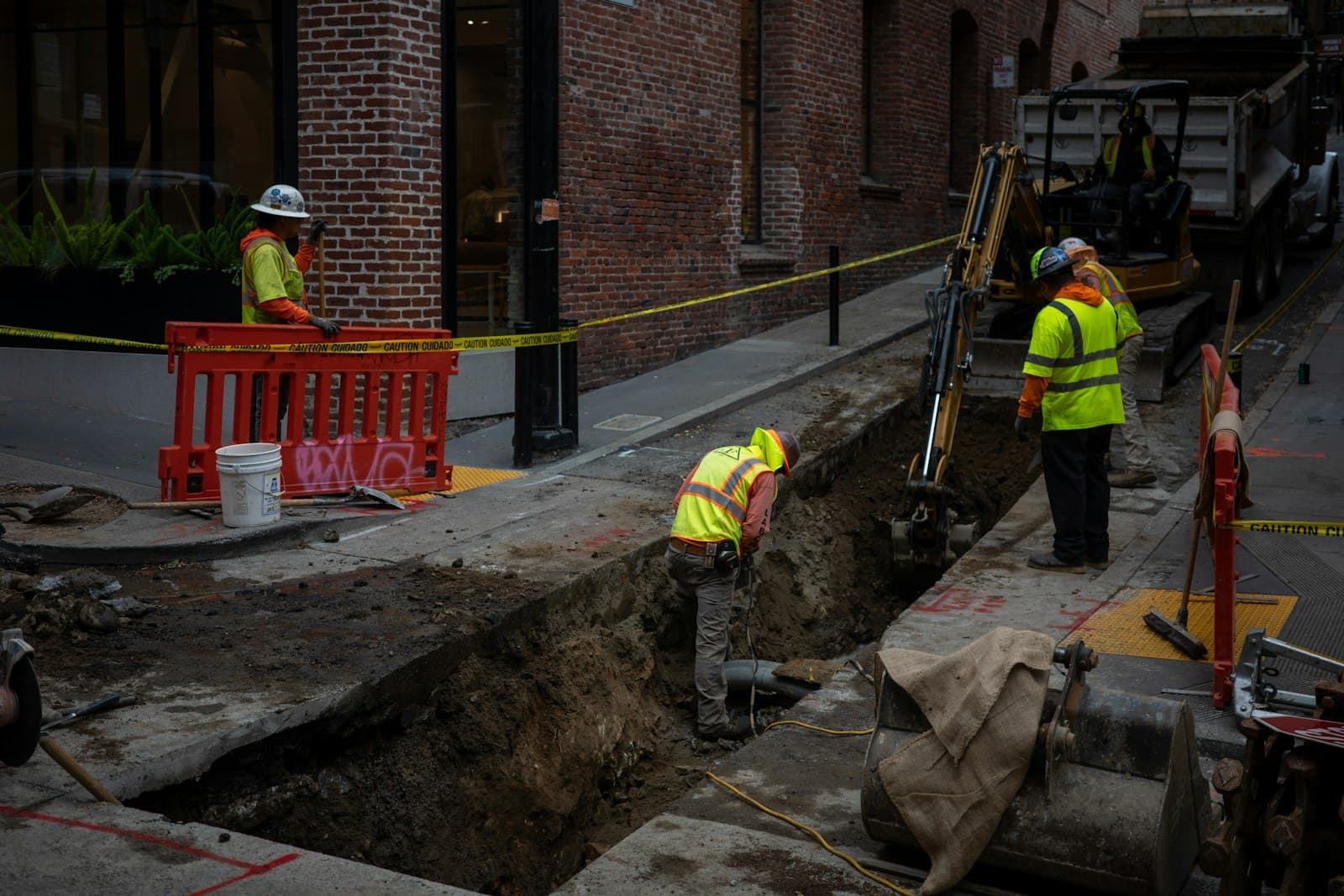
When a sewer main lets go, it does not stay a municipal problem for long. It becomes a basement full of sewage, a shut-off notice taped to a door, and a scramble to find a plumber who can actually pull a permit. Two recent North Shore incidents show exactly how fast aging pipes can turn into a homeowner emergency, and why understanding the line between public infrastructure and your private responsibility matters more than most Greater Boston residents realize.
Two North Shore failures, one warning
In Haverhill, a 42-inch force main break discharged millions of gallons of untreated sewage into the Merrimack River. As the Eagle-Tribune reported, the city is now running on a temporary bypass system while officials figure out a permanent fix.
"Haverhill is operating under a temporary bypass system following the 42-inch force main sewer break that discharged millions of gallons of untreated sewage into the Merrimack River."
The report also references a second break in the same force main, which underscores the point: this is not a one-off failure but a symptom of infrastructure under strain. Temporary repairs are holding, but officials say a permanent fix is still needed.
Just south in Lynn, a smaller failure hit even closer to home. As Itemlive reported, residents at 103 Birch St. lost water for three days after a water and sewer break in their property pipe, a break that had been sending sewage down the street for almost two months.
That one word, "property," is the crux of this whole story. The Lynn break was not the city's pipe. It was the homeowner's lateral.
The part of your sewer you actually own
Here is what catches many Massachusetts homeowners off guard: the sewer pipe running from your house to the municipal main in the street is usually your responsibility, not the city's. This is called the private sewer lateral.
When that lateral cracks, roots invade it, or it collapses, the repair bill lands on you. And as the Lynn case showed, a city can compel action fast when public health is at stake.
The Lynn Water and Sewer Commission issued a 48-hour notice, then extended it by several weeks to give the homeowners time to hire a contractor. When the scheduled work was canceled, LWSC shut off the water over ongoing public health concerns and neighbor complaints. Only after McGrath Enterprises repaired the pipe and LWSC inspected it was service restored, by 2:30 p.m. on a Friday.
"I'm glad it got mitigated and that we were able to address the concerns... originally we did have to, you know, shut the water off a couple of days but luckily everything's going good now, and it's my understanding that the pipe is repaired and everything is flowing and working," said the official quoted by Itemlive.
The takeaway for renters and owners alike: know where your responsibility begins. If your home is served by municipal sewer, you almost certainly own the lateral. If you are on a private septic system, the entire wastewater setup is yours.
Why aging pipes raise your backup risk
Aging municipal mains and private laterals fail in similar ways, and both increase the odds of a backup into your home. A compromised city main can surcharge and push sewage backward toward connected homes. A failing lateral can clog, sag, or collapse and trap waste on your side.
Watch for the warning signs that trades flag as early trouble. Control Point Heating, Cooling, Plumbing and Electric of Shrewsbury, which recently added drain cleaning services, lists several red flags worth memorizing:
- Multiple slow drains at once
- Foul odors coming from drains
- Gurgling sounds in fixtures
- Recurring clogs that keep coming back
The company notes that untreated issues can escalate into backups and potential damage to sewer lines. Its technicians use camera inspections to locate blockages such as grease, food scraps, hair, and soap residue, an approach that also helps distinguish a simple clog from a structural lateral failure.
That distinction matters, because the fix and the price are wildly different.
Municipal cleaning helps, but it stops at the curb
Cities are trying to stay ahead of debris and obstructions. The City of Everett, for example, is soliciting sealed bids for sewer and drain line cleaning, with scope covering cleaning, flushing, jetting, and removal of obstructions from municipal infrastructure. That solicitation was posted July 20, 2026, with a response deadline of August 3, 2026.
That kind of preventive maintenance is exactly what reduces spills. But it cleans the city's pipes, not yours. Everything from your foundation to the curb stop is still on you to maintain.
If you are on septic, the rules are different
Many outer-ward and border-area properties across the region rely on private septic systems rather than municipal sewer. Royal Septic Pumping, which recently expanded into Brockton, points out that clay-heavy soil and compacted urban fill can slow wastewater absorption and strain drain fields.
Septic owners in Massachusetts also carry a specific legal obligation.
"By extending our specialized vacuum equipment and expert technicians into Brockton, we are helping local property owners protect their legacy infrastructure, prevent costly emergency backups, and stay fully compliant with Massachusetts Title 5 regulations," a company representative said.
Title 5 governs inspections and system standards, and a Title 5 inspection is typically required when you sell a home with a septic system. Routine pumping and drain-field care are the cheapest insurance against a backup you can buy.
When to call a licensed plumber, and how to vet one
Slow drains and gurgling can sometimes be handled with a straightforward cleaning. But if you see sewage backing up, smell persistent odors, or suspect the lateral itself has failed, call a licensed plumber promptly. In Massachusetts, plumbing is licensed at the state level.
Before you hire anyone, verify the license. Here is a practical checklist:
- Confirm the plumbing license. Massachusetts plumbers and gas fitters are credentialed through the Board of State Examiners of Plumbers and Gas Fitters. Note that gas fitting is a separate credential from plumbing.
- Run the license lookup. Use the state's check a professional license tool to confirm the credential is active before work begins.
- Check contractor registration for larger jobs. Excavation and rebuilding a lateral can fall under home-improvement rules. The Office of Consumer Affairs and Business Regulation runs the Home Improvement Contractor program, and Massachusetts law under MGL c.142A sets contract requirements, deposit limits, and homeowner protections.
- Confirm permits and inspection. Municipal work triggers plumbing permits and inspections. Boston homeowners deal with the Inspectional Services Department; other cities have their own equivalents. The Lynn repair was not complete until LWSC inspected the finished pipe.
If you want the license verification done for you, Tavlee, a Greater Boston contractor directory, checks plumber and contractor licenses against the state registry so you are not cross-referencing databases at 11 p.m. with a flooded basement.
Protect yourself now, not during the emergency
The North Shore failures are a reminder that aging pipes eventually fail, and homeowners bear more of that cost than they expect. A few steps ahead of time make the difference between an inconvenience and a five-figure surprise.
- Locate your lateral and understand where city responsibility ends and yours begins.
- Act on early warning signs like multiple slow drains, odors, and gurgling before they become backups.
- Get a camera inspection if clogs keep recurring, to catch a structural problem early.
- Stay current on septic maintenance and Title 5 if you are not on municipal sewer.
- Verify every license before you hire, using the state registry or a directory like Tavlee.
Municipal repairs and $50M-scale infrastructure investment will help over time. Your basement, though, depends on the pipe you own and the licensed pro you choose to fix it.