Massachusetts has no flooring-specific license, and floor-covering-only work is often exempt from HIC registration — so vet Boston flooring contractors on insurance, written contracts, and HIC registration whenever subfloor or structural work is in scope. Refinishing costs far less than replacement, but in triple-deckers and brownstones have the remaining wear layer measured first, and check condo sound-underlayment rules before installing new floors.
Typical cost
$6,000 – $9,600
Tracked on Tavlee
1124 flooring contractors in Greater Boston
Refinishing the original pine or oak in a Dorchester triple-decker is a different job than laying new luxury vinyl in a Seaport condo, and the two projects carry different costs, different prep work, and different rules about who is allowed to do the work. If you are a Boston-area homeowner staring at scuffed floors or a subfloor that dips toward one corner, this guide walks through what you should actually budget for, what Massachusetts does and does not license, how to read competing quotes, and the warning signs that separate a real contractor from a fast-talking scam.
Flooring is one of the more confusing trades to hire for precisely because so much of it sits outside formal state licensing. That makes homework on your end more important, not less.
Refinishing vs. installation: what drives the cost
The first fork in the road is whether you are refinishing what you already have or installing something new. They are priced on completely different logic.
Refinishing is a labor-and-materials job measured in sanding passes, stain, and finish coats. The variables that move the price:
Square footage and layout. Open rooms sand faster per square foot than a warren of closets and hallways.
Wood condition. Deep gouges, pet stains, and water damage add sanding time and sometimes board replacement.
Finish choice. Oil-based polyurethane, water-based finish, and hard-wax oil differ in price, dry time, and durability.
Number of coats and stain color. Custom stain matching and extra coats add labor days.
New installation adds material cost and a lot more prep. Solid hardwood, engineered wood, and luxury vinyl plank (LVP) each carry their own material pricing, and then you layer in demolition of the old floor, disposal, subfloor prep, underlayment, and trim.
Because the ranges swing so widely with the specifics of your home, plug your actual square footage and floor type into a live estimator like the Boston flooring cost calculator before you start collecting quotes. Walking into bids with a realistic number makes it far easier to spot an outlier.
What does a hardwood floor cost in Greater Boston?
Most flooring projects in Greater Boston run $6,000 – $9,600. Adjust the estimate for your job in the flooring contractor cost guide.
Top-rated flooring contractors in Greater Boston
These are the strongest flooring contractors on the evidence: reviews weighed across sources and licenses verified against the Massachusettsregistry. Rankings can't be bought.
Hiring flooring contractors in Greater Boston: your questions
Do flooring contractors in Massachusetts need a license?
Massachusetts generally doesn't license flooring installation as its own trade, and floor-covering-only work is often exempt from home-improvement registration. Jobs that go beyond the finished floor — subfloor repairs or structural work — can require a registered home-improvement contractor. Tavlee shows verified license status wherever a job requires one.
How much does it cost to refinish hardwood floors in Boston?
Costs depend heavily on square footage, the condition of the wood, your finish choice, and the number of coats. Rather than rely on a generic figure, enter your room dimensions and floor type into the Boston flooring cost calculator and use that as your baseline when comparing bids. Deep damage, custom stain matching, and extra coats push the number up.
How many times can hardwood floors be refinished?
It depends on how much wood sits above the tongue of the board and how aggressively past refinishes removed material. In older Boston triple-deckers and brownstones, floors have often already been sanded several times, leaving a thin wear layer. A good contractor measures that remaining depth before committing to a full sand, because sanding through the tongue ends refinishing and forces replacement.
Is LVP or hardwood better for resale?
Both have a place. Hardwood carries traditional appeal and can be refinished repeatedly if enough wear layer remains, which matters in period homes. LVP is durable, moisture-tolerant, and often preferred in below-grade units or high-traffic spaces. In condos, remember that any hard flooring may need to meet your association's IIC and STC underlayment requirements regardless of material. Match the choice to the space and the building rules rather than assuming one always wins.
Why do wood floors gap in New England winters?
Wood expands and contracts with humidity. New England winters bring dry indoor air as heating systems run, and wood loses moisture and shrinks, which opens small gaps between boards. The gaps usually close again as humidity rises in warmer months. Proper acclimation of new flooring and maintaining stable indoor humidity reduce the effect, which is one more reason moisture testing during installation matters.
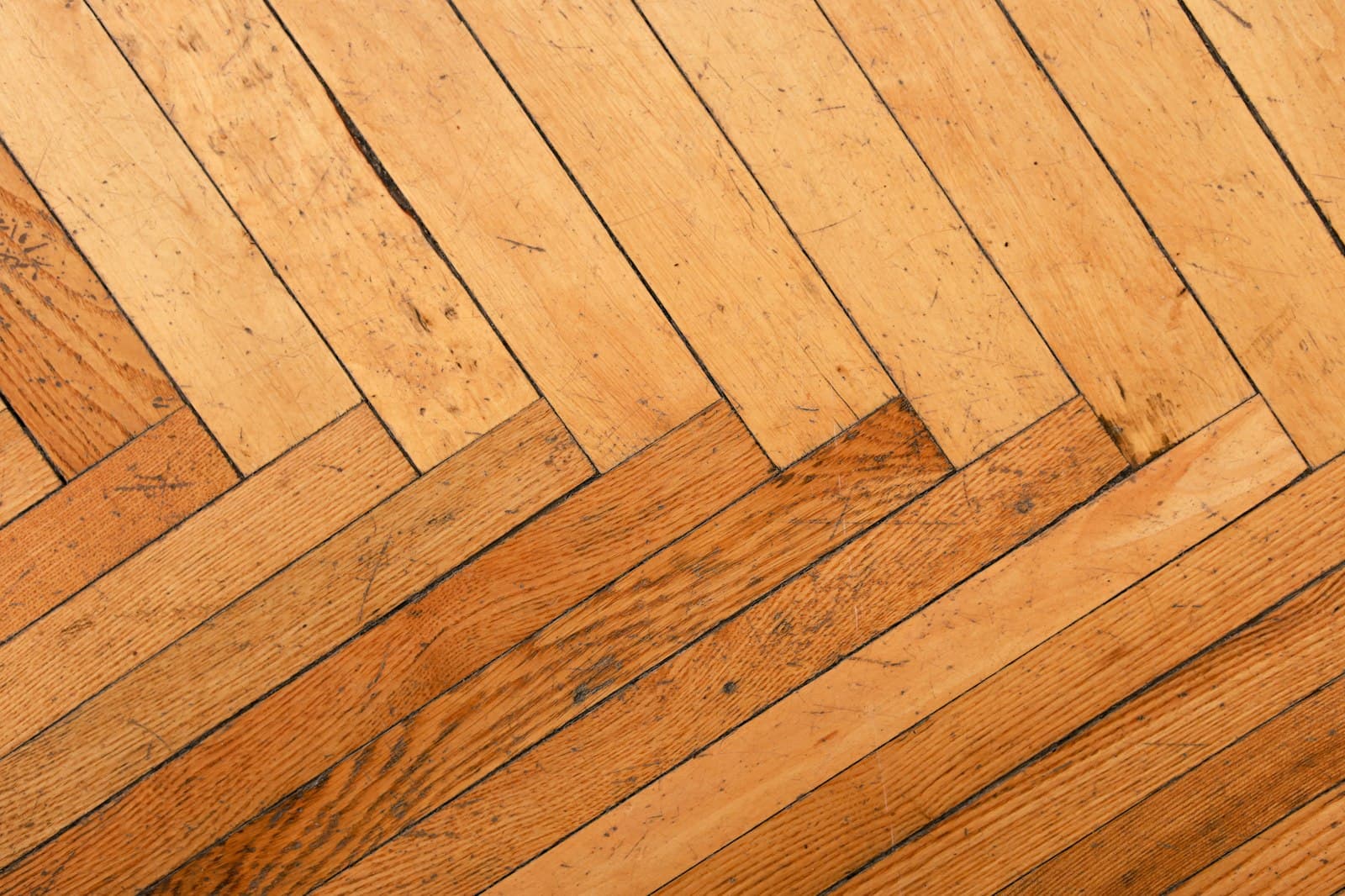
Here is the Boston-specific catch that trips up a lot of homeowners. In our older housing stock, those beautiful original floors have often already been sanded several times across a century of owners. Every refinish removes a slice of the wear layer, and there is a finite amount of wood above the tongue of a tongue-and-groove board.
A competent contractor will measure how much wear layer is left before quoting a full sand. If you are told a floor can be refinished without anyone checking that depth, be skeptical. Sand through the tongue and refinishing is no longer an option; you are into replacement.
Out-of-level subfloors
Many triple-deckers and brownstones have settled over the decades, leaving subfloors that are noticeably out of level. New rigid flooring laid over a wavy subfloor telegraphs every dip and can fail at the seams. Leveling or subfloor repair is real work that belongs as a line item in the quote, not a surprise mid-project.
What Massachusetts licenses for flooring, and what it doesn't
This is where flooring differs from the trades most people assume are regulated. Massachusetts does not issue a flooring-specific trade license. There is no state "floor installer" credential the way there is for other work.
Compare that to the trades the state clearly licenses:
Most residential flooring work falls under the Home Improvement Contractor (HIC) program, run by the Office of Consumer Affairs and Business Regulation under MGL c.142A. The state's overview of home improvement law lays out the registration requirement, contract rules, deposit limits, and homeowner protections including access to the Guaranty Fund for disputes with registered contractors.
There is an important nuance: pure floor-covering work is often exempt from HIC registration. Installing carpet or a floating floor by itself may not require it. But the moment the job includes work tied to the structure, the picture changes:
Subfloor repairs, leveling, or structural work typically bring the job under HIC registration or, for larger structural scope, a Construction Supervisor License, and often trigger the need for permits.
In Boston, building and related permits run through the Inspectional Services Department, which issues building, plumbing, gas, and electrical permits and performs inspections.
The practical takeaway: ask any flooring contractor whether your specific scope requires HIC registration or permits, and confirm their registration through OCABR. If the answer is a shrug, keep looking.
Condo and multifamily sound rules
If you own a condo or unit in a multifamily building and you are replacing floors, check your association documents before you commit to a material. Many buildings require sound-insulation underlayment meeting minimum IIC and STC ratings when hard flooring goes over a shared structure. Skipping that requirement can put you in violation and, in the worst case, force you to tear out a finished floor. A contractor who works in Boston multifamily buildings should raise this before you sign.
How to compare quotes without getting burned
The cheapest number is rarely the best value, and the most expensive is not automatically the most thorough. Compare on substance:
Moisture testing. For any wood or engineered install, especially over concrete or in a below-grade unit, a real installer tests subfloor and slab moisture. A quote that skips this is guessing.
Prep detail. Look for line items on demolition, disposal, subfloor leveling, and underlayment. Vague quotes hide the expensive parts.
Dust containment. Sanding produces enormous dust. Ask how they contain it, whether they use dust-collection sanders, and how common areas in a multifamily building are protected.
Wear-layer check (refinishing). Confirm they will verify remaining wood before committing to a full sand.
Written scope and materials. Product, grade, finish type, number of coats, and cure time should all appear in writing.
Registration and insurance. Confirm HIC registration where applicable and ask for proof of liability insurance.
A directory that verifies credentials up front saves a step here. Tavlee's verified Boston flooring listings check contractor credentials against official registries and weigh reviews across sources, so you start with contractors whose registration status is already confirmed rather than taking a stranger's word for it.
Get every quote in writing, itemized, and never let work begin without a signed contract.
Under Massachusetts home improvement law, a signed contract and reasonable deposit limits are not niceties; they are your legal protection.
Red flags to avoid
A recent case in Monson, Massachusetts shows how quickly a home project can go wrong. As Roofing Contractor reported in July 2026, a homeowner who had just had exterior work finished was approached days later by a man claiming to be a mason, who said the chimney was at risk of collapse and offered to start repairs immediately for $25,000. Demolition began before any permit was pulled or contract signed, and by the time the homeowner tried to stop it, the chimney was destroyed and the new siding and roof were damaged. The story is about masonry, but the warning signs translate directly to flooring:
Unsolicited arrival, especially right after another crew has been at your home.
Pressure for an immediate signature or payment.
Work starting without a signed contract or deposit terms.
Inability or refusal to provide licensing and insurance.
Urgent "your floor is failing" claims designed to rush you.
The reporting on that case echoes the same advice this guide gives: verify a contractor's Massachusetts license or registration, and never allow work to begin without a signed contract. The OCABR HIC lookup exists for exactly this reason.
One more point on scope creep: if a flooring crew suddenly proposes structural or subfloor work mid-job, that work may require HIC registration, a Construction Supervisor License, or a Boston permit. A legitimate contractor pauses and handles the paperwork. A scammer swings the sledgehammer first.
The bottom line
Flooring sits in an unusual regulatory spot in Massachusetts: no trade-specific license, a floor-covering exemption from HIC registration, and a hard requirement for HIC registration or a Construction Supervisor License plus permits the moment subfloor or structural work enters the picture. Your protection comes from verifying credentials, insisting on an itemized written contract, and understanding your building's sound rules and your floor's remaining wear layer.