Most Boston painters doing exterior or general work need a Massachusetts HIC registration (OCABR); interior-only painters are exempt. On pre-1978 homes — most of Boston's stock — require EPA Lead-Safe (RRP) certification before anyone scrapes or sands. Quotes differ mainly on prep scope, staging on tight lots, and triple-decker height, so compare line items, not bottom lines.
Typical cost
$6,000 – $9,000
Tracked on Tavlee
1713 painters in Greater Boston
Painting is one of the highest-impact upgrades you can make to a Boston home, and one of the easiest places to get burned by a bad hire. Between triple-decker clapboard, condo boards with strict rules, and a housing stock full of pre-1978 lead paint, the details here matter more than in most markets.
This guide walks through what interior and exterior work actually costs, how Massachusetts licensing and federal lead-safe rules apply, how to compare quotes so you are not comparing apples to oranges, and the red flags that separate a pro from a problem.
What Interior Painting Costs in Greater Boston (and What Drives It)
Interior repaints are the bread-and-butter job for most Boston painters, and they range widely depending on scope. The biggest cost drivers are not the paint itself but the labor around it.
Expect the price to move based on:
Ceiling height and layout. Older Boston triple-deckers and Victorians often have tall ceilings and detailed trim, both of which slow the crew down.
Surface condition. Cracked plaster, peeling layers, and water stains all add prep time before a brush ever touches the wall.
Trim, doors, and built-ins. Detailed millwork takes far longer than flat walls, and it is where hourly labor adds up.
Number of colors and coats. Dramatic color changes and dark-over-light jobs often need extra coats.
For condo interiors, factor in building logistics. Many associations restrict elevator use, working hours, and hallway protection, and some require proof of the contractor's insurance before work starts. Ask your painter whether they have done condo work in your building type before, because the coordination alone can change the schedule.
If you want a current, itemized estimate rather than a rough guess, the live painting cost calculator for Boston on Tavlee is a good starting point for setting a realistic budget before you call anyone.
What Exterior Painting Costs in Greater Boston (and What Drives It)
What does house painting cost in Greater Boston?
Most painting projects in Greater Boston run $6,000 – $9,000. Adjust the estimate for your job in the painter cost guide.
Top-rated painters in Greater Boston
These are the strongest painters on the evidence: reviews weighed across sources and licenses verified against the Massachusettsregistry. Rankings can't be bought.
Most home-improvement work in Massachusetts requires the contractor to be a registered or licensed home-improvement/general contractor. Tavlee verifies each contractor's registration against the Massachusetts registry.
How much does it cost to paint a house in Boston?
It depends heavily on scope. Costs are driven by prep work, surface condition, ceiling height, number of stories, and access, and exterior clapboard jobs on tall triple-deckers with staging needs run higher than simple single-room interiors. Rather than relying on a flat number, use a current tool like the Tavlee Boston painting cost calculator and collect itemized quotes so you are comparing the same prep scope across bidders.
How do I know if my house has lead paint?
Age is the first clue. Homes built before 1978, common throughout Boston, are likely to contain lead paint because it was banned for residential use that year. The EPA's lead information page explains the risks and the rules, and any contractor disturbing painted surfaces on a pre-1978 home must be EPA Lead-Safe Certified. For confirmation, a certified lead inspection or risk assessment can identify lead in your specific home.
When is the best time to paint a house exterior in New England?
Exterior painting depends on dry, moderate weather so the paint can cure properly, which in New England generally means the warmer, drier months rather than the cold or wet stretches of the year. Because Boston's clapboard homes need thorough scraping and priming before paint goes on, build in extra time for prep and ask your painter how weather delays affect the schedule.
How do I dispose of leftover paint in Boston?
Do not pour paint down drains or put liquid paint in the trash. Check with the City of Boston for current disposal and household hazardous waste guidance, and confirm how your painter handles leftover product and cleanup, especially lead-related debris on pre-1978 homes, since lead-safe cleanup is part of the federal RRP requirements.
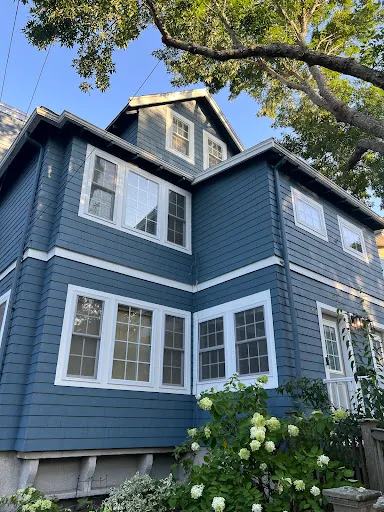
Exterior work is a different animal, and in Boston it usually means one thing: clapboard. The triple-deckers and wood-frame homes that define so many neighborhoods carry a lot of surface area across three stories, and clapboard has a lot of edges that hold paint unevenly and weather from the bottom up.
Here is what pushes exterior quotes up or down:
Prep and scraping. On older clapboard, failing paint has to be scraped, sanded, and spot-primed. This is the single biggest variable between a cheap quote and a durable one.
Number of stories and access. A three-story triple-decker on a tight lot means more ladder work, and sometimes staging, which adds labor and equipment cost.
Staging and ladder logistics. Boston's dense blocks and narrow side yards make setup harder. Crews may need to work around driveways, fences, and neighboring properties, which slows the job.
Trim, soffits, and detail work. Decorative trim on older homes is time-consuming to cut in cleanly.
Repairs. Rotted clapboard or trim usually needs replacement before painting, which may involve carpentry.
When you compare exterior bids, the prep scope is where the real difference lives. Two painters can quote the same house at very different prices simply because one plans to scrape and prime failing areas and the other plans to paint over them.
Massachusetts Licensing: HIC Registration and Lead-Safe Certification
This is where Boston homeowners need to slow down and verify, because painting sits in a specific spot in Massachusetts law.
HIC registration is not a skills license, but it matters because it ties a contractor to consumer protections. Under the state's home-improvement law, registered contractors are subject to contract requirements, deposit limits, and access to the Guaranty Fund, which can help homeowners recover losses from a registered contractor in certain disputes.
One nuance worth knowing: under MGL c.142A section 14, interior-painting-only contractors are generally exempt from HIC registration. So a painter who only does interior work may legitimately not carry an HIC number, while a firm doing exterior work or broader improvements should.
Always confirm a contractor's status yourself using the OCABR HIC lookup, and cross-check other trades through the state's general check a professional license tool if your project touches other work.
EPA Lead-Safe Certification for Pre-1978 Homes
This is the compliance issue that catches Boston homeowners off guard, and it is arguably more important than HIC status for painting.
Boston's housing stock is old. A large share of homes here were built before 1978, the year lead paint was banned for residential use. Under the federal EPA Renovation, Repair, and Painting (RRP) rule, any firm that disturbs painted surfaces in a home built before 1978 must be EPA Lead-Safe Certified. You can read the requirements at the EPA's lead information page.
Because scraping and sanding are exactly how exterior repaints begin, lead-safe practices are not optional on older Boston homes. Massachusetts also runs its own lead-safe renovation program alongside the federal rule.
Before hiring for any pre-1978 home:
Confirm HIC registration through OCABR (for exterior/general work).
Ask for proof of EPA Lead-Safe (RRP) certification and keep a copy.
Confirm the crew, not just the company owner, follows lead-safe containment and cleanup practices.
A painter who cannot produce lead-safe documentation for an older home is a hard pass.
How to Compare Quotes Without Getting Fooled
The cheapest quote is almost never the cleanest comparison. Price differences usually come down to prep work, and prep is what makes paint last.
When you collect bids, ask each painter to spell out:
Prep scope. Scraping, sanding, spot-priming, caulking, and how failing surfaces are handled. Get this in writing.
Number of coats and the specific product line being used.
Surface repairs. Who handles rotted clapboard or damaged plaster, and is it included or extra?
Containment and cleanup, especially for pre-1978 homes.
Timeline and crew size.
Payment schedule. Under Massachusetts home-improvement law, deposit limits apply for registered contractors, so a demand for a huge upfront payment should raise questions.
A tool like the Tavlee Boston painters directory can shorten the vetting step: it verifies contractor registrations against the Massachusetts registries and weighs reviews across multiple sources, so you are not relying on a single star rating from one site.
When quotes vary widely, ask the low bidder what they are doing differently on prep. Often the answer explains the gap.
Red Flags to Avoid
Contractor fraud is not hypothetical in Massachusetts. In one recent case reported by Roofing Contractor, a man showed up unannounced at a Monson, Massachusetts home, claimed the chimney was at risk of collapse, pressed the homeowner for $25,000 to start immediately, and began demolition with a sledgehammer before any permit was pulled — destroying the chimney and damaging recently completed siding and part of the roof before he could be stopped.
The episode is a useful checklist of warning signs. Watch for:
Unsolicited arrival, especially right after another job on your home.
Pressure for immediate payment or a signature.
Work starting without a signed contract or before a permit is pulled.
Refusal or inability to provide licensing and insurance.
Urgent "it's about to fail" claims designed to rush you.
Verify registrations through OCABR and never let work start without a signed contract. For permits on larger jobs in the city, the Boston Inspectional Services Department handles building and related permits, and legitimate contractors will pull them rather than skip them.
Key Takeaways
Interior and exterior costs are driven by prep and access, not paint. On Boston clapboard, scraping and staging logistics dominate.
Verify HIC registration through OCABR for exterior and general work; interior-only painters may be exempt.
On any pre-1978 home, require EPA Lead-Safe certification. It is federal law and non-negotiable.
Compare prep scope, not just the bottom-line number.
Trust your gut on pressure tactics, unsigned work, and refusal to show credentials.