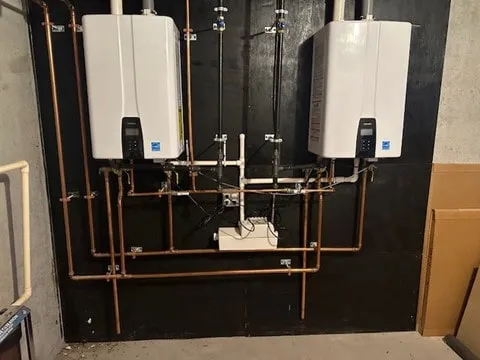
Massachusetts licenses HVAC and refrigeration technicians at the state level, and any gas-fired furnace or boiler must be connected by a licensed gas fitter or plumber — verify both on Mass.gov. Costs hinge on system type, ductwork, and electrical upgrades. In Boston's radiator-heated older homes and condos, ductless mini-splits avoid duct chases; insist on a Manual J load calculation and Mass Save heat-pump rebates before signing.
Typical cost
$5,000 – $11,400
Tracked on Tavlee
1369 hvac contractors in Greater Boston
Boston's housing stock is a puzzle. You have triple-deckers with steam radiators, brick rowhouses running hot-water boilers, and condos where the only realistic path to cooling is a ductless mini-split. Choosing the right HVAC contractor here means understanding both your building and the state rules that govern who is allowed to touch it.
This guide walks through what systems cost, how Massachusetts licenses the trades involved, how heat pumps stack up against the old boilers in our neighborhoods, and the red flags that separate honest pros from the operators who prey on homeowners.
What HVAC Work Actually Costs in Greater Boston
HVAC pricing swings widely depending on your home and the work involved. A service call or seasonal tune-up sits at the low end. Replacing a full system, converting to heat pumps, or retrofitting a home with no existing ductwork lands at the high end.
The biggest cost drivers in Boston tend to be:
Building age and layout. Older homes with plaster walls, tight mechanical rooms, and no duct chases cost more to work in.
System type. A like-for-like boiler swap is one price; converting to ducted heat pumps or a multi-zone mini-split system is another.
Electrical and gas work. New equipment often needs panel upgrades or gas-line changes, which pull in other licensed trades.
Permits and inspections. Work in the city runs through the Boston Inspectional Services Department, which issues building, plumbing, gas, and electrical permits and inspects the finished job.
Because quotes vary so much, it helps to anchor your expectations before you call anyone. Tavlee runs a live HVAC cost calculator for Boston that lets you gauge a realistic range for your project type before a single contractor walks through the door.
One rule to internalize: a reputable contractor gives you a written, itemized quote before work begins — clear, fixed pricing before a single wrench is turned, with warranties in writing. Hold every Boston contractor to that standard.
What does heating and cooling work cost in Greater Boston?
Most HVAC projects in Greater Boston run $5,000 – $11,400. Adjust the estimate for your job in the hvac contractor cost guide.
Top-rated hvac contractors in Greater Boston
These are the strongest hvac contractors on the evidence: reviews weighed across sources and licenses verified against the Massachusettsregistry. Rankings can't be bought.
Hiring hvac contractors in Greater Boston: your questions
Do HVAC contractors in Massachusetts need a license?
Yes. HVAC and refrigeration work in Massachusetts is licensed at the state level. Tavlee verifies each contractor's license against the Massachusetts registry rather than trusting a self-reported badge.
How much does a new HVAC system cost in Boston?
Costs vary widely by system type, your home's age and layout, and whether the job needs new ductwork, electrical upgrades, or gas work. A like-for-like boiler swap sits at one end and a full ducted heat-pump or multi-zone mini-split conversion at the other. Because ranges are so broad, use Tavlee's Boston HVAC cost calculator to gauge your specific project, then get at least three itemized written quotes.
Are heat pumps worth it in New England winters?
Cold-climate air-source heat pumps have improved and now perform far better in freezing weather than earlier models. They deliver heating and cooling from one system, and ductless mini-splits are especially useful in Boston's older, ductless homes and condos. Many owners keep a boiler for the coldest stretches and add heat pumps for cooling and shoulder-season heating. Proper sizing through a Manual J load calc is essential to winter performance.
How often should HVAC be serviced?
Plan on at least annual professional service, ideally a cooling check in spring and a heating check in fall, plus regular filter changes in between. Older steam and hot-water boilers benefit from a yearly tune-up to catch efficiency and safety issues early. Regular maintenance also protects manufacturer warranties, which typically require documented service.
What rebates are available for heat pumps in Massachusetts?
Mass Save offers rebates for qualifying heat-pump installations in Massachusetts, with eligibility tied to the equipment and often the installer. Confirm current rebate amounts and requirements before you commit, and ask contractors to reflect available incentives in their quotes so you are comparing true net costs.
Massachusetts Licensing: Who Is Legally Allowed to Do the Work
This is where many homeowners get tripped up. "HVAC contractor" is not a single license in Massachusetts. Depending on the job, several separate credentials come into play, and they are administered through the Massachusetts Division of Occupational Licensure, which houses the trade boards and a public license lookup.
Here is how the pieces fit:
Refrigeration and HVAC technicians handle cooling equipment and heat pumps. These trades are licensed at the state level.
Gas-fired equipment is a different matter. Any gas-fired furnace, boiler, or water heater requires a licensed gas fitter or plumber. That credential is separate and issued through the Board of State Examiners of Plumbers and Gas Fitters. Gas fitting is its own credential on top of a plumbing license.
Electrical work, such as the panel upgrade a heat pump often needs, must be done by a state-licensed electrician through the Board of State Examiners of Electricians.
The practical takeaway: a legitimate HVAC job often involves more than one licensed trade. A contractor who shrugs off the gas-fitting requirement or offers to "just handle" the electrical without a licensed electrician is cutting corners that can void insurance and fail inspection.
Verify the License Before You Sign
Do not take a business card at face value. Massachusetts makes verification easy. Use the official check a professional license tool on Mass.gov to confirm a plumber, gas fitter, or electrician against the state registry.
Tavlee builds this verification into its directory. Every contractor in its Boston HVAC listings is checked against the Massachusetts state registry, and reviews are weighed across multiple sources rather than a single platform. That does not replace your own lookup, but it filters out the operators who never should have been on the list.
Heat Pumps vs. Steam and Hot-Water Boilers in Old Housing
Boston's older homes were built around radiators. Many still run one-pipe or two-pipe steam, others use hot-water (hydronic) boilers. Both work, but neither provides cooling, and both are candidates for a rethink when the equipment ages out.
The case for heat pumps
Air-source heat pumps have improved substantially at cold-weather performance, and they deliver both heating and cooling from one system. For a condo or a home with no existing ductwork, ductless mini-splits are often the cleanest retrofit. They mount on walls or ceilings, run refrigerant lines through small penetrations, and skip the disruption of adding duct chases to a plaster-walled home.
That no-ductwork advantage matters in Boston, where tearing open walls in a century-old building is expensive and sometimes structurally messy.
When to keep the boiler
If you have a well-maintained hot-water boiler and no need for central cooling, a straight replacement can be the pragmatic choice. Steam systems are trickier: they are harder to zone and less efficient, but wholesale conversion is a significant project. Many owners take a hybrid path, keeping the boiler for deep winter and adding mini-splits for cooling and shoulder-season heating.
Insist on a Manual J load calculation
Here is the single most important technical point in this entire guide: proper sizing comes from a Manual J load calculation, not a rule-of-thumb estimate. A contractor who sizes your system by square footage alone, or by "what the old unit was," is guessing. Oversized equipment short-cycles, wastes energy, and controls humidity poorly. Undersized equipment struggles in a New England cold snap.
A real load calc accounts for insulation, windows, air leakage, and your home's orientation. Ask for it in writing. A contractor who cannot or will not produce one is telling you something.
How to Vet and Compare Quotes
Get at least three quotes, and compare them on substance, not just the bottom-line number.
Confirm every required license using the Mass.gov lookup, including the gas fitter or electrician for their portion of the work.
Require a Manual J load calc and matched, itemized equipment specifications.
Check that permits are included. Boston work runs through Inspectional Services; a quote that skips permits is a warning sign.
Read the contract terms against the MGL c.142A requirements, including deposit limits.
Cross-check reviews across sources rather than trusting a single star rating.
When quotes differ wildly, the cheapest one usually cuts something: a permit, the right license, proper sizing, or a warranty. Ask what is missing before you assume you found a bargain.
Red Flags: How Contractor Scams Actually Play Out
The warning signs are consistent, and a recent Massachusetts case shows them in action. As Roofing Contractor reported, a homeowner in Monson, Massachusetts was targeted right after a legitimate siding installation: a man claiming to be a mason warned that the chimney was about to collapse, pushed for $25,000 to start immediately, and began demolition before any permit was pulled — destroying the chimney and damaging the new siding and roof before he could be stopped.
Not every homeowner gets rescued from a bad actor, so learn the pattern. Watch for:
Unsolicited arrival, often right after another crew leaves.
Pressure for an immediate signature or payment, framed as urgent.
Work starting without a signed contract or permit.
Refusal or inability to provide license and insurance details.
Alarming "about to fail" claims designed to rush you.
The same logic applies to HVAC. Anyone who insists your "cracked heat exchanger" or "failing compressor" needs cash-only emergency work today, before you can verify anything, deserves your suspicion, not your deposit. Unlicensed work is not just a paperwork problem — it can void insurance coverage and, with gas-fired equipment, create genuine safety risks.
Rebates Can Reshape the Math
Massachusetts homeowners considering heat pumps should factor in incentives, which can substantially lower the net cost of a conversion. Mass Save offers rebates for qualifying heat-pump installations, and eligibility often depends on the equipment and the installer. Build any incentive into your quote comparisons rather than treating it as a bonus after the fact.
Takeaways and Next Steps
Hiring an HVAC contractor in Boston comes down to matching the right system to your building and the right license to the work.
Understand your system type first, whether steam, hot water, or a candidate for mini-splits.
Verify every required license, including the gas fitter or electrician, on Mass.gov.
Demand a Manual J load calc, permits, and a written contract that complies with state law.
Walk away from urgency, cash pressure, and missing paperwork.
Start by pinning down a realistic budget with the Boston HVAC cost calculator, then shortlist verified pros from Tavlee's Boston HVAC listings and run your own license check before you sign anything.