No Massachusetts license covers fence installation, and fencing-only firms are generally HIC-exempt under MGL c.142A §14 — still, choose HIC-registered contractors for the contract, deposit, and Guaranty Fund protections. On the North Shore, check historic-district approval in Salem or Marblehead, spec deeper posts for coastal wind, confirm your town's height bylaw and property line, and call Dig Safe (811) before digging.
Typical cost
$4,050 – $7,950
Tracked on Tavlee
330 fence contractors in North Shore
Putting up a fence on Boston's North Shore looks simple until the quotes come back with a $4,000 spread, your neighbor disputes the property line, or the historic commission in Salem asks what style you had in mind. A fence is a real construction project, and the towns from Marblehead to Newburyport each add their own wrinkles.
This guide walks through what fences actually cost by material, the Massachusetts rules that govern the work, the coastal and historic-district factors specific to the North Shore, and a practical process for vetting quotes so you do not overpay or get burned.
Fence costs by material and length on the North Shore
Fence pricing comes down to two variables: the material you choose and the linear footage you need. Most residential jobs are priced per linear foot installed, which bundles posts, panels, hardware, and labor.
General cost ranges you will encounter on the North Shore, from lowest to highest:
Chain link - the budget option, common for pet and boundary containment.
Pressure-treated wood - the workhorse; stockade and picket styles dominate older neighborhoods.
Cedar - a regional favorite for its rot resistance and the classic New England look, priced above standard treated wood.
Vinyl (PVC) - higher upfront cost, lower maintenance, popular for privacy fencing.
Aluminum and ornamental steel - premium pricing, often chosen for decorative front-yard fencing.
Rather than trust a single ballpark, run your specific footage and material through a live estimate. Tavlee maintains a fence cost calculator for the Boston metro that lets you model different materials and lengths before you ever call a contractor, which gives you a reference point when the quotes arrive.
What drives the price up
Several factors push a North Shore fence quote higher than the base per-foot rate:
What does a fence cost in North Shore?
Most fencing projects in North Shore run $4,050 – $7,950. Adjust the estimate for your job in the fence contractor cost guide.
Top-rated fence contractors in North Shore
These are the strongest fence contractors on the evidence: reviews weighed across sources and licenses verified against the Massachusettsregistry. Rankings can't be bought.
Hiring fence contractors in North Shore: your questions
Do fence contractors in Massachusetts need a license?
Most home-improvement work in Massachusetts requires the contractor to be a registered or licensed home-improvement/general contractor. Tavlee verifies each contractor's registration against the Massachusetts registry.
How much does a fence cost on the North Shore?
Cost depends mainly on material and linear footage. Chain link and pressure-treated wood sit at the lower end, cedar and vinyl in the middle-to-upper range, and aluminum or ornamental steel at the top. Coastal lots that need deeper posts, sloped or ledge terrain, gates, and old-fence removal all add to the total. Run your exact footage and material through the Boston-area fence cost calculator for a realistic reference before comparing quotes.
How do I find a reliable fence repair contractor on the North Shore?
Get at least three written quotes, compare them line by line, and prefer a contractor who is HIC-registered with the state. Verify credentials through the official Massachusetts license lookup, and cross-check reviews across sources rather than trusting a single page. Tavlee's verified North Shore fence contractor listings check credentials against official registries and weigh reviews to help you shortlist trustworthy pros.
Do I need approval to replace a fence in a historic district like Salem or Marblehead?
Often, yes. Antique properties and homes within local historic districts in Salem, Marblehead, Newburyport, and Gloucester frequently require historic-commission review, which can dictate acceptable styles such as cedar picket or post-and-rail. Contact your town's historic commission before ordering materials so your fence design is approved before installation begins.
How tall can my fence be in Massachusetts?
Fence height limits are set by local town bylaws, not a single statewide number, so they differ between North Shore towns. Front-yard fences are typically held to a lower height than rear and side-yard fences, which are commonly allowed up to about 6 feet. Confirm the exact cap for your yard with your town's building or inspectional department before you build.
Terrain and grading. Sloped or ledge-heavy yards, common inland from the coast, mean more labor and sometimes stepped panels.
Post depth. More on this below, but coastal wind loads can require deeper, more expensive footings.
Demolition and haul-away of an existing fence.
Gate count and width. Every gate adds hardware and labor.
Permit and survey costs, especially near contested property lines or in historic districts.
Cedar, coastal wind, and North Shore specifics
The stretch from Salem and Marblehead up through Gloucester and Newburyport has a distinct fencing character shaped by history and the ocean.
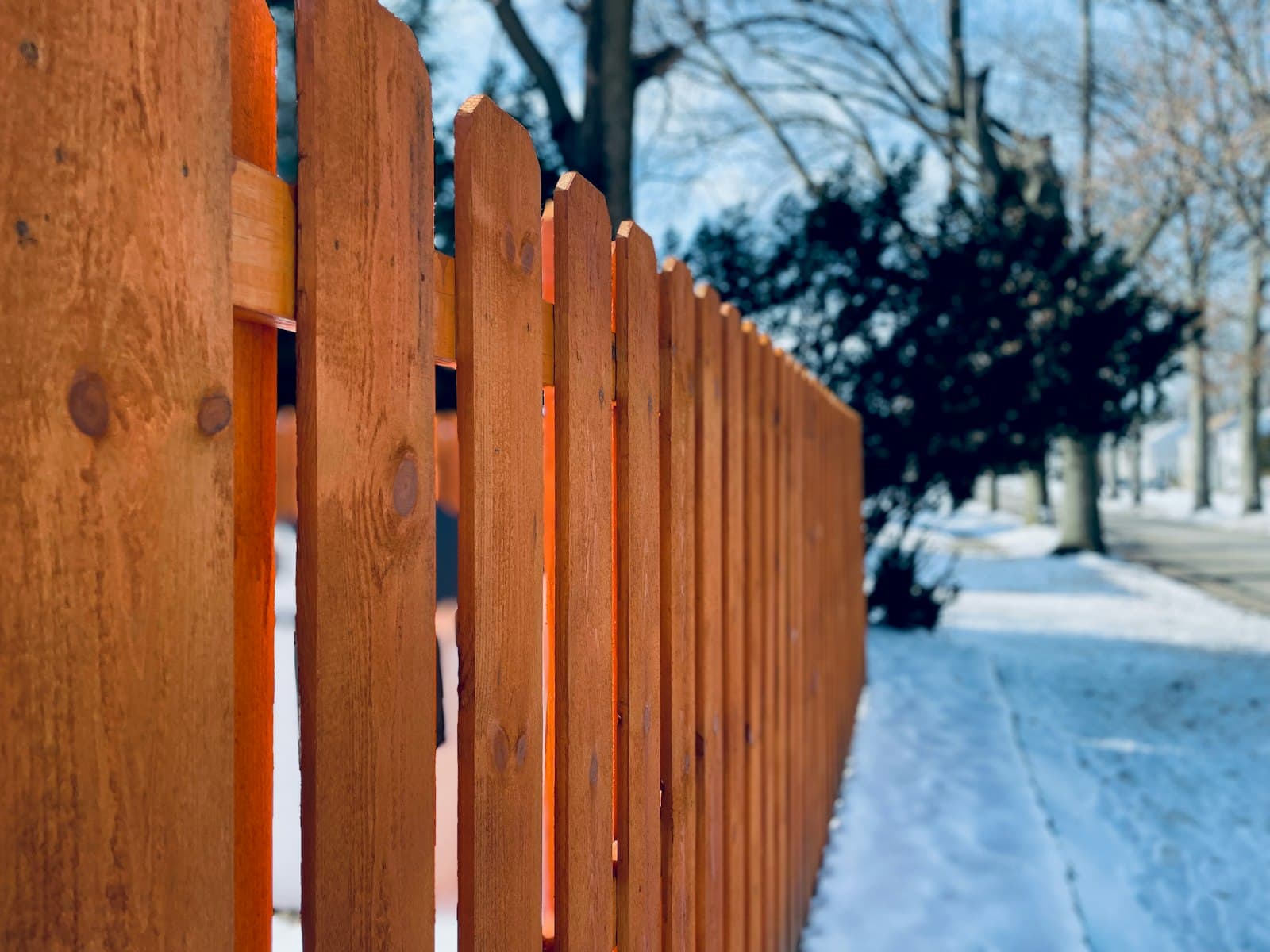
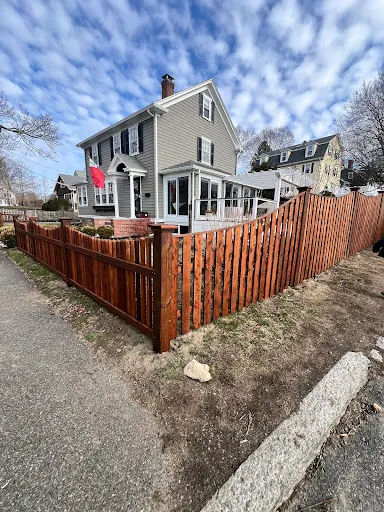
Cedar picket is a regional tradition. Antique properties and colonial-era streetscapes favor cedar picket and post-and-rail styles, and in many neighborhoods a modern vinyl panel will look out of place. If you own a period home, cedar is often the path of least resistance with both neighbors and local boards.
Historic districts add a review step. In local historic districts across Salem, Marblehead, Newburyport, and Gloucester, a fence visible from the street can require historic-commission approval, and the commission may weigh in on style, height, and material. Build that review into your timeline and get the approval before ordering materials.
Coastal wind loads matter more than most homeowners expect. Near the water in Marblehead, Gloucester, and the Newburyport waterfront, wind pressure on solid privacy panels is significant. Two practical consequences:
Post depth increases. Deeper footings resist the leverage that wind puts on tall solid fences. A good coastal contractor will spec deeper, sometimes concrete-set posts near exposed shoreline lots.
Panel choice changes. Solid privacy panels act like sails. Contractors often recommend spaced pickets, lattice tops, or shorter solid sections to let wind pass through and reduce the load that topples fences and pulls posts.
If a quote for an exposed coastal lot does not mention post depth or wind considerations, treat that as a sign the contractor has not thought the job through.
Massachusetts rules: licensing, permits, and property lines
Here is where fencing differs from other trades. Massachusetts does not license a "fence contractor" trade the way it licenses electricians and plumbers.
There is no fence-trade license, but registration still matters
What does apply is the Home Improvement Contractor (HIC) program, run by the Office of Consumer Affairs and Business Regulation under MGL c.142A. The nuance for fences: a firm doing fencing-only work can generally fall outside HIC registration under the exemptions in section 14 of that law. In practice, though, many North Shore fence companies carry HIC registration anyway because they also handle broader exterior work like decks, railings, and gates tied into structures.
Still, prefer an HIC-registered contractor. HIC registration unlocks real homeowner protections, including access to the state's Guaranty Fund and the contract requirements and deposit limits spelled out under MGL c.142A. You can verify any professional credential through the official Massachusetts license lookup before you sign anything.
Tavlee's approach lines up with this. Its verified North Shore fence contractor listings check credentials against official registries and weigh reviews across multiple sources, so you are not relying on a single star rating from one site.
Town height bylaws and permits
Fence height limits and permit requirements are set at the town level, not the state level, so they vary between Salem, Marblehead, Newburyport, and Gloucester. Common patterns include lower height limits for front-yard fences and taller allowances - often around 6 feet - for rear and side yards.
Before ordering materials, confirm with your town's building or inspectional department whether a permit is required and what the height cap is for your specific yard location. (In Boston proper, that function sits with the Inspectional Services Department; each North Shore town runs its own equivalent office.)
Property lines and surveys
Fence disputes are, at heart, property-line disputes. If you are unsure exactly where your boundary runs, a survey is cheaper than tearing down a fence built a foot onto your neighbor's land.
Locate existing survey pins before you start.
When in doubt, commission a boundary survey or pull your plot plan.
Talk to your neighbor early; many North Shore lots are tight, and goodwill prevents lawsuits.
Dig Safe: call 811 before you dig
Setting fence posts means digging, and digging into unmarked utility lines is dangerous and illegal. Massachusetts law requires you to notify Dig Safe - the region's underground-utility notification program - by calling 811 before any excavation so buried gas, electric, and communication lines can be marked. A legitimate fence contractor will handle this call as a matter of routine. If yours shrugs it off, that is a problem.
How to vet and compare fence quotes
Get at least three written quotes and compare them line by line, not just on the bottom number. A cheap quote that omits demolition, deeper coastal footings, or permit costs is not actually cheap.
What a solid quote should spell out:
Material and grade (for example, western red cedar versus a lower grade).
Linear footage and gate details.
Post type, depth, and setting method (especially for coastal lots).
Demolition and haul-away of any old fence.
Permit responsibility and who calls Dig Safe.
Payment schedule and deposit within legal limits.
Written contract signed before work begins.
Verify the contractor's HIC registration through the state before signing, and cross-check reviews. Tavlee's model of weighing reviews across sources exists precisely because a single glowing review page can be gamed.
Red flags: how contractor scams actually work
A recent Massachusetts case shows how fast a legitimate-looking home project can turn into a scam. As reported by Roofing Contractor in July 2026, a Monson homeowner who had just had siding installed was approached by a man claiming to be a mason, who said the chimney was at risk of collapse and offered to start immediately for $25,000. The man began swinging a sledgehammer before any permit was pulled, and by the time the homeowner stopped him, the chimney was destroyed and the new siding and roof were damaged. The scam was only recognized when the homeowner called the original contractor about the damage.
The tactics in that story map directly onto fence-scam warning signs:
Unsolicited arrival, often right after another crew has left your property.
Pressure for immediate payment or signature.
Work starting without a signed contract or before a permit is pulled.
Refusal or inability to show registration and insurance.
Urgent "it will fail any day now" claims designed to short-circuit your judgment.
The core advice applies to fencing too: verify the contractor's Massachusetts registration and never let work begin without a signed contract.
Takeaways and next steps
A fence on the North Shore is worth doing carefully once rather than cheaply twice. Before you commit: