Every Massachusetts roofer needs OCABR Home Improvement Contractor registration — written contract required, deposit capped at one-third — and structural roof work needs a CSL. On the North Shore, slate colonials in Salem and Marblehead demand proven slate specialists, historic-district approval can govern materials, and salt air corrodes flashing first. Verify registration before signing, and turn away post-storm door-knockers.
Typical cost
$9,000 – $18,600
Tracked on Tavlee
809 roofers in North Shore
Hiring a roofer on Massachusetts' North Shore is not a routine transaction. Between the antique slate roofs on Salem and Marblehead colonials, the coastal wind that hammers homes near Gloucester harbor, and salt air that eats through flashing and fasteners, the stakes are higher here than in most markets.
This guide walks through what a roof actually costs, the licensing rules that protect you under Massachusetts law, how to compare quotes without getting fooled, and the storm-chaser tactics that show up after every big weather event. The goal is simple: help you hire the right roofer once, verify their credentials, and avoid the scams that target this region.
What a New Roof Costs on the North Shore
Roofing prices swing widely depending on your home, and North Shore housing stock covers the full range. A modest ranch in Peabody is a different job than a slate-roofed antique in Marblehead's historic district.
Several factors drive the number more than anything else:
Material. Asphalt shingle is the affordable baseline. Slate is a different universe entirely - it is heavier, requires specialized skill, and costs several times more per square than asphalt. Many colonials in Salem, Beverly, and Marblehead carry original or antique slate that demands a roofer who has actually worked with it.
Pitch and complexity. Steep, multi-gable roofs common on older homes take longer and require more safety setup, which raises labor cost.
Layers and tear-off. Removing old material adds disposal cost, but overlaying new shingles on top of old ones can hide rot and shorten the new roof's life.
Access. Tight lots in Lynn or dense historic streets in Salem complicate staging, dumpsters, and delivery, all of which add to the bill.
Coastal exposure. Homes near the water in Gloucester or Marblehead need upgraded wind-uplift detailing and corrosion-resistant fasteners and flashing, because salt air degrades standard metal fast.
Because pricing depends so heavily on these variables, ballpark figures from a neighbor rarely translate. To get a grounded estimate for your specific home, run the numbers through Tavlee's before you start collecting quotes, so you know whether a bid is in a reasonable range.
What does a roof replacement cost in North Shore?
Most roofing projects in North Shore run $9,000 – $18,600. Adjust the estimate for your job in the roofer cost guide.
Top-rated roofers in North Shore
These are the strongest roofers on the evidence: reviews weighed across sources and licenses verified against the Massachusettsregistry. Rankings can't be bought.
Most home-improvement work in Massachusetts requires the contractor to be a registered or licensed home-improvement/general contractor. Tavlee verifies each contractor's registration against the Massachusetts registry.
How much does a new roof cost on the North Shore?
It depends heavily on material, roof pitch, complexity, access, and coastal exposure. Asphalt shingle is the affordable baseline, while slate costs several times more per square. Because the range is so wide, get a grounded estimate for your specific home using Tavlee's Boston-area cost calculator and then compare at least three written quotes.
How much does roof repair cost?
Repairs cost far less than replacement and depend on the problem. Isolated leaks, a few slipped slates, or corroded flashing around chimneys and valleys are common repair jobs. On the coast, salt-air corrosion of flashing and fasteners drives a large share of repairs, sometimes long before the main roof surface wears out.
How long does a slate roof last?
Slate is prized precisely because it is long-lived, which is why so many North Shore colonials still carry antique slate. Its lifespan depends on correct installation and maintenance, plus the condition of the flashing and fasteners around it. Because inexperienced crews can crack tiles and mishandle detailing, hiring a roofer with proven slate experience matters as much as the slate itself.
Will insurance pay for my roof after a storm?
Storm damage may be covered depending on your policy and the cause, so document the damage and contact your insurer directly. Be cautious of storm-chasers who show up unsolicited after weather events, promise to "handle" your claim, and pressure you to sign immediately. As the Monson case reported by Roofing Contractor showed, urgency and fast-payment demands are classic fraud signals, so verify any contractor's registration before agreeing to anything.
How do I choose a roofing contractor on the North Shore?
Slate is the material that separates general roofers from specialists. A slate roof installed and maintained correctly can outlast the homeowner, but a well-meaning crew without slate experience can crack tiles, botch flashing, and leave you worse off than before.
If your home has slate, treat slate experience as a hard requirement, not a bonus. Ask to see completed slate jobs on comparable antique homes in towns like Salem or Marblehead.
Repair vs. Replacement
Not every problem needs a full replacement. Isolated leaks, a few slipped slates, or corroded flashing around a chimney or valley are often repairs.
On the coast, flashing and fastener corrosion is the recurring culprit. Salt air attacks the metal that seals your roof's transitions long before the field of the roof fails. A good roofer will tell you honestly whether you are looking at a targeted repair or a roof at the end of its service life.
Be skeptical of anyone who inspects a sound roof and immediately recommends tearing off the whole thing. That pattern shows up in the scam section below for a reason.
Massachusetts Licensing: HIC, CSL, and What You Must Verify
Massachusetts has clear rules, and knowing them is your strongest protection.
Roofing work in Massachusetts requires Home Improvement Contractor (HIC) registration through the Office of Consumer Affairs and Business Regulation (OCABR), under MGL c.142A, the state's home-improvement law. That law is not decorative. It carries real homeowner protections:
Written contracts are required for home-improvement work.
Deposits are capped at one-third of the contract price, except when special-order materials justify more.
Registered contractors give you access to the Guaranty Fund, a recourse mechanism if a project goes wrong.
Structural roof work, meaning anything that touches the roof's load-bearing structure rather than just the covering, requires a Construction Supervisor License (CSL). That is a separate, higher credential from HIC registration.
Verify before you sign. Homeowners should confirm a roofer's HIC registration directly through OCABR, and you can check any Massachusetts professional credential through the state's check a professional license tool.
This verification step is exactly what Tavlee automates. The directory checks contractor registrations against the Massachusetts registries and weighs reviews across multiple sources, so you can start with verified North Shore roofer listings rather than a random search result.
Permits and Historic-District Approvals
Roofing work typically requires a local building permit, issued by your city or town's inspectional or building department. In Boston, that is the Inspectional Services Department; each North Shore municipality runs its own equivalent.
Historic districts add another layer. Towns like Salem and Marblehead have historic-district commissions that must approve changes visible from the street, and roofing material and color can fall under that review. If your home sits in one of these districts, factor commission approval into your timeline, and make sure your roofer has navigated the process before.
A legitimate contractor pulls the permit and works within these rules. Anyone who wants to skip permits is a warning sign, not a convenience.
How to Vet Roofers and Compare Quotes
Collect at least three written estimates, and read them line by line. Cheap and expensive both deserve scrutiny; what you want is a bid that reflects your actual roof.
When comparing, focus on these points:
Tear-off vs. overlay. A quote that assumes overlaying new material on old is not comparable to one that includes a full tear-off. Overlay is cheaper up front but can trap moisture and hide decking rot.
Warranty terms. Separate the manufacturer's material warranty from the contractor's workmanship warranty. Ask how long each lasts and what voids it.
Slate and antique experience. For slate or historic roofs, confirm specific, verifiable slate work, not general roofing volume.
Coastal detailing. Near the water, ask what corrosion-resistant fasteners and flashing they use and how they address wind uplift.
Licensing and insurance in writing. HIC registration number, CSL if structural work is involved, and proof of liability and workers' compensation coverage.
A real, signed contract. MGL c.142A requires it, and it should spell out scope, materials, price, deposit, and timeline.
If a contractor hesitates on any of these, that hesitation is your answer.
Storm-Chaser Red Flags
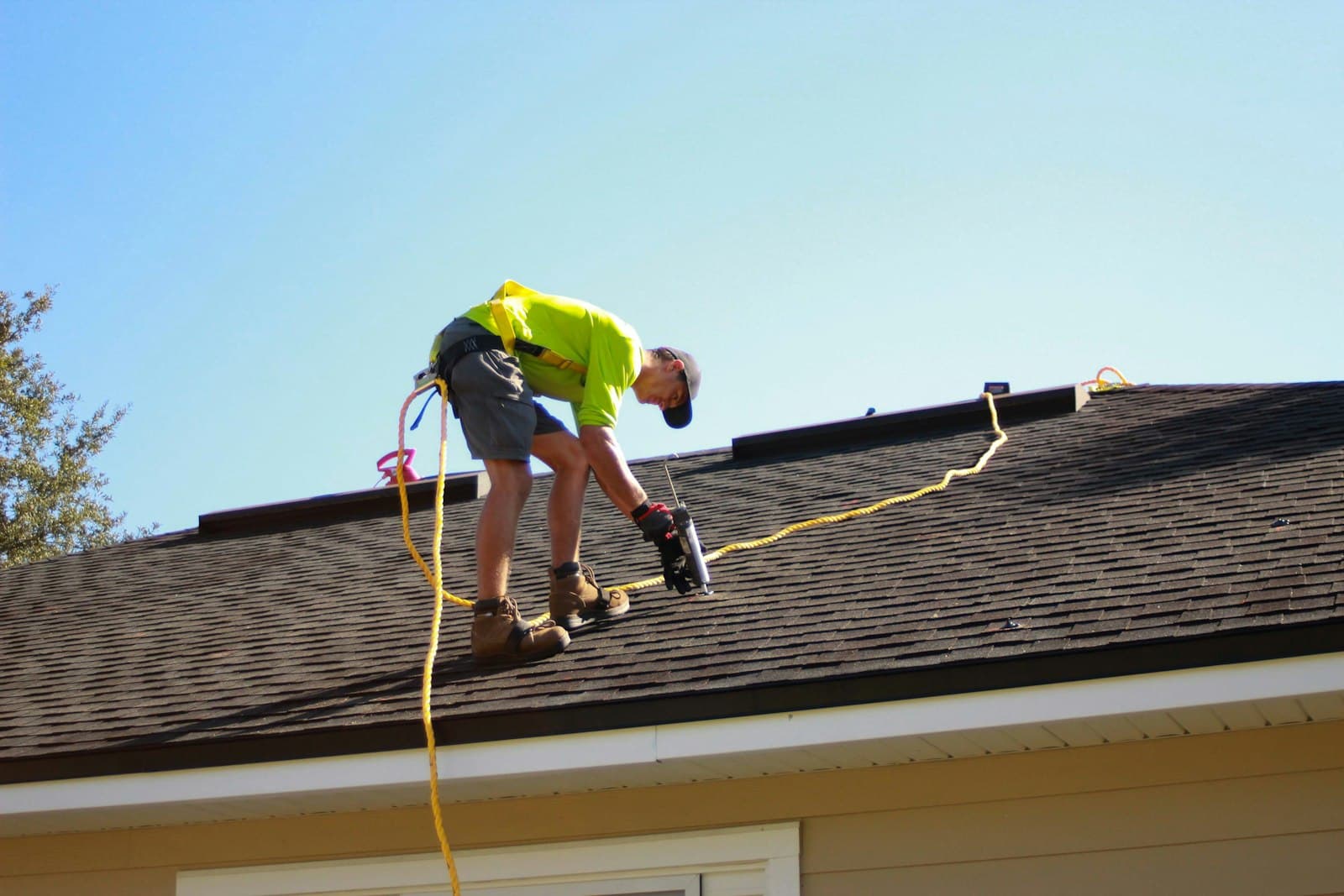
Storm-chaser fraud is the signature scam pattern in roofing. After heavy wind or a coastal storm, out-of-area operators canvass neighborhoods, manufacture urgency, and pressure homeowners into fast, expensive decisions.
A recent Massachusetts case shows how ugly this gets. As Roofing Contractor reported in July 2026, a Monson homeowner who had just had new siding installed was approached by a man claiming to be a mason who said the chimney was at risk of collapse and offered to start repairs immediately for $25,000. The homeowner said the man began swinging a sledgehammer before any permit was pulled, and when he tried to stop the work, the chimney was destroyed and the new siding and part of the roof were damaged. The homeowner's original contractor recognized the tactic, urged him to contact local authorities, and the individuals were reportedly taken into custody.
The warning signs in that story are the same ones to watch for anywhere on the North Shore:
Unsolicited arrival, often right after other work or a storm.
Pressure for an immediate signature or payment.
Work starting without a signed contract or before a permit is pulled.
Inability or refusal to provide licensing and insurance.
Urgent "your roof/chimney is about to fail" claims designed to short-circuit your judgment.
The defense is boring and effective: never let work begin without a signed contract, never pay large sums up front (remember the one-third deposit cap), and verify the contractor's Massachusetts registration through OCABR before anyone touches your home. The state's Division of Occupational Licensure publishes license-lookup tools for the trades that carry state licenses.
Key Takeaways
Hiring a roofer here comes down to a few disciplined habits:
Match the roofer to your roof, especially for slate and antique homes.
Verify HIC registration through OCABR, and confirm a CSL for any structural work.
Respect historic-district rules in towns like Salem and Marblehead, and make sure permits get pulled.
Compare quotes on real terms: tear-off vs. overlay, warranties, and coastal detailing.
Treat urgency and door-knocking as red flags, not opportunities.
Start with verified listings, run your numbers through a cost calculator, and insist on a signed contract. Do that, and you sharply reduce the odds of ending up as the next cautionary story.
Start with contractors whose Massachusetts HIC registration you can verify, confirm slate experience if your home needs it, and require a signed written contract with a deposit no larger than one-third of the price. Compare quotes on tear-off vs. overlay, warranty terms, and coastal detailing. Using Tavlee's verified North Shore roofer listings is an efficient way to start with contractors already checked against the state registries.