Who answers for your pool if no one holds a pool license?
Massachusetts does not license pool cleaning or pool service. Nobody who skims, vacuums, balances the water or opens and closes your pool needs a state credential to do it. That puts the burden on you to ask the right questions, because the risks in a backyard pool are real: chemicals stored and mixed on site, electrical equipment next to water, and a gate that keeps children out.
Three parts of pool work do carry state or town rules, and a good pool company knows exactly where its own job ends:
- The electrical. Pumps, heaters, lights and automation run on circuits that a licensed electrician must install and the town wiring inspector checks.
- The pool itself. Installing a new pool, or making major changes to one, is building work that needs a permit from your town.
- The barrier. The state building code sets the rules for the fence and gate around the pool.
The service company is often the one person who sees your pool every week. A good one will tell you when the gate does not latch or a cord is running across the deck. Ask whether they report problems like these in writing.
What does your pool gate have to do?
The pool barrier rules sit in the Massachusetts building code at 780 CMR 3109.4, and they apply to pools more than 24 inches deep, above-ground ones included. The barrier around the pool must be at least 48 inches tall, and every gate in it must close on its own and latch on its own. Your town's building department enforces it, and towns publish their own permit checklists; Belmont's swimming pool permit checklist is one published example of what a town asks for.
A pool service is not responsible for building the barrier, but it is responsible for not defeating it. Crews come and go through the gate with hoses and equipment. Ask the company to confirm, in writing, that its staff will close and latch the gate every time, and never prop it open during a visit. If a hinge has stopped closing the gate, ask them to tell you the same day.
Who should wire the pump, heater and lights?
Pool equipment is electrical equipment beside water, and Massachusetts treats it that way. The electrical work, including new pump circuits, heater connections, underwater and deck lighting, bonding and timers, belongs to a state-licensed electrician (the electricians' board issues those licenses), working on a permit your town's wiring inspector signs off. You can look up an electrician's license on the state's eLIPSE search.
Many pool companies swap pumps and filters. The plumbing side of that is their work; the wiring is not. When you get a quote for a new pump or heater, ask:
- Who will make the electrical connection, and under whose license?
- Is a wiring permit included, and who schedules the inspection?
- Does the new equipment need a new circuit or a larger breaker?
A heat pump pool heater, or a variable-speed pump, can change the load on your panel. If your panel is already busy with a heat pump or an EV charger, ask the electrician to check capacity first.
What does South Shore ground mean for an in-ground pool?
Much of Plymouth County sits on sandy outwash soil. Newer subdivisions in Plymouth, Kingston, Carver and Middleborough often have the backyard pools that go with them. Sandy soil drains quickly, which helps, but it shifts under heavy loads and water, so the ground around an in-ground pool deserves attention.
A good pool service watches for signs worth reporting: decking that has settled or cracked, a coping that has lifted, water loss that suggests a leak, or soft ground around the equipment pad. A pool that keeps losing water faster than evaporation explains needs a leak check, not just a top-up.
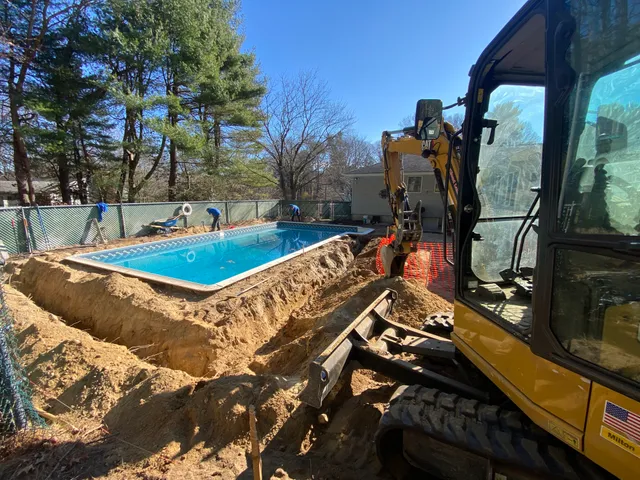
If a new pool or a major repair means digging, the excavator must request a Dig Safe ticket first. The state's Dig Safe rules require the request at least 72 business hours before excavation, not counting weekends and holidays.
How do septic systems and wetlands affect a pool yard?
Many South Shore yards hold more than a pool. In Pembroke, Hanover and Norwell, the septic tank and leach field are often in the same backyard, and both are governed by the state's Title 5 septic code. Nothing heavy belongs on a leach field, and that includes pool trucks, equipment deliveries and excavators. Point out the septic system to any company that drives into the yard.
Lots near the water add another layer. In Duxbury, Marshfield and Scituate, a pool, a patio or new equipment pad within 100 feet of a wetland is a matter for the town's conservation commission under the Wetlands Protection Act. Draining a pool toward a marsh or pond is something to ask the commission about first, not after.
How should pool chemicals be handled at your house?
Chlorine, acid and other pool chemicals are the part of pool service most likely to hurt someone. Many South Shore pool owners let the service company keep a supply on site, in a garage in Weymouth or a shed behind a Kingston colonial. That is convenient, and it needs rules.
Ask the company where it wants the chemicals stored, and keep them out of reach of children and pets, away from the house's heating equipment, and apart from each other: some pool chemicals react badly when mixed. Ask the technician to leave the containers closed and labelled after every visit, and to tell you what was added and how much. A written log on a clipboard in the pump house, or a message after each visit, gives you a record if the water ever goes wrong.
If anyone in the house is sensitive to chlorine, or you have a saltwater system, say so at the start. The company should adjust its routine, not you.
What should a pool service agreement cover?
Because there is no license, the written agreement is your main protection. Ask for one that lists:
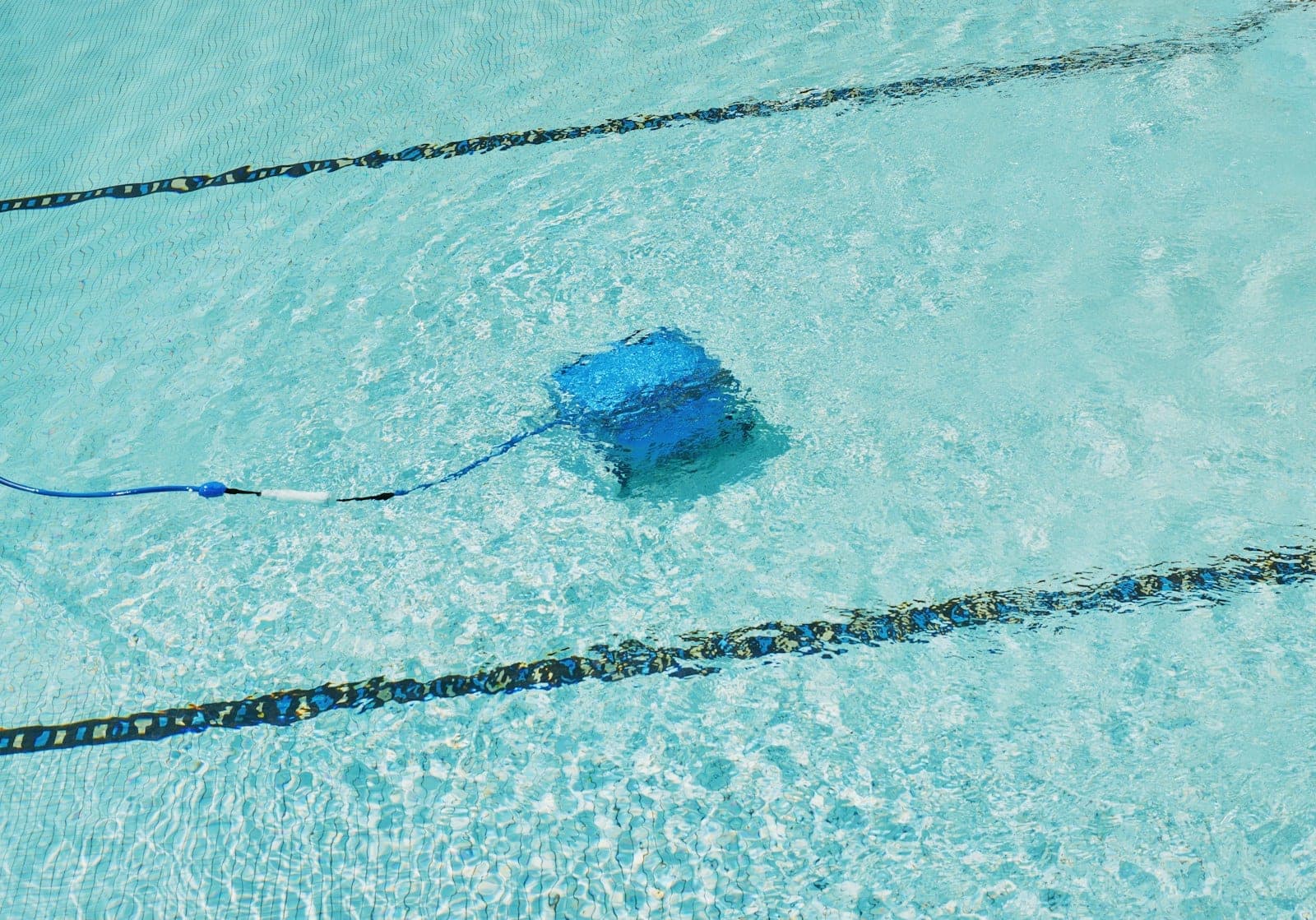
- What each visit includes. Skimming, brushing, vacuuming, emptying baskets, testing and balancing the water, checking the filter and pump.
- Chemicals. Which are included in the price and which are billed separately, and where they are stored on your property.
- Openings and closings. The dates, what each includes, and whether winterizing lines and covers is part of the closing.
- Repairs. How equipment repairs are quoted and approved before work begins.
- Insurance. Proof of liability insurance, and whether workers are covered if they are hurt on your property.
- Cancellation. How much notice ends the season's service.
If a company will not put the visit checklist in writing, choose one that will.
What does pool service cost on the South Shore?
Pool companies here price off the Greater Boston baseline. The pool cleaning cost page puts a typical service visit at about $280 to $550, and you can adjust it for your pool. What changes the price:
- Pool size and type. A large in-ground pool in Hingham or Cohasset takes longer than a small above-ground pool in Rockland.
- Condition. Clearing a green pool after a missed week is a different job from routine upkeep.
- Chemicals. Included or billed separately makes a real difference.
- Season tasks. Openings and closings are priced on their own.
- Equipment. Heaters, salt systems and automation add checks and repairs.
Compare quotes on the same checklist, not just the per-visit price.
When should you book a pool company?
South Shore pools are generally open from about Memorial Day until Labor Day, and companies fill their opening schedules in early spring. Book the opening and the closing when you sign up for the season. Ask what happens if a summer storm leaves branches and debris in the pool: is a cleanup visit included, or extra? Close early enough in the fall that the lines are blown out before the first hard freeze.