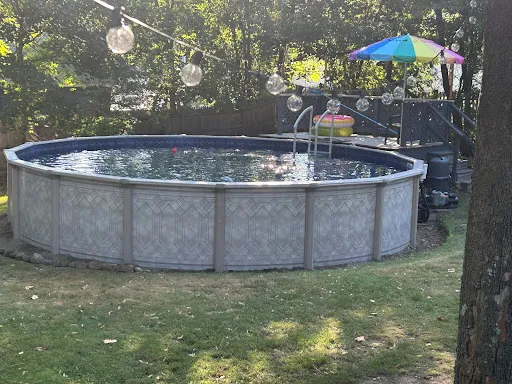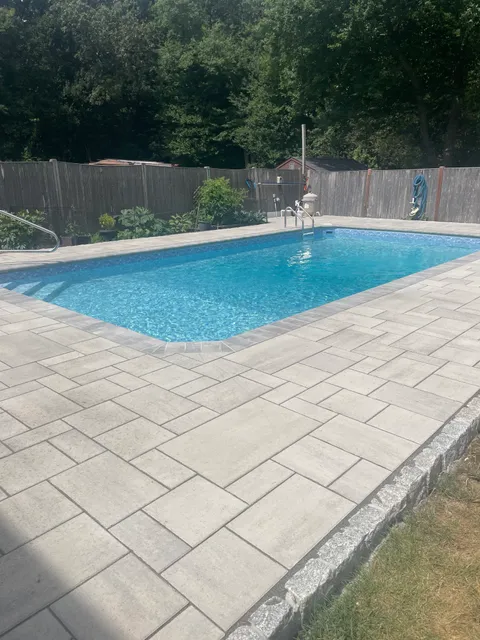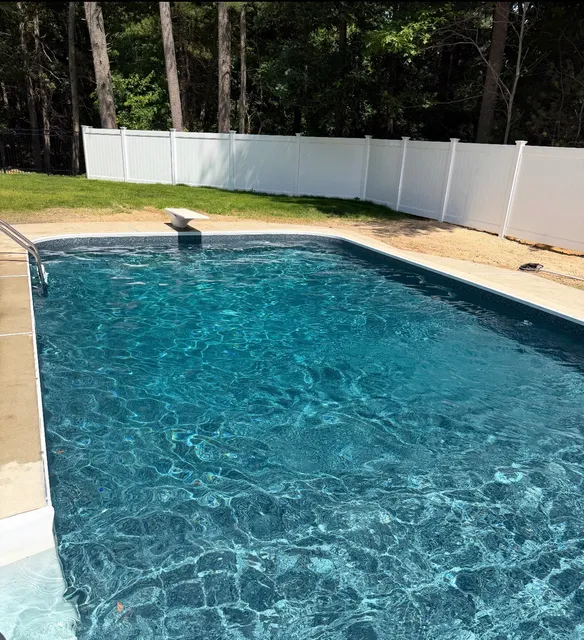
Pools on the North Shore range from above-ground pools in the yards of Saugus and Peabody capes to in-ground pools behind the big houses of Hamilton, Wenham, Topsfield and Manchester-by-the-Sea. A pool service company might open a dozen of them in a May week, test water all summer and winterize them in the fall. What the company can do, and what it has to hand to someone else, is the first thing to get straight.
Can a pool service company touch my pump wiring?
Massachusetts has no state license for pool cleaning and maintenance. A service tech can skim, vacuum, brush, test and balance water, clean filters, and open and close the pool without any credential from the state.
Electrical work is different. Pumps, heaters, salt systems and underwater lights all run on power, and wiring them is electrical work. In Massachusetts that is done by an electrician licensed by the Board of State Examiners of Electricians, under a permit from your town's wiring inspector. A pool tech without that license should not be running a new circuit, moving an outlet or hooking up a new heater, however simple it looks.
In practice the line falls like this:
- Service work: replacing a pump motor or a cartridge on existing plumbing, reconnecting a pump to the same correctly wired receptacle, adjusting a timer.
- Electrician's work: a new circuit for a heater or heat pump, moving or adding an outlet near the water, wiring lights, adding a subpanel for pool equipment.
If a service company says it "has an electrician," ask for the electrician's name and look the license up yourself on the state's eLIPSE search. Water and electricity are the one combination in a backyard where a shortcut can kill someone.
What does the barrier around my pool have to be?
The state building code sets barrier rules for pools more than 24 inches deep. The barrier has to be at least 48 inches high, and gates have to be self-closing. Those rules sit in section 3109.4 of the state building code (780 CMR), and your town's building department enforces them.
Towns publish their own checklists for pool permits. Belmont's swimming pool checklist is a published example of what a building department asks for. Your own town's list may differ, so call your building department in Beverly, Danvers or wherever the pool is before you buy a fence or a new above-ground pool.
A pool service company does not install barriers, but it is often the first to notice a problem: a gate that no longer swings shut, a latch that a child can reach, a gap under a fence after frost heave. Ask your service tech to tell you about anything like that at opening, and fix it before the pool is used.
I'm adding a pool in Topsfield or Hamilton. What approvals and surprises should I expect?
A new pool is a construction project, not a service call. The installer needs a building permit from your town, and the electrical work needs its own wiring permit. Pool installers are often registered home improvement contractors, and you can search a company's registration on the state's Contractor Hub.
Two North Shore conditions affect in-ground pools in particular:
- Ledge and glacial till. Much of the North Shore sits on till and ledge, and digging a pool hole or a foundation here can run into rock that needs hammering or blasting. Nobody can tell you in advance how much rock is under your lawn. Ask the installer how the contract handles ledge if they hit it, and whether that work is priced per hour, per cubic yard or as a change order.
- Wetlands nearby. Many lots in Ipswich, Topsfield and Hamilton sit near wetlands, brooks or marsh. Work in a wetland or within its 100-foot buffer zone goes to the town conservation commission under the Wetlands Protection Act. That can include a pool, its patio and where the water goes when the pool is drained.
Before any digging, someone has to place a Dig Safe ticket first. The notice period is 72 business hours, so a Friday call does not clear the way for Monday. The installer doing the digging files it; ask for the number.
When should I book opening and closing on the North Shore?
The pool season here runs roughly from Memorial Day to Labor Day. That makes the first weeks of May the busiest time for openings, and September and early October the busiest for closings.
Some practical points:
- Book openings early. Companies with a good reputation in Marblehead, Swampscott and Beverly fill their May calendars in the spring. Calling the week before Memorial Day usually means waiting.
- Ask what "opening" includes. Removing and storing the cover, reconnecting the equipment, filling, the first chemical treatment and a follow-up water test are all different line items with some companies.
- Ask what "closing" includes. Blowing out the lines, adding antifreeze where needed, lowering the water and fitting the cover. Freeze damage to lines and equipment found in May is a closing problem from the previous fall.
- Keep the paperwork. Ask the company to note the condition of the equipment and the cover at each opening and closing. If something fails, you'll want a record of when it was last fine.
How much does pool service cost on the North Shore?
A single service visit defaults to $280 – $550 in the calculator, which prices the North Shore with the rest of Greater Boston. You can model your own pool on the pool service cost page.
What moves the price:
- Visit type. An opening or closing takes longer and uses more chemicals than a routine weekly visit.
- Pool size and type. A large in-ground pool behind a house in Manchester-by-the-Sea takes more time than an above-ground pool in Saugus.
- Condition. A green pool in June after a late opening can need several visits to clear.
- Equipment. Heaters, salt systems and automatic covers add steps to every opening and closing.
- Chemicals. Some companies include chemicals in the visit price; others bill them separately.
Get the price for the full season in writing: openings, closings, weekly visits and how extra calls are charged.
What should a season contract with a pool company say?
A weekly service agreement is not a renovation contract, but it deserves the same care. Put it in writing. It should say:
- the dates or weeks for opening and closing, and what each includes;
- how often the tech visits during the season and what each visit covers;
- how chemicals are charged;
- what the company will do itself and what it will refer to an electrician or installer;
- how and when either side can end the agreement.
Ask for proof of liability insurance, too. A tech working around your water, your electrical equipment and your fence gate should be covered if something is damaged.
If a dispute comes up with a pool company and you can't resolve it, file a complaint with the state consumer affairs office, which can point you to mediation. You can browse North Shore pool service companies on Tavlee and then ask each the electrician and season-contract questions above.