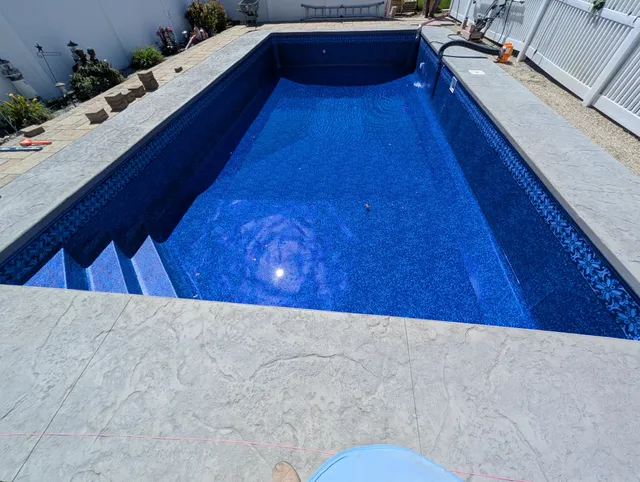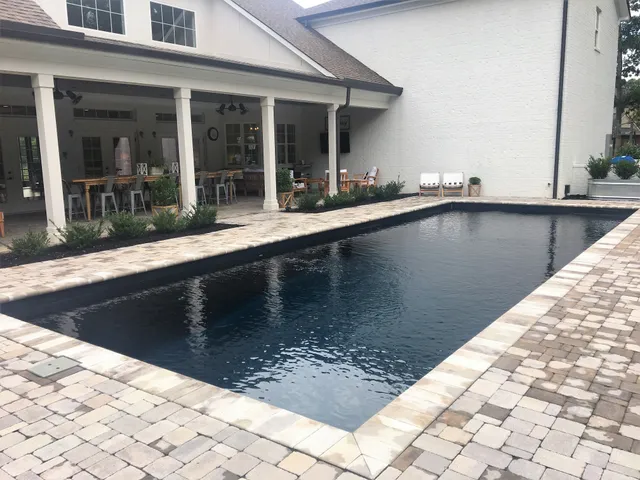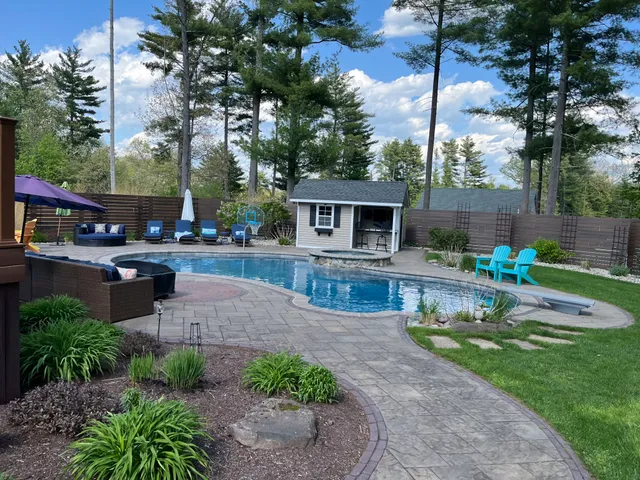
Backyard pools are common in the suburbs around Springfield, in Longmeadow, East Longmeadow, Wilbraham, Hampden, Agawam and Southwick, and around second homes in the Berkshires. The season is short and the winters are hard, so the two busiest jobs for a pool service are opening and closing, with weekly care in between for owners who would rather not test water themselves.
Opening a pool after a valley winter: Memorial Day timing
Pool season here runs roughly from Memorial Day to Labor Day. Most owners in the valley want the pool open for the holiday weekend, which means every service in the area is booked solid in the second half of May. In the Berkshires and on the hilltown plateau, cold nights linger longer, so some owners open a week or two later.
A full opening usually covers:
- Removing, cleaning and storing the winter cover.
- Reconnecting the pump, filter and any heater, and removing winter plugs.
- Topping up the water.
- Starting the filter, shocking and balancing the chemistry.
- Checking for liner tears, cracked skimmers and pump leaks.
Book the opening in March or April to get your date. Ask what is included, what the service charges for a green pool that needs several visits to clear, and whether chemicals are in the price.
Above-ground pools: no registration, but still a permit
Massachusetts lists above-ground pools among the jobs that need no Home Improvement Contractor registration, on the state's HIC homeowner resources page. That does not mean no paperwork. Towns generally require a building permit to install a pool, above-ground or in-ground, and their zoning sets setbacks from property lines and rules for the barrier around it.
If you are putting in a new pool, ask the installer:
- Who applies for the building permit and the wiring permit?
- What fence or barrier will the inspector require, and is it in the price?
- How far from the house, the septic and the property line must it be?
In Pittsfield, permits of every kind, including electrical, are filed online. In other towns, ask the building department before you buy a pool kit.
Digging for an in-ground pool, or even leveling the ground and trenching power for an above-ground one, is excavation. The installer has to log the job with Dig Safe at 811 well before the machine arrives, after outlining the area in white. Rural owners should also show the crew where the septic tank and its field lie, since no utility marks those.
Bonding and the electrician behind every pump
The service company cleans the water and runs the equipment. The wiring to that equipment is a different trade. Pumps, heaters, lights and the bonding grid that ties metal parts together so stray voltage cannot shock a swimmer are all electrical work, and in Massachusetts electrical work requires a licensed electrician and a wiring permit. You can confirm the license on eLIPSE.
That matters when:
- A pump fails and the replacement draws more power or needs a new circuit.
- You add a heater, a heat pump or lights.
- An older pool has no visible bonding, or the bonding wire has been cut during landscaping.
Anything that changes the wiring belongs to the electrician, even when the pool service supplies the equipment. If a pool service offers to "rewire the timer" or run a new line to the pump, ask for the license number.
Filling or topping up from a private well
In Belchertown, Granby, Amherst's outer roads and most of the Berkshires, the house runs on a private well. Filling a pool from it can pump a low-yield well dry, overheat the pump and stir up sediment that stains the water. Topping up after a heavy splash week is usually fine; a full fill is another matter.
Many owners on wells have water hauled in for the first fill. Ask the pool service whether they can arrange a water delivery, what it costs, and how they will balance well water, which can carry iron or minerals that stain a liner. A service that works rural towns will know which water haulers serve your area.
Closing before the first freeze in the hill towns
Closing is the job that protects the pool through winter. The service lowers the water, blows out the lines, plugs the returns and skimmers, adds winter chemicals, removes and stores the ladder and pump where needed, and puts on the cover. A line left with water in it can crack in the first hard freeze, and in the hill towns that can come early in autumn.
Ask the service when they close pools in your town, and whether the cover is a mesh safety cover anchored to the deck or a solid cover held with water bags. Safety covers cost more and keep children and animals out; solid covers keep more debris out. With woods close to most yards, closing before the leaves fall saves the cover from a heavy, sodden load.
Hot tubs at ski houses near Jiminy Peak
Pool services in the Berkshires often look after hot tubs too, and around Jiminy Peak in Hancock and the ski and lake houses of Becket, Otis and Peru, a hot tub may be the only water feature on the property. Unlike a pool, it runs all winter, which brings its own problems in a house that sits empty between ski weekends.
If you hire someone to care for a hot tub at a seasonal house, settle:
- Visit frequency. Water chemistry drifts quickly in a hot tub; weekly is common for a rental, less for a house used only by the owner.
- Freeze protection. What happens if the power fails or the heater trips in January. A hot tub that freezes can crack pipes and the shell.
- Draining and refilling. How often the water is changed, and where it is drained so it does not ice a driveway or flood a septic field.
- Cover care. Heavy snow on a hot tub cover can break it. Ask whether the visit includes clearing it.
As with a pool, the hot tub's dedicated circuit and disconnect are licensed electrical work. If the tub is new, ask who pulled the wiring permit.
Weekly service at $250 to $510: comparing contracts
The Western Massachusetts calculator puts a typical pool service job at about $250 to $510, and the pool service cost estimate for this market lets you price an opening, a closing or a season. When you compare companies, ask:
- What each weekly visit includes: skimming, vacuuming, brushing, testing, chemicals, filter cleaning.
- Whether chemicals are in the price or billed separately.
- What happens if the pool turns green between visits.
- How repairs are quoted and approved.
For a second home in Lenox, Lee or Great Barrington, ask whether the service will report on the pool's condition after each visit, since nobody may see it for a week at a time.