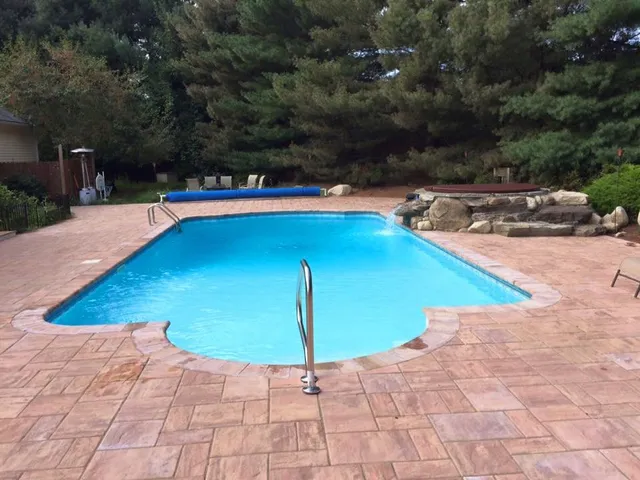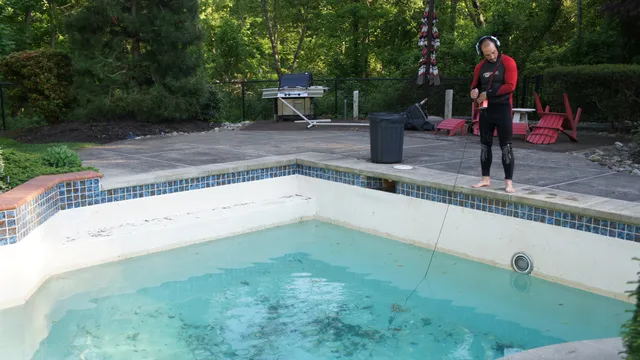
Rhode Island's pool season is short and crowded. Most backyard pools in Cranston, Warwick, Smithfield and Cumberland open in late spring and close in the fall, and the pool companies that service them do most of a year's work in a handful of months. Shore houses in Westerly, Narragansett and Portsmouth add rental schedules to the calendar. If you want a reliable service, the work of hiring one starts in winter.
No license to clean, a registration to install
Routine pool service, which means skimming, brushing, vacuuming, emptying baskets, testing and balancing water, needs no state license in Rhode Island. Building a pool is different. The state's contractor law names "swimming pool installers, both above ground and in ground" on its list of trades needing their own registration (RIGL 5-65-3); the only installers excused are those working on a registered contractor's payroll. If a company that cleans your pool also offers to replace a liner, rebuild a deck around the pool or install a new one, check that it is registered on the CRLB contractor search.
Pumps, heaters, lighting and salt systems bring in the licensed trades. Gas lines to a heater, electrical circuits to a pump and bonding around a pool are licensed plumbing, gas and electrical work. Ask who does those parts, and check the license on the DLT license search.
What a spring opening should include
An opening is more than pulling off the cover. A complete opening usually covers:
- removing, cleaning and storing the winter cover;
- removing winter plugs and reinstalling ladders, rails and fittings;
- starting the pump and filter, checking for leaks, and cleaning or backwashing the filter;
- adding water to the right level;
- testing and balancing the water, including a first shock;
- a check of the heater, if there is one.
Ask the company to list what it includes, and what it charges for anything extra, such as a cover that needs replacing or a filter that needs new media. Ask also about a follow-up visit a few days later, since water chemistry after opening often needs a second adjustment.
Closing before a freeze
Closing a pool properly protects it from freeze damage over a New England winter. The water in pipes, pumps, filters and heaters has to come out or be protected, the water level is lowered to the depth the cover and skimmer need, winter chemicals are added, and a cover goes on. Skipping steps can mean cracked pipes or a ruined pump in spring.
Ask how the company winterizes the lines, whether it blows them out and plugs them, and what it uses in them. Book closing early. A first hard frost in a western town like Glocester or Foster can arrive well before the coast's.
Weekly service and the summer rental pool
For a weekly maintenance contract, agree in writing on:
- the day of the week and what each visit includes;
- whether chemicals are included in the price or billed separately;
- what happens if the water turns green between visits, and who pays for recovery;
- how the company reports problems, such as a leak or a failing pump;
- the access arrangement for the gate and the equipment.
Owners of rentals in Charlestown, Narragansett and Middletown need a pool that is clean and safe on changeover day, and a pool service that can come on a set day before guests arrive. Ask whether the company works with rental properties, and whether it will report damage or misuse between stays.
Shore pools, salt systems and wells
Salt-chlorine systems are popular and easier on swimmers, but the salt cell needs cleaning and eventual replacement, and salt can be hard on some deck materials and metal fittings. Ask a service company whether it maintains salt systems and what it charges for cell cleaning.
Homes on private wells, common in the western towns and much of South County, fill and top up pools differently. Ask about water delivery for filling, and whether well water's iron or minerals will affect the chemistry.
Liners, leaks and when service becomes construction
Vinyl liners on above-ground and in-ground pools last years, not decades. Sun, chemistry and winter take their toll, and a liner that tears or pulls away from its track is a common spring discovery. A small tear can be patched by a service technician. Replacing the liner means draining the pool, sometimes repairing the floor or walls under it, and fitting a new one, and at that point the company is doing installation work.
Leaks are harder. Water loss beyond normal evaporation can come from the liner, a fitting, the skimmer, or the plumbing between pool and pump. Good companies test before replacing anything. Ask:
- How will you find the leak, and what does leak detection cost?
- If the plumbing under the deck is the cause, who repairs it, and does that need a licensed plumber?
- What warranty comes with a new liner, and does it cover installation?
Safety items to ask about every season
A pool company sees your pool more often than anyone else. Ask it to look at the safety items each visit, or at least at opening: drain covers that meet current standards and are not cracked, gates that close and latch by themselves, a working pool alarm if you have one, and an intact safety cover at closing. A ladder or rail that has worked loose is a quick fix during an opening and a serious injury in July.
A new pool: Dig Safe and the coastal zone
If you are planning a new in-ground pool, the installer will be excavating near buried utilities, and RIGL 39-1.2-5 requires the person digging to notify Dig Safe ahead of time, at least 72 hours excluding weekends and holidays. On a waterfront lot in Barrington, Jamestown or Little Compton, a new pool may also fall within the area regulated by the Coastal Resources Management Council, and the local building official will want any coastal approval before a permit. Pool barriers and fencing are set by local rules; ask your building office what it requires.
Opening fees, packages and choosing a route
The Greater Providence calculator puts a typical spring opening at about $260 to $510; switch to weekly service, closing or a package on the pool service cost estimate for this market. An above-ground pool in a Johnston yard sits at the bottom. A large in-ground pool with a heater and a salt system in East Greenwich sits higher. Many companies discount an opening-and-closing package booked together.
When you compare pool companies, ask how many pools each technician covers in a day, whether the same person comes each week, and how quickly the company responds to a problem between visits. A service with a short route and a clear call-back time is worth more in August than a slightly lower weekly price.