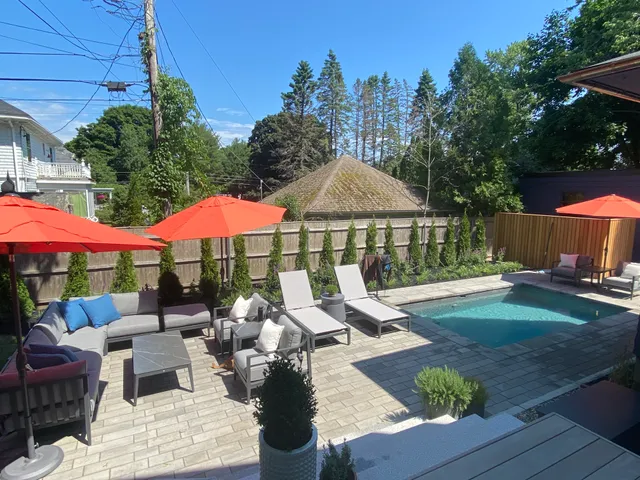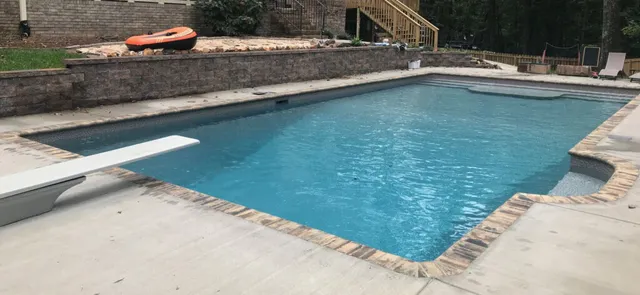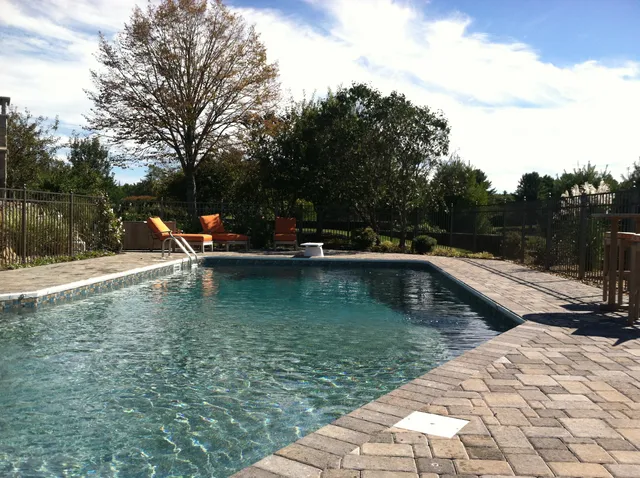
Backyard pools in Maine have a short, intense life each year. They are opened in late spring, used hard through July and August, and closed before the first frost. Most are in the suburbs, in towns like Scarborough, Gorham, Cumberland, Topsham and Hampden, and around Augusta and Auburn. A pool service company here earns its keep at the two ends of the season more than in the middle.
What should a Maine opening and closing include?
Because the season is short, the opening and the closing are the visits that decide whether you get a good summer and an undamaged pool next spring.
An opening usually covers:
- removing, cleaning and storing the winter cover
- reinstalling ladders, rails, the pump and the filter, and starting the system
- checking for frost damage to the plumbing, skimmer and liner
- balancing the water and shocking it
- a follow-up visit if the water is green
A closing usually covers:
- lowering the water level and blowing out the lines so no water sits in pipes that freeze
- adding winter chemicals
- draining and storing the pump, filter and heater parts as the equipment requires
- installing and securing the cover
The closing matters most in Maine. Lines that aren't blown out properly crack over the winter, and you find out in May. Ask the company what it does to protect the plumbing and whether it guarantees the closing against freeze damage.
Openings and closings are booked weeks ahead in most of the state. Pool companies around Kennebunk, Falmouth or Bangor often run a waiting list. Call early in spring for the opening and in midsummer to reserve a closing date.
Which parts of pool work need a licensed tradesperson?
Pool cleaning and routine maintenance need no state license in Maine. But several things around a pool do.
Electrical. Pumps, lighting, timers, bonding of metal parts and any heat pump heater are electrical work. Maine's Electricians' Examining Board licenses electricians as individuals, so a pool company that offers to "run power" for a new pump or heater should be able to tell you which licensed electrician will do it. Look the name up on the state's ALMS search. Water and electricity together are dangerous, and bonding is not a place for shortcuts.
Gas. A propane or natural gas pool heater needs its gas line and connection done by a technician licensed by the Maine Fuel Board. Most pool heaters in rural Maine run on propane, from a tank the gas supplier sets.
Construction. Installing a pool, replacing a liner with structural work, or building the deck around it is construction rather than service. If that kind of job costs more than $3,000, Maine's contracts Act (10 M.R.S. §1487) calls for a written contract with both signatures, a description of the materials, and a first payment of no more than one-third of the price.
Does your town set rules for the fence around the pool?
Possibly. Maine's building code statute allows a town to adopt and enforce the swimming pool fencing standards in Appendix G of the 2nd edition of the 2009 International Residential Code, without amendment (10 M.R.S. §9724). Whether your town has done that, and whether it requires a permit for a pool or its barrier, is a local question.
Ask the town's code enforcement officer before you install a pool or replace the fence around one. Even where no local rule applies, a barrier that keeps young children out is the standard your insurer may expect. A pool service company that notices a broken gate latch or a gap under the fence should tell you.
Should you fill a pool from a private well?
Be careful. Many Maine homes outside the water districts are on private wells, and filling a pool can draw tens of thousands of gallons in a short time, more than many wells can supply quickly. In a dry year the risk is higher; the National Weather Service in Gray publishes a drought information statement for Maine when conditions call for it.
Options to discuss with the pool company:
- Have water trucked in for the initial fill or a big refill.
- Fill slowly over several days to let the well recover.
- Find out your well's yield before you try a large fill.
Well water can also be high in iron or manganese, which stains a pool and makes balancing harder. Ask the company how they treat it.
How much does running a heater add?
A pool heater stretches Maine's short season but costs money to run. Heat pump pool heaters work best in warm weather, and they draw electricity at your home rate. Efficiency Maine's heat pump page uses electricity at 26 cents a kilowatt-hour and propane at $3.20 a gallon in its home heating assumptions, which gives a rough sense of the two fuels' relative cost. A solar cover holds heat far more cheaply than either, and a pool company can tell you how much it would help.
How can you tell whether weekly service is being done well?
The middle of the season is when you see the company least, so it helps to know what good weekly service looks like. Ask for a log, on paper by the equipment or in a text after each visit, that shows:
- the date and time of the visit
- the readings taken, such as chlorine, pH and alkalinity
- what chemicals were added and how much
- whether the filter was backwashed or cleaned
- anything noticed: a leak at a fitting, a noisy pump, a torn liner, a loose ladder
A log lets you spot a pattern, such as the chlorine always running low after weekends with guests, and it is the first thing to check if the water clouds over. It also helps a new company if you switch partway through a summer.
Watch for skipped visits. A short Maine season leaves little room for a pool to sit untended for two weeks in July. Ask what the company does when it rains on your service day, and whether a missed visit is made up or credited.
What should a pool service contract cover?
The Maine calculator default for a typical pool service visit is about $260 to $530; the Maine pool service cost estimate lays out the assumptions. Openings and closings are often priced separately from weekly service.
A good written agreement says:
- what each routine visit includes, such as skimming, vacuuming, brushing and testing
- whether chemicals are included or billed separately
- the opening and closing dates, and what happens if weather delays them
- what the company will do, and charge, if the water turns green
- who is responsible for equipment repairs, and who does any electrical or gas work
In towns like York and Wells, many pools belong to summer homes. If you're away, ask for a short report and photos after each visit.