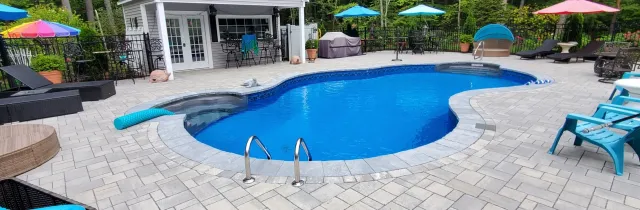
The swimming season in New Hampshire is short: roughly Memorial Day to Labor Day, a little longer for a heated pool. Most pools are in the southern tier, above-ground and vinyl inground pools in the backyards of Hudson, Litchfield, Pelham and Londonderry, with more around Bow, Stratham and Keene. Because the season is short, nearly every pool owner hires for the same few weeks: opening in May and closing in September. The rest of the summer, some owners maintain the pool themselves and some pay for weekly service.
Openings in May, closings in September
Pool companies in New Hampshire do most of their year's openings in a few weeks before Memorial Day and most closings in the weeks after Labor Day. If you want a particular date, book early in spring.
An opening usually means removing and cleaning the winter cover, reconnecting the pump, filter and heater, refilling to the right level, starting the system and balancing the water. A closing reverses it: cleaning, lowering the water, blowing out the lines and adding antifreeze where needed, winterizing the pump, filter and heater, adding winter chemicals and installing the cover.
Ask each company exactly what its opening and closing include, which chemicals are in the price, and what parts or repairs are billed extra. A cheap opening that leaves you to balance the water yourself is not the same service as one that returns to check it a week later.
Closing for a New Hampshire winter
The closing is the more important visit. Water left in pool plumbing freezes and cracks pipes, skimmers and equipment. That damage shows up in May, when the pool will not hold water or the pump will not prime.
Ask the service:
- How do you clear the lines, with a blower or a vacuum, and do you plug them afterward?
- Is antifreeze added to the lines, and is it the kind made for pools?
- Will you drain and store the pump, filter and heater, or winterize them in place?
- What kind of cover do you install, and how is it secured against wind and snow load?
- If the cover fails or the pool is green in spring, what do you charge to fix it?
A good closing in Windham or Hooksett and a good one in a colder spot in Swanzey are not quite the same job. Ask the company how late in the fall they close in your area.
Heaters, pumps and bonding: where a licensed electrician comes in
New Hampshire does not license pool service. It does license the trades a pool depends on. The plumbing for installing and servicing a swimming pool is exempt from the plumbing license, as long as the work meets the code (RSA 153:36). Electrical work is different: wiring a pump, a heater, pool lighting or the bonding that ties the pool's metal parts together must be done by a licensed electrician, since the homeowner exemption in RSA 319-C:15 covers only the owner working on their own home.
Electricity and water together are dangerous. If a pool company proposes a new pump, a heater or lights, ask who will do the wiring and look that electrician up on the OPLC verification page. A gas or propane heater also needs a licensed gas fitter for the gas line.
Pool permits and Manchester's question
A new pool, or a major change to one, usually needs a permit. Manchester's Building FAQ lists "What do I need to get a pool permit?" among its standard questions, and its fee schedule charges pools at 1% of their cost plus the $25 application fee.
The state building code, under RSA 155-A:1, adopts the 2024 International Swimming Pool and Spa Code, which covers pool barriers, gates and safety covers. If you are installing a pool, a hot tub or a new fence around one, ask the installer how they will meet the barrier requirements and who will arrange the inspection. Digging an inground pool also requires a Dig Safe call before excavation.
Filling a pool from a private well
Many pool owners outside the city water systems fill from a private well. A well may not be able to supply the thousands of gallons a pool needs without running low, and some well water carries iron or other minerals that stain a pool or turn the water a color.
Ask the pool company whether it recommends trucking water in for the first fill, and whether it tests and treats well water before balancing the pool. Ask what to watch for if you top up from the well during a dry summer.
Above-ground pools: liners, walls and frost
Above-ground pools are common across the southern tier, and they wear in ways an inground pool does not. Ice and snow sit on the cover all winter, and a cover that collects meltwater can stretch and pull the top rail. Frost moves the ground under the wall, and a pool that was level in June can settle unevenly over a few winters. Vinyl liners fade, shrink and tear with age.
Ask a service company whether it opens and closes above-ground pools, since some focus on inground, and whether it can replace a liner, repair a wall or re-level a pool. A liner replacement is a bigger job than an opening, and it is best done early in the season so the pool is not empty in July. Ask how they keep a winter cover from filling with water: an air pillow under the cover and a cover pump are common answers.
Hot tubs and spas through the winter
Many New Hampshire owners keep a hot tub running all winter, when it gets the most use. A tub left on in January depends on its heater and pump; if power fails for a day in a cold snap, the water and plumbing can freeze. Ask a service company whether it maintains spas in winter, what it does if a tub freezes, and whether it can drain and winterize a tub you will not use.
New hot tubs need a dedicated circuit and a disconnect, wired by a licensed electrician, and may need a permit and a barrier or a locking cover under the code your town enforces.
Weekly maintenance and pricing an opening
Opening an inground pool runs about $240 to $480 in the New Hampshire pool service cost estimate. A closing costs about the same, and the calculator also prices weekly maintenance, above-ground pools and green-to-clean recovery.
Weekly service usually includes skimming, brushing, vacuuming, emptying baskets, checking and balancing chemicals and checking the equipment. Ask what is included, whether chemicals are in the weekly price, how often the filter is cleaned, and whether you get a written log of water readings after each visit. In a short season, a company that misses two weeks can cost you a third of the summer, so ask what happens when the technician is out or the weather is bad.