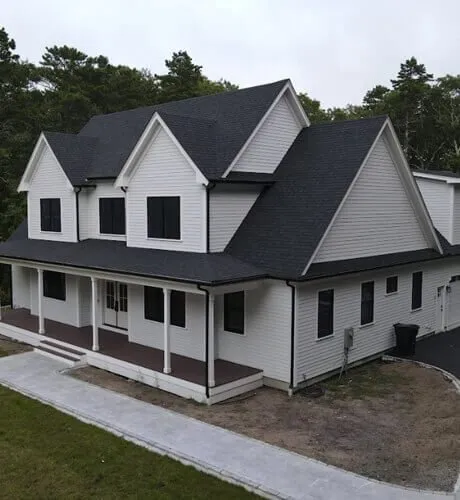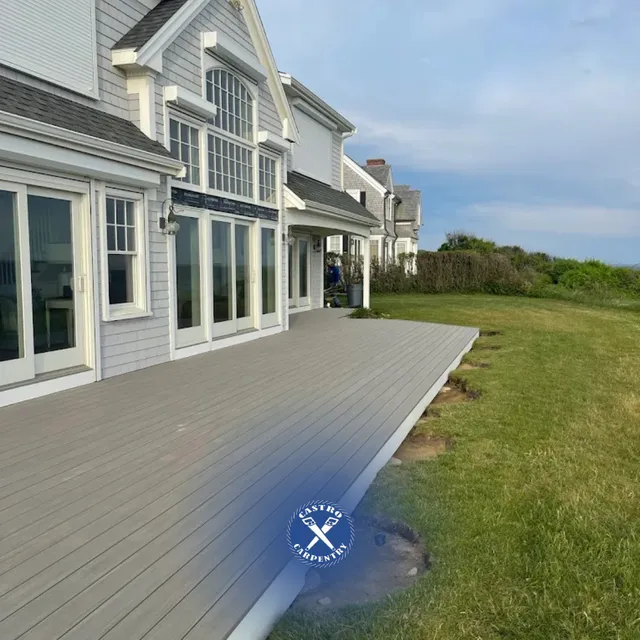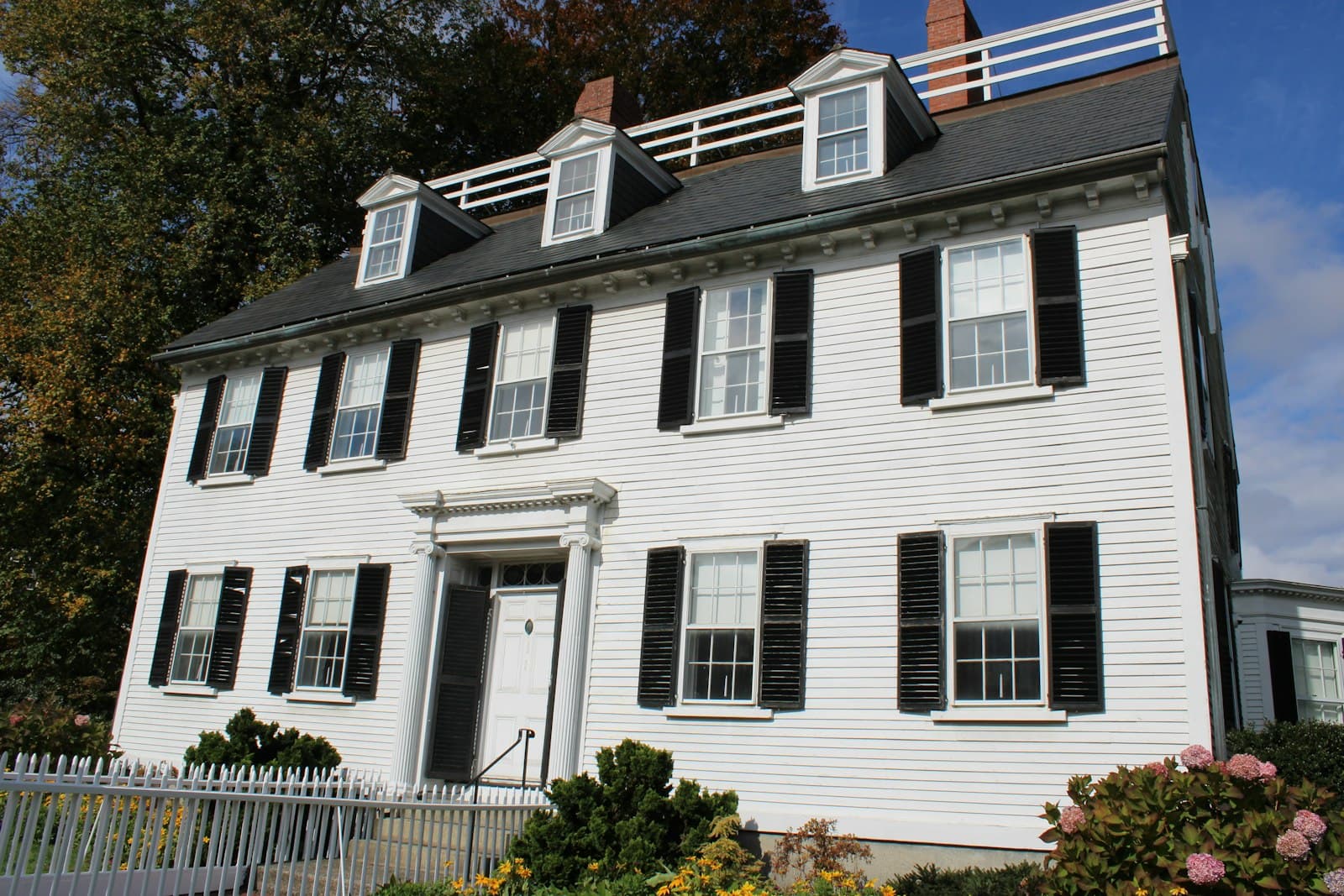
The outside of a Cape house lives in a hard climate. Wind off the Sound or Cape Cod Bay drives rain sideways into joints, salt settles on every surface, and summer sun bakes south walls. At the same time, the look of an exterior is something the Cape cares about, enough that a long stretch of the bay side is a regional historic district. That combination shapes what a siding, window or gutter contractor should be ready to discuss.
Cedar shingles or fiber-cement near the ocean?
White-cedar shingles are the Cape's signature. Left unpainted, they weather to a silver gray; the Boston Globe's guide for newcomers notes that painted surfaces hold up poorly in salt wind and that moss and algae grow on shaded shingles. Cedar is light, easy to repair one shingle at a time and suits older houses in Sandwich, Yarmouth Port and Dennis.
Common alternatives:
- Pre-dipped or factory-stained cedar looks like natural shingle but arrives with its finish already on, which helps it weather evenly.
- Fiber-cement shingles or panels resist rot and insects and hold paint longer than wood, at the cost of weight, cutting dust and a different look up close.
- Composite and PVC trim is common at corners, rakes and window casings where wood rots first.
Ask each contractor what they would install on your wall given its exposure and shade, how they handle the rainscreen or air gap behind it, and what fasteners they use. Stainless nails cost more and are worth it near salt water. Galvanized nails of the wrong grade bleed rust through new shingles in a few seasons.
Do new windows on Route 6A need Old King's Highway approval?
In most cases, if they can be seen from the road. Along the Old King's Highway, the bay-side district that follows Route 6A through towns such as Sandwich, Barnstable, Yarmouth and Brewster, each town's committee issues a Certificate of Appropriateness for exterior changes visible from a public way. Windows come up often: a change in size, material, grille pattern or trim can draw comments or conditions.
Brewster's committee page gives a sense of how detailed the review is: applications are judged on general design, the proportion of building elements, texture, materials and color. Expect the same questions about a window in Barnstable or Yarmouth.
When you hire:
- Ask how many committee applications the contractor has prepared, and whether they bring samples and cut sheets.
- Ask who attends the hearing.
- Make approval a condition of the start date in your contract.
How should gutters be handled on a shingled Cape house?
Many older Cape houses were built without gutters, and many owners add them later. Done well, gutters keep roof water from splashing back onto the bottom courses of shingle and from pooling against the foundation. Done badly, they trap water behind the fascia and rot the roof edge.
What to ask a gutter installer:
- Material. Aluminum is common and inexpensive. Copper costs much more but lasts and suits some historic houses; in the Old King's Highway district, ask whether the committee has a view.
- Size and pitch. Large roofs and steep pitches need larger gutters and downspouts. The gutters should slope steadily toward the outlets.
- Where the water goes. Downspouts should discharge well away from the foundation and never onto the septic leach field. On sandy Cape lots a dry well or splash block often works; ask which the installer recommends for your yard.
- Leaf protection. Pine needles and oak leaves are a constant on wooded lots in Mashpee and Brewster. Ask about guards and how often the gutters will still need cleaning.
- Fascia condition. Rotten fascia behind old gutters is common. Ask for a per-foot price to replace it so the gutters go up on sound wood.
On an empty house, a clogged gutter can overflow all winter before anyone sees it. Put a fall cleaning on the calendar.
Do you need lead-safe work on a pre-1978 house?
If the house was built before 1978 and the job disturbs painted surfaces, the work must be done by a contractor licensed for lead-safe renovation. Pulling old windows, stripping painted trim or tearing off painted clapboards are exactly the kind of jobs the rule covers. On the Cape, that includes most of the antique houses on Route 6A and a large share of the postwar housing in Bourne, Falmouth and Harwich.
Ask for the license, who will supervise containment, how debris is bagged and removed, and how the yard and garden beds are protected from paint chips.
How do you check a siding contractor's registration?
Siding, window and gutter work on your home falls under the Massachusetts Home Improvement Contractor law, so the contractor needs a current HIC registration. You can search for it on the state Contractor Hub. Where the job opens structure, such as a new window opening or a rotted sill, a holder of a Construction Supervisor License should be on the building permit.
For a job above $1,000, the contract statute wants it all on paper: which siding or window products, at what price, paid how, starting and finishing when, under which permits, plus the contractor's registration number and a cancellation notice. Windows built to your openings are the classic special-order item, so a window contractor may lawfully collect more than a third up front to cover them; ask to see that order itemized.
Why do re-shingling quotes on the Cape vary so much?
On the market's calculator, a typical siding, window or gutter project runs about $3,750 to $10,300; the Cape Cod exterior cost page shows how it is built. A full re-shingle on a two-story house, a whole-house window replacement or work that needs staging on a tall shingle-style house in Chatham runs higher.
Two Cape factors to price in: rot repair behind old shingles, which is hard to estimate until the wall is open, so ask for a unit price; and historic review time, which can push a spring job into summer.
Ask, too, how the crew will protect the house while walls are open. Re-shingling a wall means stripping it to the sheathing, and a sudden storm off the bay can soak an exposed wall in an afternoon. A contractor should strip only what they can cover again the same day, and should wrap and flash each window opening before moving on. On a house in Dennis or Orleans that sits empty during the work, ask for photos of the house wrap and flashing before the new shingles go over them, because once the wall is closed nobody can see whether it was done right.
Questions to put to each bidder
- What siding or window product would you use on my exposure, and why?
- What fasteners and flashing do you use near salt water?
- Have you taken windows or siding through the Old King's Highway committee in my town?
- Is your company licensed for lead-safe work, and which crew member is certified to run containment?
- How do you price rot repair you find after tear-off?
Write the answers into the scope so every quote covers the same job.