Exterior work in Greater Providence starts with a simple question that many homeowners skip: is the house in a local historic district? In most of the market the answer is no, and a siding or window job is a matter of a permit, a registered contractor and the right materials for the weather. In the parts of Providence that sit inside a district, the answer shapes what you are allowed to put on the house before any contractor quotes it.
Is your Providence house inside one of the nine districts?
Providence has nine local historic districts: Armory, Broadway, College Hill, North Elmwood, the Providence Landmarks District, Power-Cooke, South Elmwood, Stimson Avenue and Wanskuck. In each, the Providence Historic District Commission reviews changes that affect a property's exterior or setting, including repairs and replacements, not just additions. A certificate of appropriateness, or a letter saying the work is exempt, has to be in hand before the building permit is issued.
The commission's guidance is specific on exterior cladding:
- vinyl and aluminum siding are "not appropriate" on historic buildings in the districts;
- sandblasting "will not be approved";
- paint colors, light fixtures and door hardware are exempt from review.
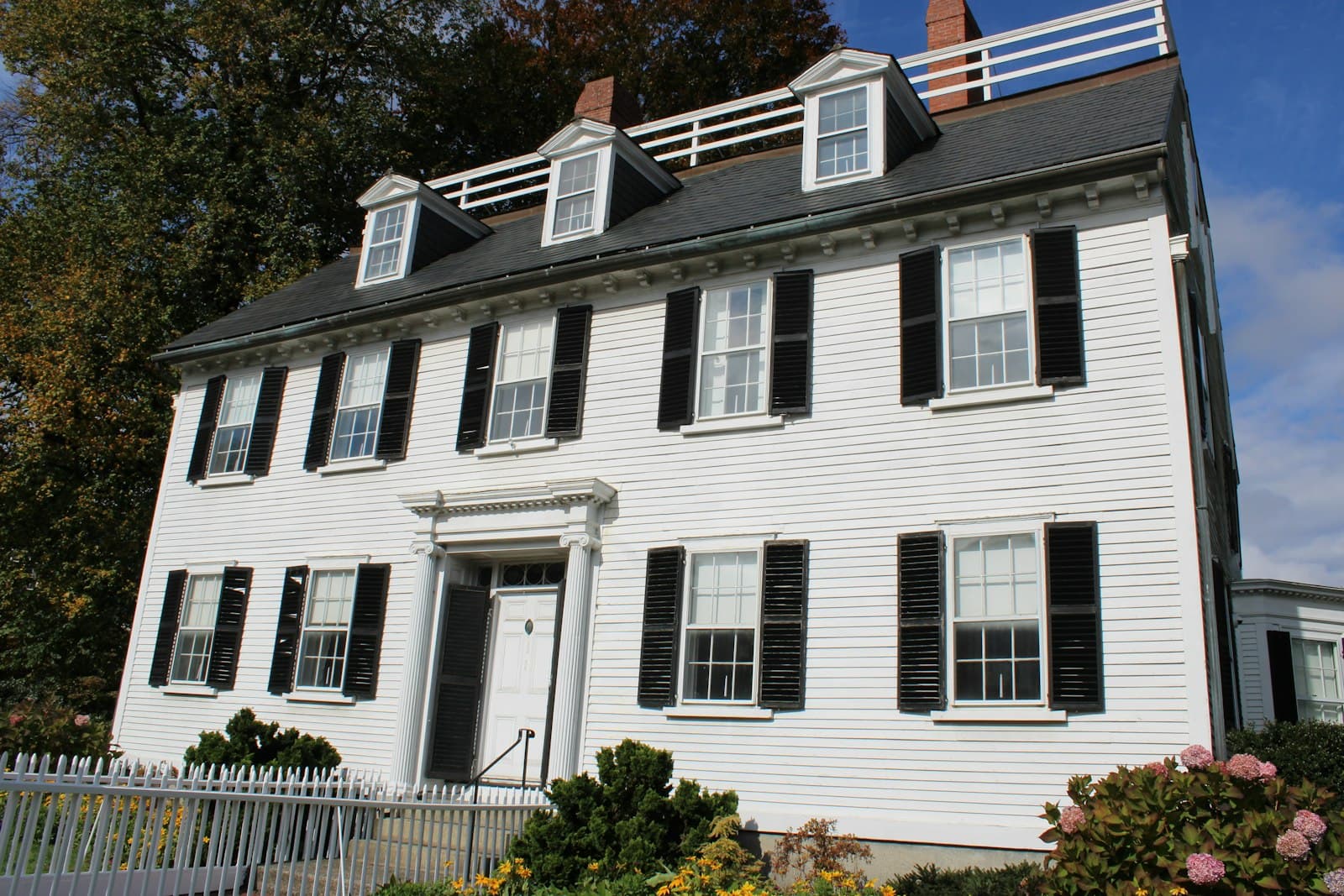
Two popular neighborhoods are worth singling out because people assume otherwise. Federal Hill and Olneyville are not on the commission's list, so their triple-deckers go through ordinary permits. A wood clapboard house on College Hill or in the Armory goes through the commission.
If you are inside a district, hire a contractor who has prepared commission applications before, and ask what they proposed and what was approved. Replacing rotted clapboard with matching wood clapboard is a routine application. Replacing it with vinyl is not.
Newport has its own historic district commission and ordinance. If your house is in one of its districts, check with the city before signing a contract for exterior changes.
Clapboard, shingle and what lies under a 1950s cover-up
Much of the housing in Providence, Pawtucket and Woonsocket was covered with asbestos-cement shingles, aluminum or vinyl in the decades after the war, often over the original clapboard. When you reside, the contractor has to decide whether to strip down to the sheathing or go over what is there. Ask:
- What is on the house now, and how many layers?
- If there are asbestos-cement shingles, how will they be removed and disposed of, and by whom?
- What will go behind the new siding as a water barrier, and how will window and door openings be flashed?
- If the contractor finds rot in the sheathing or sills, what is the price per sheet or per foot to replace it?
Stripping costs more, but it shows you the condition of the wall. Covering over can trap problems. On a house built before the war, open walls also expose old painted wood, which brings in the lead rules below.
Siding crews and their own registration
Rhode Island's contractor law names siding installers among the subcontractor trades that need their own registration unless they work as employees of a registered contractor (RIGL 5-65-3). Window and gutter companies working on a home register in the same way. Look up the company you sign with, and any separate crew it sends, on the CRLB contractor search.
This matters because exterior jobs are often subcontracted. A window company may sell and measure, then send an installer from a different business. Ask who will actually be on the ladder, and get that crew's registration number too.
Lead-safe practices on old trim and window sashes
Window replacement and siding removal on a pre-1978 house disturb painted surfaces more than almost any other job. The EPA's Renovation, Repair and Painting rule requires paid contractors doing that work to be certified and their workers trained in lead-safe practices. Outside, that means plastic sheeting on the ground, no open-flame burning or uncontrolled power sanding, and a cleanup that leaves no paint chips in the soil where children play.
If you own a pre-1978 rental unit, window and siding work also connects to Rhode Island's lead hazard rules for landlords. Talk to the contractor about timing the work between tenants.
Salt spray in Narragansett, wind in Middletown
On the shore, from Westerly and Narragansett to Middletown and Portsmouth, exterior materials face salt spray, wind-driven rain and long stretches of sun. Fasteners corrode, paint fails faster on the weather side, and wood that is not back-primed cups and splits. For a coastal job, ask:
- What fasteners will hold the siding, and are they rated for salt exposure?
- For windows, what is the design pressure rating, and is the glass suited to the exposure?
- For gutters, what metal and what hanger spacing, given ice in winter and wind in storms?
- How will the trim be sealed where it meets the siding?
Cedar shingles weather well near the water and are common in the East Bay. Fiber-cement and composite products also hold up when installed to the manufacturer's coastal instructions. Whatever the material, the details at the openings decide how long it lasts.
Gutters on inland houses
Away from the water, gutter work in Coventry, Burrillville or Johnston is mostly about leaves and ice. Ask about guards if the house sits under trees, downspouts that carry water well away from the foundation, and hangers that can carry the weight of ice in a January thaw-and-freeze. A gutter that pulls off in March is often a hanger problem, not a gutter problem.
Windows and the energy question
New windows are often sold on energy savings. Rhode Island Energy offers a free EnergyWise home energy assessment, described on its rebates page, and air sealing and insulation are usually cheaper per dollar of savings than replacing sound windows. Have the assessment done first. Then replace windows where the sash or frame has failed, not because a salesman measured a draft.
Squares, window counts and tear-off: pricing the outside of the house
The Greater Providence calculator puts a typical window, siding or gutter job at about $3,700 to $10,200; check your scope against the exterior contractor cost estimate for this market. Residing a full house in Warwick, or a commission-approved wood restoration in the Armory district, will run above that range.
Exterior quotes are hard to compare because companies measure differently. One prices siding by the square (100 square feet), another by the wall, another as a lump sum. Ask each for the same things: total squares or window count, what is torn off, what goes behind the new material, how trim and openings are detailed, dumpster and disposal, and the permit. A Cranston colonial priced three ways becomes one comparison once those lines are on the page.
Ask too about the warranty in two parts: the manufacturer's warranty on the product, and the contractor's warranty on the installation. The first is only as good as the second, because most product warranties exclude failures caused by poor installation.