Plumbing work on Cape Cod follows the calendar more than it does anywhere else in Massachusetts. A large share of houses from Bourne to Provincetown stand empty from fall to spring, so the busiest weeks for a plumber are the ones when owners close up and the ones when they come back. In between come the emergencies: a supply line that split in a February cold snap, discovered weeks later by a caretaker in Chatham or a neighbor in Wellfleet.
The other thing that sets the Cape apart is what happens after the water goes down the drain. Barnstable County reports that more than 85% of Cape homes use septic systems rather than a town sewer. That shapes which plumbing jobs need a second contractor and a second permit.
Should an empty Cape house be drained for the winter, and who does it?
If nobody will be in the house between November and April, a drain-down is cheap insurance. The plumber shuts the main, opens every faucet and drains the supply piping, empties the water heater, blows out lines that hold water in low spots, and puts antifreeze rated for potable systems into traps and toilets. Houses with an outdoor shower, common in Truro, Eastham and along the Falmouth shore, need that line drained and its valve left open.
Ask three things before you book:
- Will they tag every closed valve and leave a written list in the house?
- Do they also come back in spring to refill, check for leaks and relight the water heater?
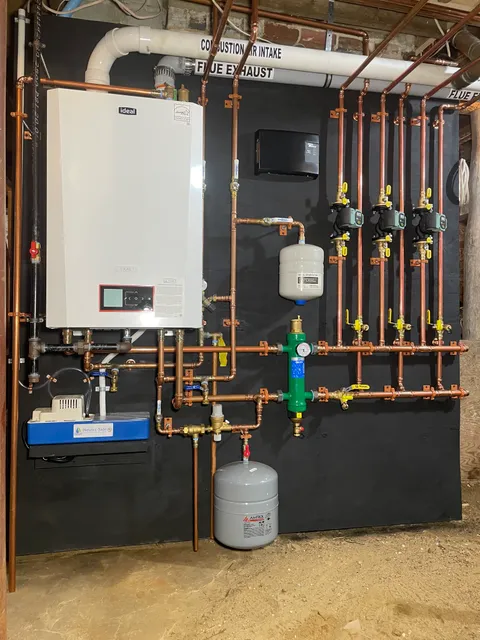
- What happens to a boiler or a hydronic heating loop: is it drained too, or left running on low heat with glycol?
A house left heated instead of drained needs a working low-temperature alarm and someone who can get there. Many owners in Dennis, Harwich and Orleans hire the same plumber every year for both trips, which means the person who closed the house is the person who opens it.
Which plumbing jobs touch the septic system, and which do not?
A plumber's work ends roughly where the building sewer leaves the foundation. The tank, the distribution box and the leach field belong to a septic installer and the town board of health. In practice the two trades meet on three kinds of job:
- Adding a bathroom or bedroom. More fixtures can push the house past what its system was designed for. The board of health decides, and the septic upgrade has to be designed and permitted before the plumber roughs in.
- Replacing a failed system. The installer brings the new tank; the plumber may need to reroute the house drain to meet it.
- Innovative or alternative (I/A) systems. These nitrogen-reducing units often need power and alarms inside the house, and sometimes a pump. The septic designer sets the layout; a plumber and an electrician connect the inside.
If you are paying for septic work, Barnstable County's AquiFund loan program finances repairs, replacements and I/A installs at 4%, or 5% for rentals, seasonal homes or houses being listed, with terms up to 20 years. Plumbing inside the house is generally not part of that loan, so get the two quotes separately.
Sellers face a deadline too. Massachusetts requires a Title 5 inspection within two years before a sale, and a failed system must be fixed within two years of the inspection. A plumber cannot sign that report; a state-approved system inspector does.
Who may run a gas line to a new range or a generator?
Many Cape houses run on propane delivered by truck, and natural gas reaches only part of the region. Either way, piping for a range, a dryer, a tankless heater or a standby generator is gas fitting. Massachusetts licenses gas fitters through the same state board that licenses plumbers, and many plumbers hold both licenses. Do not assume it: ask which license the person doing the pipe work holds.
Gas work needs its own permit from the town, separate from any plumbing or building permit. Barnstable, Falmouth, Sandwich and the other towns each run their own building department and inspector, so the inspection date depends on the town as much as on the contractor.
How do you check the license and the paperwork?
The state licenses plumbers at the journeyman and master levels, and gas fitters on their own track; you can look a name up on eLIPSE before anyone comes to the house. Search by last name, then check that the license type matches the work (plumbing, gas or both) and that it is current.
Then look at who pulls the permit. A licensed plumber pulls a plumbing permit in their own name. If a quote says "permit by owner," ask why. On larger remodeling jobs where a plumber is a subcontractor to a general contractor, the Massachusetts home improvement contract law requires the written contract to say which permits the contractor will obtain, along with a start date, a finish date and a payment schedule.
What does a plumbing call cost here, and what moves the number?
The market's calculator default for a typical plumbing job on Cape Cod is about $260 to $620. The Cape Cod plumbing cost page breaks that down by job type. That range covers a single repair or fixture swap. A water heater, a repiped bathroom or work tied to a septic upgrade sits well above it.
Three things raise a Cape bill:
- Travel and timing. A Hyannis-based shop sent to Provincetown is spending part of your bill on the drive. Ask whether a trip charge applies outside its home towns.
- Damage found late. A freeze break in an empty house in Mashpee or Yarmouth can sit for weeks before anyone notices. The plumbing repair is small next to the drywall and flooring work that follows.
- The spring rush. In May everyone wants the water turned on at once. If you can open the house in April, you are more likely to get a firm date.
A water heater is the other common Cape replacement. If yours is near the end of its life, replace it in the fall or spring rather than waiting for it to fail in an empty house. Ask the plumber whether a tank, a tankless unit or a heat pump water heater suits how the house is used: ask whether Cape Light Compact currently offers anything for a heat pump model, while a tankless gas or propane unit needs a gas fitter and venting.
What should you ask a plumber before hiring?
Before you hire, ask:
- Do you do both fall drain-downs and spring start-ups, and do you keep a record for each house?
- Do you hold a gas fitting license, or will someone else do the gas piping?
- Have you worked alongside septic installers on I/A systems in this town?
- Will you pull the permit, and when can the town inspect?
- Do you charge travel time to the Outer Cape or across the canal?
If you are comparing plumbers, Tavlee lists the plumbers working across the Cape's fifteen towns with the sources behind each profile.