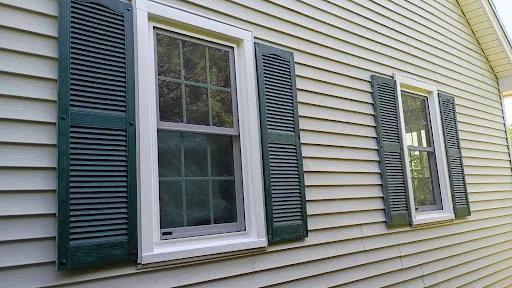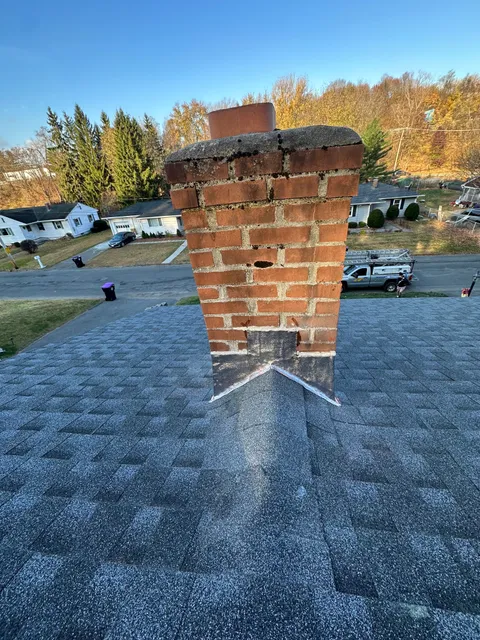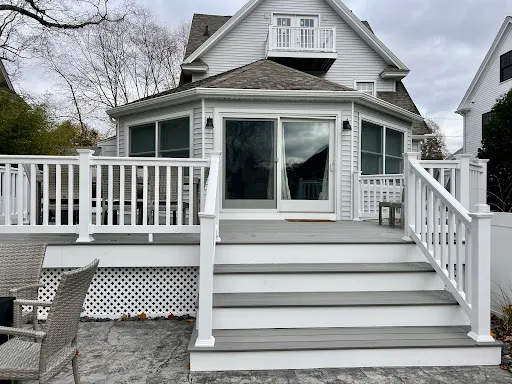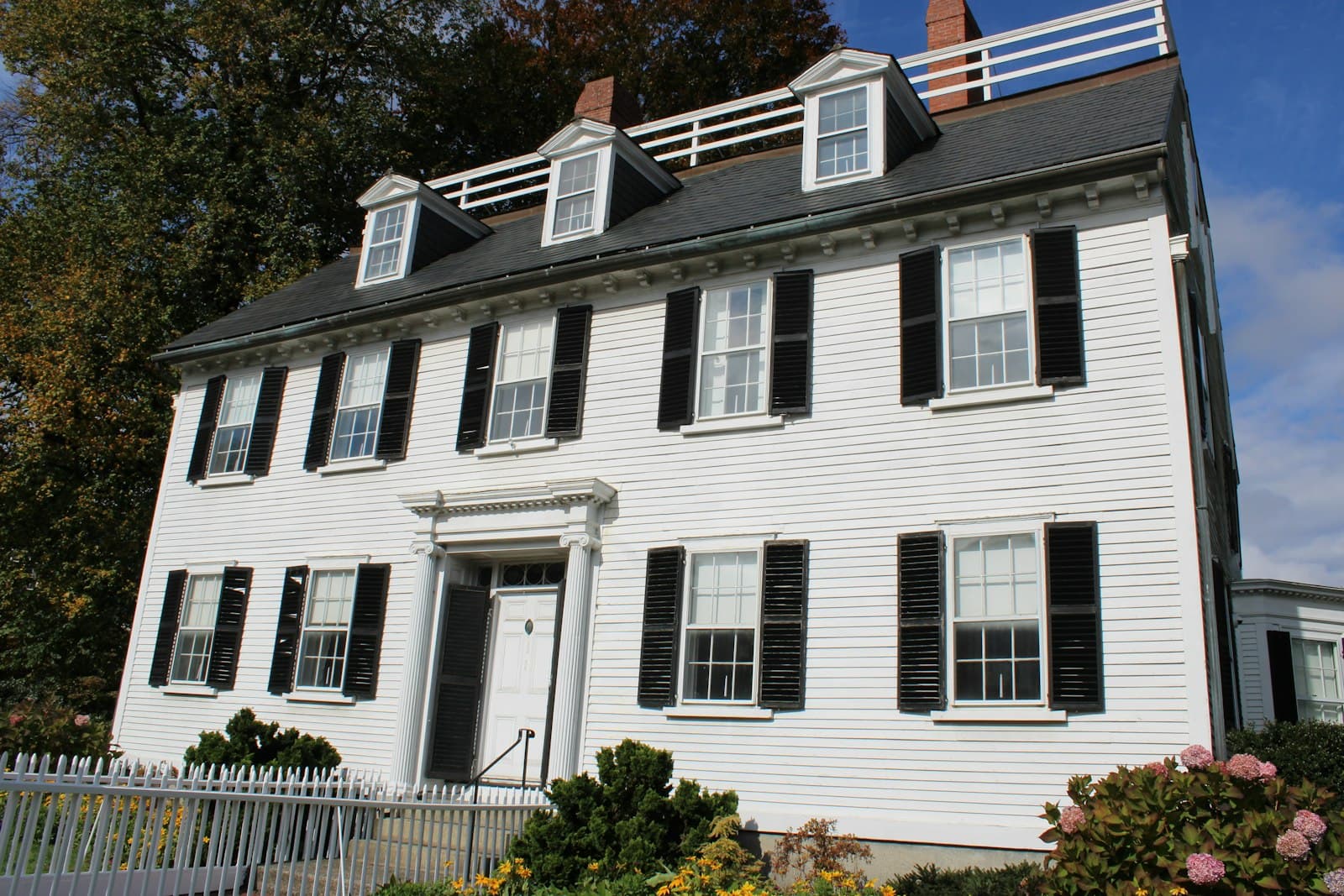
The outside of a house in Western Massachusetts has to survive a lot: valley humidity, hill-town snow, ice at the eaves and a century or more of repainting. Much of it is also old enough to be historic. The contractor who replaces your siding, windows or gutters is changing what neighbors, and sometimes a commission, see every day.
Do I need historical commission approval for new siding in McKnight?
Probably, if the change faces the street. Springfield has six local historic districts, and McKnight, east of downtown, is the second largest: roughly 880 contributing properties, most of them wood-frame Victorians built between about 1870 and 1910, listed on the National Register since 1976. Within a local district, exterior changes go to the Springfield Historical Commission. The city's permitting guide page links the commission's districts-by-street list, its neighborhood guidelines and its FAQ.
What a commission typically cares about on siding and windows:
- Material. Swapping clapboard or shingles for vinyl is the change most likely to be questioned.
- Profile. Clapboard exposure, corner boards and window trim that match the house.
- Windows. Muntin pattern, sash proportions and whether original windows are being removed.
Ask any contractor bidding on a McKnight house how many commission applications they have prepared, and whether they will produce the drawings or samples it needs. Build the hearing schedule into your timeline. A contractor who starts before approval can leave you with a violation and work to undo.
Vinyl over clapboard on a Holyoke or Adams mill-worker house
Away from the historic districts, much of the region's older housing has already been covered once. Mill-worker houses in Holyoke, Chicopee, Adams and North Adams, and many farmhouses in the hill towns, wear aluminum or vinyl over their original clapboard. When it is time to re-side, there are two approaches:
- Over the top. Cheaper, faster, and it hides whatever is underneath, including rot.
- Strip to the sheathing. More expensive, but it lets the crew inspect and repair the wall, add a weather barrier and fix flashing at windows and doors.
On a house more than a century old, ask each bidder to open a test section at a corner and a window before pricing. What they find there usually decides the approach.
Lead paint under the siding
Almost every house built before 1978 has lead paint somewhere on its exterior, and in Western Massachusetts a large share of the stock predates 1940. Stripping siding, removing old window sash or scraping trim releases paint chips and dust into the soil where children play. The state Lead Law holds owners strictly liable when children younger than six live in a house that predates 1978 and its lead hazards go unaddressed. Ask the contractor how they will contain chips, protect the ground with sheeting, and clean up at the end of each day.
Replacement windows: what Mass Save's page does and doesn't promise
Mass Save's insulation and windows page describes high-efficiency windows as a way to cut energy costs and says insulation with air sealing can save up to 15% on heating and cooling. It does not publish a window rebate amount on that page. If a salesperson promises a specific Mass Save window rebate, ask to see it in writing from the program. Residents of Holyoke, Westfield, Chicopee and South Hadley buy power from their own municipal utilities and should check those programs instead.
In an old, leaky house, windows are rarely the cheapest efficiency win. Attic insulation and air sealing usually come first. That does not mean old windows should stay, only that you should replace them for the right reasons: rot, failed sash, operation or noise.
Gutters in snow country: guards, cables and downspouts
In the Pioneer Valley a gutter's main job is moving rain. In the Berkshires and on the hilltown plateau, it also has to survive snow sliding off the roof and ice building at the eaves. A gutter installer working in Becket, Savoy or Plainfield should talk about:
- Hanger spacing and type, since heavy ice pulls gutters off fascia.
- Whether a gutter belongs on a roof edge where snow slides off at all.
- Where downspouts discharge, so meltwater doesn't refreeze on a walkway or run into a fieldstone cellar.
Heated cables can keep a downspout open but do not fix an ice dam; that is an attic problem.
Working three stories up on a Springfield or Holyoke three-decker
Three- and four-unit buildings, the city three-deckers among them, account for somewhere between 7% and 10% of housing units in Hampden and Berkshire counties, by the federal housing survey's count. Re-siding or re-windowing one is a different job from a ranch in Ludlow. Every elevation is three full stories, porches stack on the front or back, and the lot lines are tight enough that a lift may not fit between houses.
Before you compare bids on a three-decker, ask each contractor:
- Staging or lift? Pipe staging, pump jacks and a boom lift all show up in quotes, at very different prices. Ask what they plan and whether it is in the number.
- The neighbor's side. If staging has to stand on the next lot, who asks permission, and what happens if it is refused?
- Porch connections. Siding and window trim meet the porch roofs and ledgers at every floor. Ask how flashing will be handled there, because that is where water gets in.
- Tenants. Windows in occupied units need access to each apartment. Ask how many days each unit will be disturbed and how the crew will coordinate entry.
A contractor who works three-deckers regularly will answer these without hesitating. One who mainly does single-family houses may underprice the access and come back for more once the staging is up.
Registration, the contract and the deposit
New siding, windows or doors for an owner who lives in a house of up to four units is residential contracting under the state's home improvement law, so the company needs a Home Improvement Contractor registration, which you can look up on the Contractor Hub. The state also treats exterior painting as HIC work. Over $1,000, the agreement must be in writing per c.142A §2, naming the dates, the payment plan and the registration number. Custom-sized windows are special-order goods, which is why a window contract can lawfully ask for more than a third up front; stock siding cannot.
Weighing quotes between $3,700 and $10,100
The Western Massachusetts calculator puts a typical exterior job at about $3,700 to $10,100, and the exterior cost estimate for this market tunes it to your house. On window bids, compare the frame material, the glass package, whether the units are full-frame or inserts, and who handles interior trim. On siding, compare the material grade, the weather barrier, the trim wrap and the disposal of the old cladding. A Westfield or Greenfield crew working nearby is usually priced tighter than one traveling to Great Barrington, so ask how travel is billed.