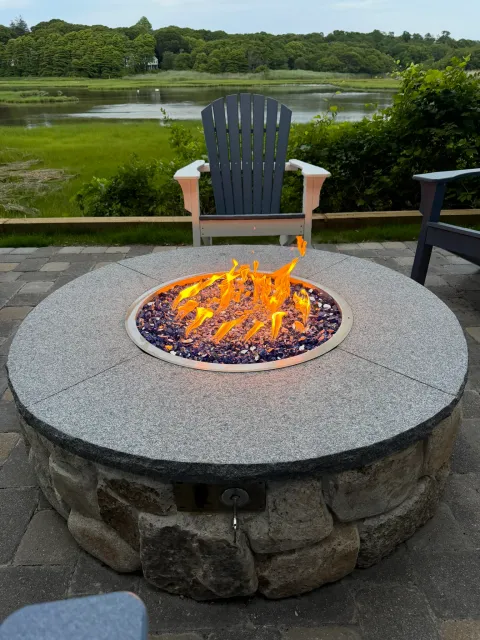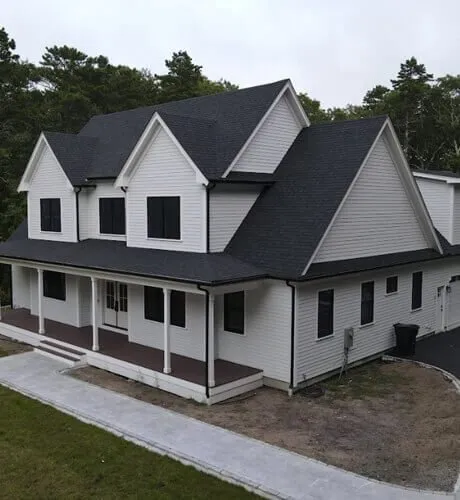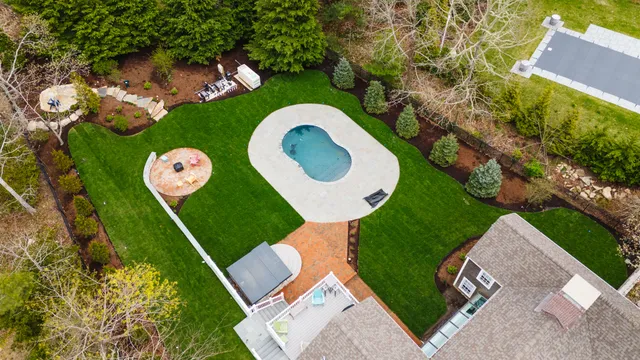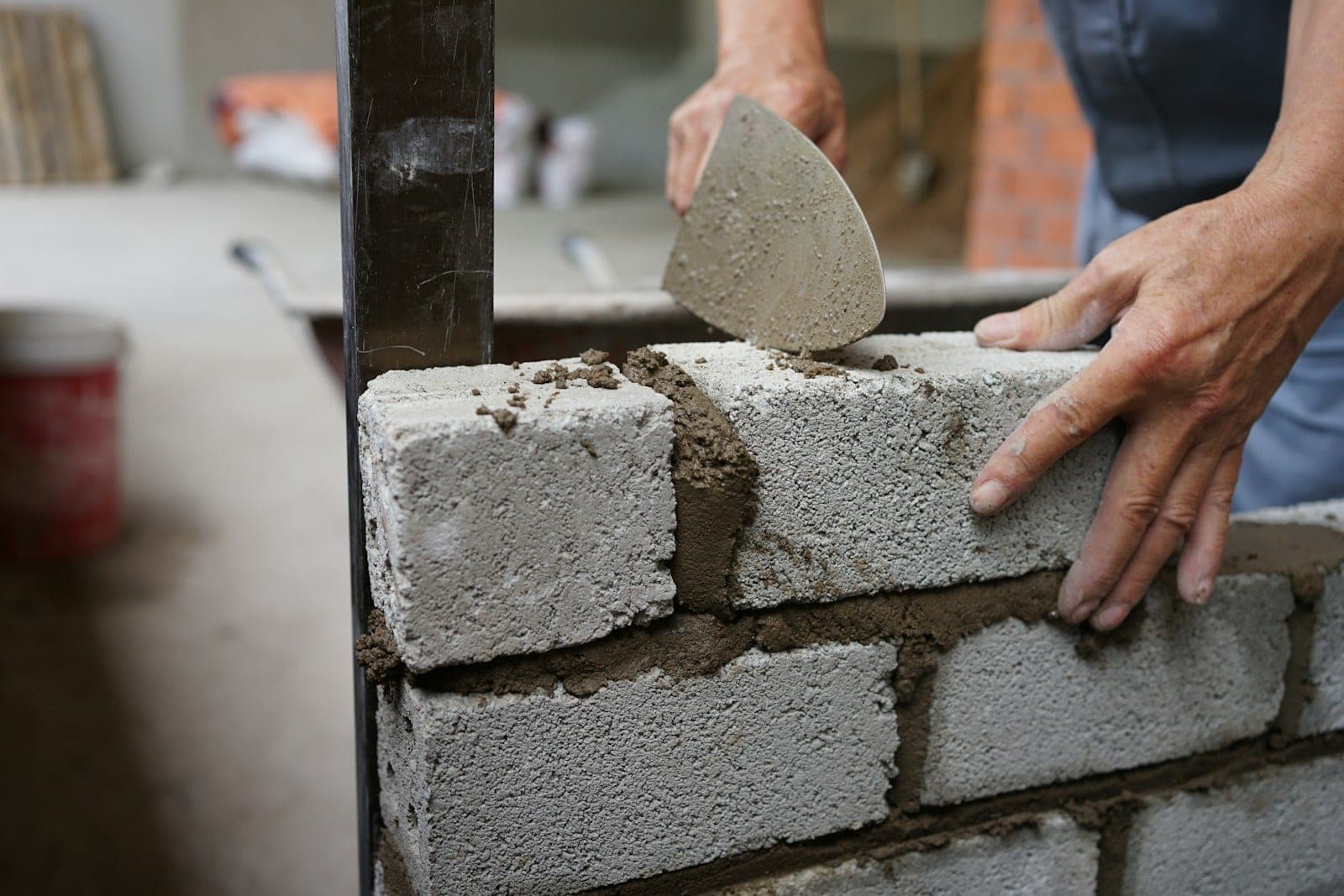
Masonry on Cape Cod covers a mix of jobs: brick chimneys on antique houses along Route 6A, fieldstone walls lining old roads in Sandwich and Barnstable, bluestone and paver patios behind summer houses, and the foundations under them all. The work is hard on materials here. Salt carried on the wind settles into joints, winter storms drive rain into old brick, and repeated freezing and thawing loosens what moisture reaches.
Does chimney repair need a permit?
Often it does, and the line falls between repair and reconstruction. Replacing a few bricks, resetting a cap or sealing a crown may be treated as maintenance. Rebuilding a chimney above the roofline, relining a flue, or rebuilding a firebox is construction your town's building department will usually permit and inspect. Barnstable, Yarmouth, Orleans and the other towns each run their own building office, so call before the mason starts.
Rebuilding a chimney is structural work. Massachusetts requires structural work on one- and two-family houses to be supervised by a person holding a Construction Supervisor License, whose name goes on the permit, under the state's rule for construction supervisors. The same applies to foundation repair. Ask the mason whose license will be on the permit.
Flashing where the chimney meets the roof is where many chimney leaks begin. Agree in writing whether the mason or a roofer handles it.
Do you need Old King's Highway approval for a stone wall on 6A?
Inside the Old King's Highway district, anything a passer-by on the road would see, whether wall, steps, walk or chimney, usually goes before the committee. The district runs along Route 6A on the bay side, and each member town's committee issues certificates for exterior changes; Brewster's committee page lists fences among the things it reviews and says its members look at materials, texture and site layout. A new fieldstone wall along the road in Dennis or Brewster, or a rebuilt chimney with different brick, is the kind of change the committees review. Choice of stone, mortar color and joint style can all come up.
Ask whether the mason has worked in the district, whether they will supply samples and photos for the application, and make the certificate a condition of starting.
How does salt air affect mortar and brick?
It speeds wear that happens everywhere. Salt deposits pull moisture into masonry, and salt crystals forming inside the surface can make brick and mortar flake. Chimneys and walls facing open water in Chatham, Harwich, Falmouth and Provincetown take the most salt. The Boston Globe's guide for new Cape residents makes a similar point about painted surfaces, which hold up poorly in salt wind.
What to discuss with a mason:
- Mortar type. Old brick needs a softer, lime-rich mortar; modern hard mortar can crack old brick when the two expand differently.
- Crowns and caps. A sound chimney crown and cap keep water out of the flue and the brick.
- Drainage. Patios and walls need slope and drainage so water does not sit in joints.
Is your mason HIC-registered?
Masonry on your home is home improvement work, so the contractor needs an HIC registration; search it on the Contractor Hub before you sign. A registration that matches the contract name and address also qualifies you for the state's arbitration program and Guaranty Fund if a registered contractor does not perform.
Past $1,000, the contract law wants a signed agreement naming the stone or brick, the mortar, the price and its installments, a start and finish date, the mason's registration number and the permits, along with your cancellation notice. A mason may ask for a deposit larger than a third only to buy material set aside for your job, such as a particular quarry's stone.
What should you know before a patio or walkway?
Patios, walks and retaining walls start with digging, which requires notifying Dig Safe at least 72 business hours ahead, with the area first marked in white. Dig Safe marks utility lines but not private ones, and on the Cape the most important private infrastructure is the septic system. A patio over a leach field, or a wall across the line to the tank, can damage the system and block access for pumping or inspection. Ask the mason how they will locate it.
Near the shore, a patio on a coastal bank or a wall that changes drainage near a marsh in Eastham or Wellfleet may need the conservation commission under the Wetlands Protection Act regulations. Check before the excavator arrives.
When does an old chimney need a liner?
Many antique and mid-century Cape houses have masonry chimneys with clay tile liners, or with no liner at all. A cracked or missing liner lets heat, gases and moisture reach the brick and the framing around it. The question often comes up when an owner switches heating systems: a new high-efficiency boiler or a heat pump with an oil backup may vent differently from the old equipment, and the chimney may no longer suit it.
Ask a mason or chimney technician:
- Has the flue been inspected with a camera, and what did it show?
- Does the appliance connected to it need a stainless liner sized to it?
- Is the crown cracked, and is there a cap to keep rain and animals out?
- If the chimney is no longer used, should it be capped and sealed, or taken down below the roofline?
A chimney on a house in Sandwich or Yarmouth Port that has been out of use for years should be checked before anyone lights a fire in it.
What does a 300-square-foot patio cost here, and what makes chimney work so variable?
A 300-square-foot paver patio comes to about $4,250 to $8,450 on the market's calculator; the Cape Cod masonry cost page lets you switch to walls, steps or chimney work. Natural stone, curves, steps, drainage and lighting add to the price. Chimney rebuilds vary widely with height, access and the condition of the flue.
Patios on Cape sand need a different base from patios inland. The ground drains well, which helps, but loose sand shifts if the base is too thin, and pavers settle unevenly. Ask how deep the mason will excavate, what crushed stone or gravel goes under the setting bed, how it is compacted, and how the edges are held in place. Ask, too, how the surface is sloped so water runs away from the house rather than toward a foundation or a bulkhead door.
Book masonry with the calendar in mind. Mortar and concrete cure poorly in freezing weather, so most masons work from spring to late fall and fill their schedules early. If you want a patio in Chatham or Harwich ready by summer, sign in winter.
Questions for every mason
- Does my job need a permit, and whose license will be on it?
- What mortar will you use, and why?
- Have you worked in the Old King's Highway district?
- How will you find my septic system before digging?
- Who handles the chimney flashing?