Heating and cooling contracts on Cape Cod are shaped by one local fact more than any other: the efficiency program here is run by Cape Light Compact, the regional body that administers Mass Save for Eversource customers in Barnstable County. Its 2026 heat pump rules decide which houses qualify, which installers can do the work, and how much of the bill comes back. Read them before you collect quotes, because one of those rules disqualifies a large part of the Cape's housing.
How much is the Cape Light Compact heat pump rebate in 2026?
For an air-source system installed between January 1 and December 31, 2026, the Compact lists:
- Whole-home: $2,650 per ton of capacity, capped at $8,500.
- Partial-home: $1,125 per ton, capped at $8,500.
- Moderate-income enhanced: up to $16,000 per home for either path.
- Integrated controls: up to $1,500 for adding controls that coordinate an existing heat pump with oil or propane heat.
- Basic: $250 per ton for replacing an existing heat pump, adding heat where none exists, or cooling only.
A ton here means 12,000 BTUs of rated cooling capacity, and a rebate can never be larger than what you paid. Ground-source systems have their own, larger figures. Income-eligible households can have the full installation covered.
Can a second home get the rebate?
Not under the 2026 rules. The Compact requires that the house be occupied full-time during the winter heating season. That one condition removes a large slice of the Cape's housing, the seasonal places that stand empty from fall to spring. A summer house in Chatham or a weekend place in Sandwich can still get a heat pump, but the owner should price it without the rebate.
A Cape Cod Commission survey found that about one in five second-home owners expected to move to the Cape full-time within 20 years. If you are making that move, ask the installer whether your timing changes your eligibility, and get the answer in writing from the Compact rather than the salesperson.
Two more conditions trip people up. New construction does not qualify, and the program only covers existing Eversource electric accounts. And from January 1, 2026, units using R410A refrigerant were taken off the qualified list, so an older model a contractor has in stock may not earn anything.
Does the installer have to be in the Mass Save network?
Yes, for any of the air-source rebates. The work must be done by a contractor in the Mass Save Heat Pump Installer Network, and the equipment must be new and on the program's qualified product list. Ask each bidder for the exact model numbers and check them against the list before you sign. Ask, too, who files the rebate paperwork and whether the quoted price is before or after the rebate.
Should you keep the oil boiler or propane furnace as backup?
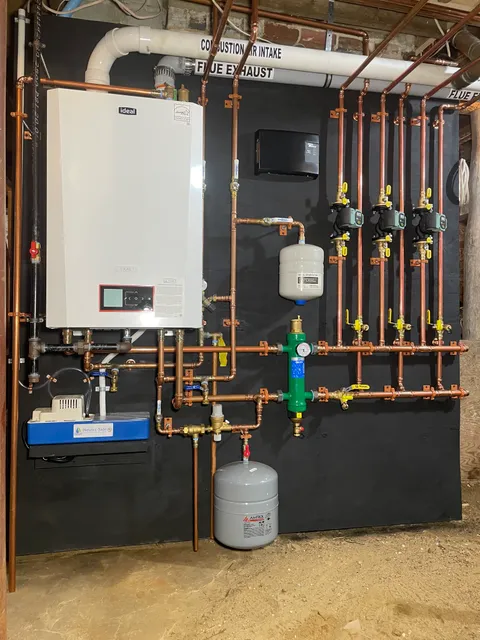
That is the whole-home versus partial-home choice, and it changes the rebate. A whole-home system must be sized to carry the house through the coldest weather on its own; the old system can stay as emergency backup. A partial-home system heats part of the house or part of the season, and integrated controls tell the two systems when to take over.
On the Outer Cape, where Truro, Wellfleet and Provincetown houses mostly run on delivered oil or propane, many owners keep the old equipment for the coldest nights. In Barnstable, Yarmouth or Falmouth, where natural gas reaches some streets, the backup question looks different. Ask the contractor to show the operating cost both ways, using your actual fuel bills, before you decide.
Who does what on a heat pump job, and how do you check them?
A heat pump install involves several trades. The refrigerant piping and equipment belong to the HVAC contractor. The dedicated circuit and disconnect belong to a state-licensed electrician, who files the electrical permit with your town. Removing or connecting an oil burner or a gas appliance brings in a licensed oil burner technician or gas fitter. State guidance on mini-split permitting confirms that these systems need a building permit.
Ask each person which state license they hold and look them up on eLIPSE. If the heating company also takes on remodeling work around the install, such as building a chase or boxing in a line set, the home improvement contract statute governs that agreement, including its limit on how much can be collected before work begins.
Where does a heat pump quote land against the Cape Cod calculator?
The calculator default for a typical HVAC project on Cape Cod is about $4,700 to $10,700; the Cape Cod HVAC cost page shows the inputs. A single-zone mini-split sits near the bottom. A whole-home ducted or multi-zone system in a two-story house sits well above it before the rebate comes off.
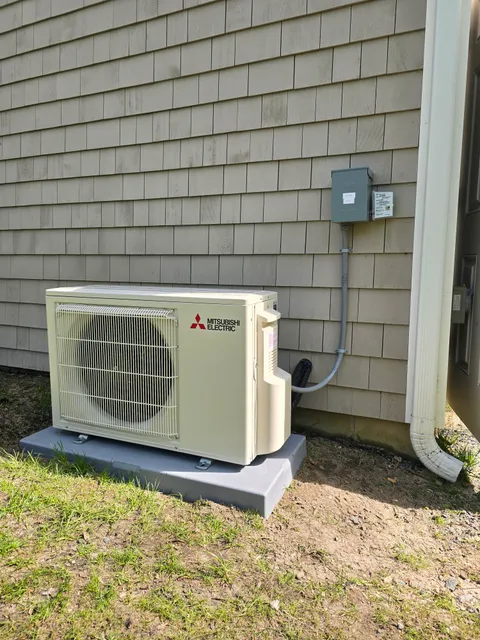
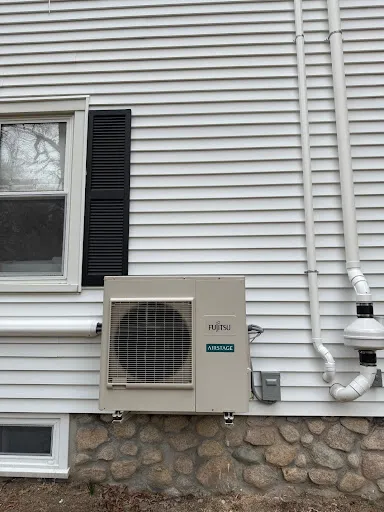
Salt air is a cost factor near the water. Outdoor coils and cabinets on houses in Dennis, Harwich or Orleans facing the open bay corrode sooner, so ask about coated coils, placement on the sheltered side of the house, and what the warranty says about coastal installs.
How should a heat pump be set for a house left empty in winter?
A second home that cannot take the rebate can still be heated by a heat pump, and many Cape owners install one for the shoulder seasons. If the house will sit empty from December to March, the setup decides whether the system protects the house or quietly fails.
Ask the installer about:
- A minimum setpoint. Most systems can hold the house at a low temperature. Ask what the lowest reliable setting is for your model and whether the controls lock it so a guest cannot turn it off.
- What happens in a deep cold snap. On the coldest nights a heat pump works hardest. If the old boiler or furnace stays as backup, ask how it is set to take over automatically.
- Power outages. A heat pump stops when the power does. A standby generator, sized to run it, or a fuel-fired backup that needs little electricity covers that gap.
- Remote alerts. A thermostat or sensor that texts you when the indoor temperature falls is cheap protection for an empty house in Mashpee or Wellfleet.
- Snow and sand. Outdoor units need clear airflow. Ask how high the unit should sit off the ground and who clears it after a storm.
Get the settings written down and leave a copy in the house for whoever checks on it.
Questions to put to every bidder
- Are you in the Mass Save Heat Pump Installer Network, and will you file the rebate?
- Is every unit you are quoting on the 2026 qualified list, and none of them R410A?
- Will you do a room-by-room heat-loss calculation?
- Who is the licensed electrician, and who pulls each permit?
- What happens to my existing boiler or furnace, and who removes the oil tank if I retire it?
- What maintenance does the outdoor unit need near salt water?
Booking in late winter or early spring gives you time to compare quotes before summer, when installers are busy with cooling calls.