The outside of a New Hampshire house works harder than most. Siding and trim face driving rain on the Seacoast, months of snow against the lower courses in Littleton and Lancaster, and the freeze-thaw cycle everywhere. Windows are the main way heat leaves an older house in Dover or Milford. And gutters, which most people ignore, decide where meltwater goes when an ice dam forms. These trades have no state license, so the choice of contractor rests on what you can check yourself.
Portsmouth's Historic District and the Certificate of Approval
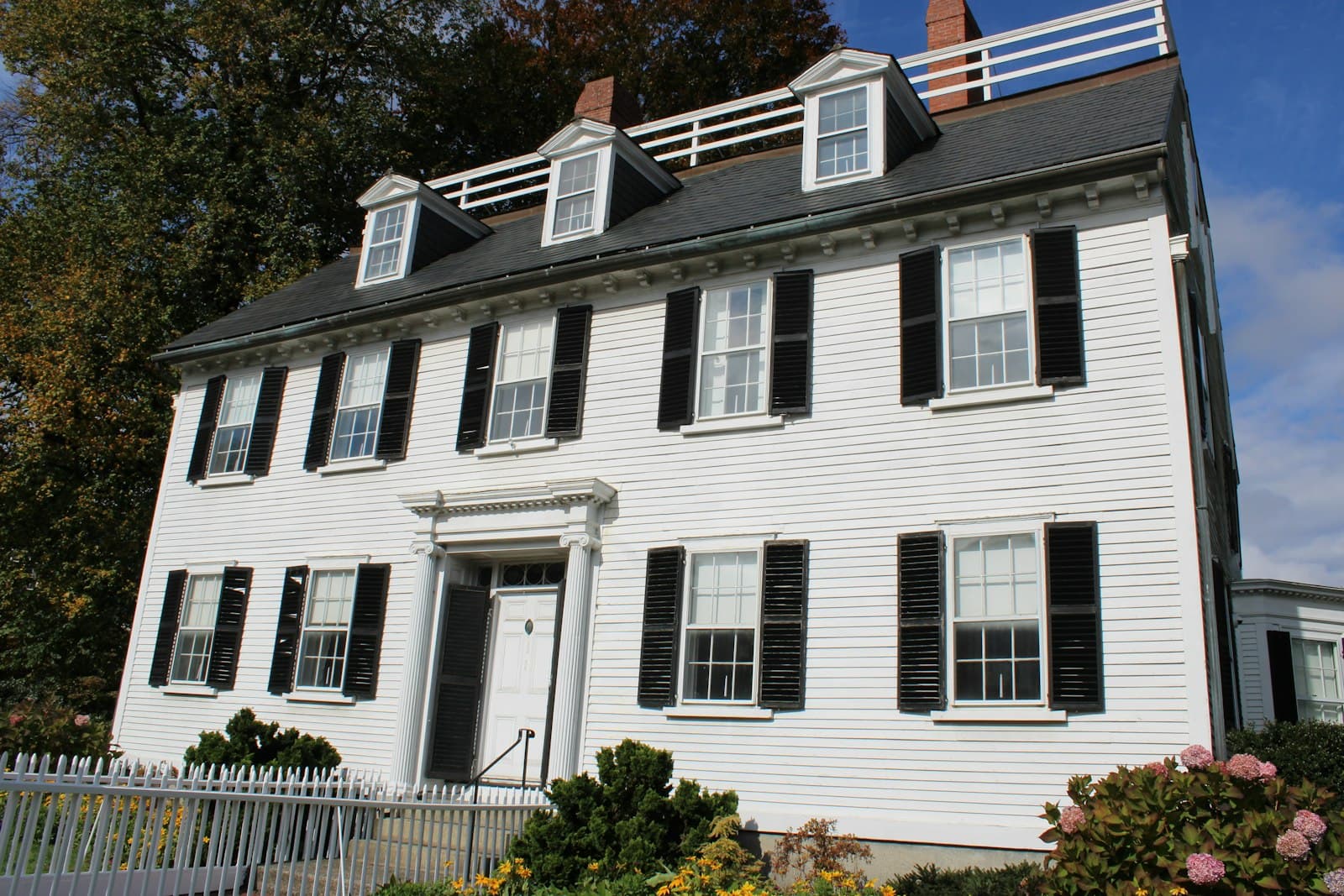
In Portsmouth, the Strawbery Banke museum preserves about ten acres of the Puddle Dock neighborhood, where English colonists settled in 1623, and the streets around it are lined with eighteenth- and nineteenth-century houses. The city protects that fabric through its Historic District Commission, which requires a Certificate of Approval for certain exterior changes inside the district.
For a homeowner in the district, the order of work matters:
- Check whether your property is inside the district, using the city's district map.
- Ask the commission's staff whether your project, such as new windows, different siding or a change of trim, needs approval.
- Hire a contractor who has been through the process and can supply drawings, product cut sheets and samples.
- Pull the building permit through the city's Inspection Department once the design is approved.
A contractor who has never worked in the district may quote vinyl replacement windows that the commission would never approve. Ask early.
Siding over old clapboard: lead and what is underneath
Many older houses in Exeter, Dover, Peterborough and Wilton have wood clapboard under several coats of paint, and some have asbestos-cement or aluminum siding layered over the original. Before re-siding, ask the contractor whether they plan to strip to the sheathing or install over the existing layer, and why. Stripping costs more but lets the crew see rot, add a weather barrier and flash windows properly.
If the house was built before 1978, the paint is likely to contain lead somewhere. Removing or cutting painted siding and trim for pay in a pre-1978 home requires an EPA-certified firm following the Renovation, Repair and Painting rule: ground sheeting to catch chips, no open-flame burning or high-speed sanding without controls, and cleanup at the end of each day. Ask for the firm's certificate and what they will put down around the foundation, where children and gardens are.
Gutters, leaf season and frozen downspouts
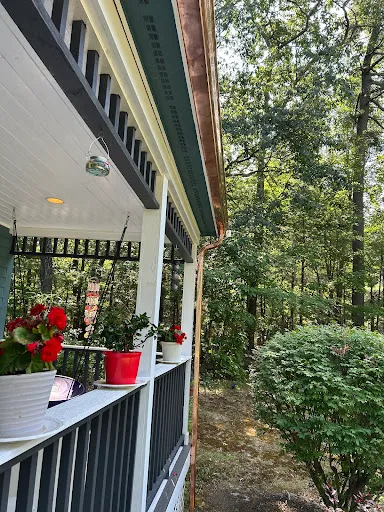
Gutters in New Hampshire have two jobs that pull against each other. In October they fill with leaves from the oaks and maples, especially in wooded towns like Hollis and Barrington. In January they fill with ice. A gutter packed with wet leaves freezes into a solid block that drives meltwater back under the shingles.
Ask a gutter contractor:
- What size gutter and downspout they recommend for your roof area and pitch. Larger ones handle spring thaw better.
- Where the downspouts will discharge, and how far from the foundation. Water dumped next to a basement wall comes back inside in mud season.
- Whether gutter guards are worth it on your trees, and how the guards handle snow sliding off the roof.
- How the hangers are fastened. A heavy load of ice will pull spikes out of the fascia; hidden hangers screwed into the rafter tails last longer.
Fall cleanups usually happen once most leaves are down, in late October or early November. Book them before the first snow, not after.
Salt air in Rye and Hampton, snow against the siding up north
The two ends of the state wear siding differently, and a contractor should be able to say how their materials suit yours.
On the coast, in Rye, Hampton, New Castle and North Hampton, the house takes wind-driven rain and salt air. Ask what fasteners the crew uses, whether nails and flashing are stainless or coated, and how the siding is attached to resist wind. Ask too whether the product's warranty excludes houses within a set distance of salt water; some do.
Inland and north, the problem is snow that sits against the bottom of the wall for weeks, and roof avalanches that hit it. In Conway or Gorham, ask how close the lowest course will sit to the ground, what is behind it, and whether trim at grade will be a material that tolerates being wet. Bare wood trim buried in a snowbank every winter is where rot starts.
Wherever you live, ask the contractor to name the brand and line of siding, the trim material and the color in writing. Vinyl, fiber cement, engineered wood and natural wood all have different maintenance, and two quotes that both say "new siding" can describe very different houses ten years from now.
Replacement windows or air sealing?
New windows feel like the obvious fix for a cold house, but they are an expensive way to save heat. Air sealing the attic and basement and adding insulation usually saves more per dollar. Rebates of as much as $6,000 toward that kind of work come through the utilities' joint NHSaves program, and its loans carry 0% interest for Eversource customers and 2% for the other utilities' customers (NHSaves weatherization). An energy audit before a window project shows where the heat is actually going.
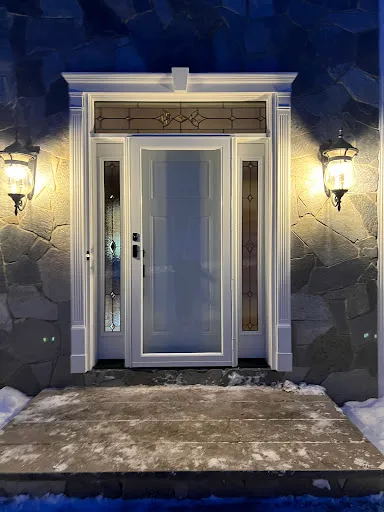
If windows are the right answer, ask about the type: inserts that fit into the old frame are cheaper and less disruptive; full-frame replacement lets the installer fix rot and flashing. On a house in Laconia that takes driving rain off the lake, the flashing around the window matters as much as the glass.
Booking between mud season and the first hard frost
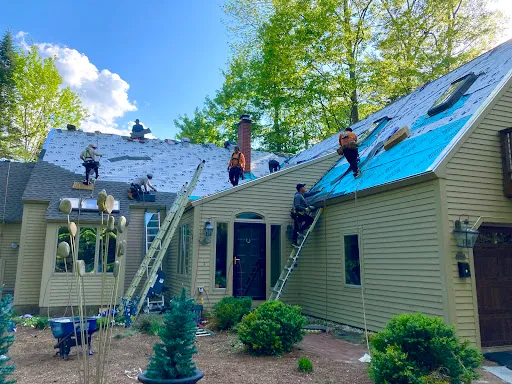
Exterior work in New Hampshire runs roughly from April to November. Sealants, caulk and paint have temperature limits, and siding and window crews want dry weather. Mud season in March and April can make ground access hard. The fall rush is real: once leaves start turning in late September, schedules fill with owners trying to finish before snow.
If you can, get quotes in late winter and book for late spring or early summer. Ask what the contractor does if a project runs into November, and how an opened wall will be protected if a storm comes through.
Pricing ten windows and comparing crews
Ten basic replacement windows run about $3,500 to $9,700 in New Hampshire, according to the New Hampshire exterior cost estimate, which also prices siding and gutters as separate jobs. Window quotes differ mainly on the product line, the glass package, inserts versus full-frame, and the interior and exterior trim work.
With no state license to look up, check insurance certificates, ask for addresses of jobs a few years old that you can drive past, and get a written contract with the product names, sizes, colors, warranty and payment schedule. If a deal turns out to have been misrepresented, the Consumer Protection Act lets you recover actual damages or a $1,000 floor, multiplied for willful conduct (RSA 358-A:10).