A fence looks like the simplest job on a property, and on Cape Cod it can still involve three or four separate rules: the utility marking law, the town's wetlands regulations, the historic district on the bay side and, for pool owners, the state building code. Post holes go in quickly, which is exactly why a crew in a hurry can hit a buried line. Here is what to settle with a fence company before the auger comes out.
Does a fence crew need to call Dig Safe for post holes?
Yes, every time. The state's Dig Safe law covers excavation, and an auger boring post holes is excavation. Owners digging on their own land are covered too, not just contractors. Under the state's Dig Safe rules:
- The digger first outlines the area in white paint or stakes.
- Then they notify Dig Safe by calling 811 (or 888-344-7233), at least 72 hours ahead, counting business hours only, so weekends and holidays do not count.
- The ticket is valid for 30 days.
- The service is free.
Dig Safe marks the lines its member utilities own, such as electric, gas, phone and cable. It does not mark private lines: the cable to a garage light, an irrigation system, the pipe to a propane tank, or the line from the house to the septic tank and leach field. On a Cape lot, where almost every house has a septic system, ask the fence contractor how they will locate the tank and field before they set posts. A post through a distribution pipe is an expensive mistake.
Ask the company whose name goes on the ticket. It should be theirs, not yours.
Can you build a fence near a coastal bank or a dune?
Often, but not without asking first. The state's Wetlands Protection Act gives each town's conservation commission authority over work in and near coastal banks, dunes, beaches, salt marshes and other wetland areas. A fence along the top of a bank in Falmouth, across a dune in Sandwich or beside a marsh in Wellfleet may need a filing with the conservation commission and an approval before posts go in. Local bylaws in Cape towns can be stricter than the state law.
Practical questions for the fence contractor:
- Has the company worked under a conservation commission order, and how do they handle the conditions (no heavy equipment on the dune, hand-dug holes, replanting)?
- Will they wait for the approval before scheduling?
Does a front fence on Route 6A need historic approval?
A fence that the road can see, on a lot inside the Old King's Highway district, will likely need the town committee's sign-off. The district runs along the bay side of the Cape, and its committees review visible exterior changes, and Brewster's committee page names fences outright in its list of what needs an application.
A contractor who has built picket or split-rail fences in Dennis or Yarmouth Port will know the styles committees tend to accept. Ask to see photos of their work in the district, and do not let them start until the certificate is in hand.
Which fence holds up to wind and salt on an exposed lot?
A fence on a bluff in Truro or along the water in Falmouth takes more punishment than one in a sheltered backyard. Wind pushes on a solid privacy fence like a sail, salt corrodes hardware, and blowing sand wears finishes.
Questions that separate a contractor who builds near the shore from one who does not:
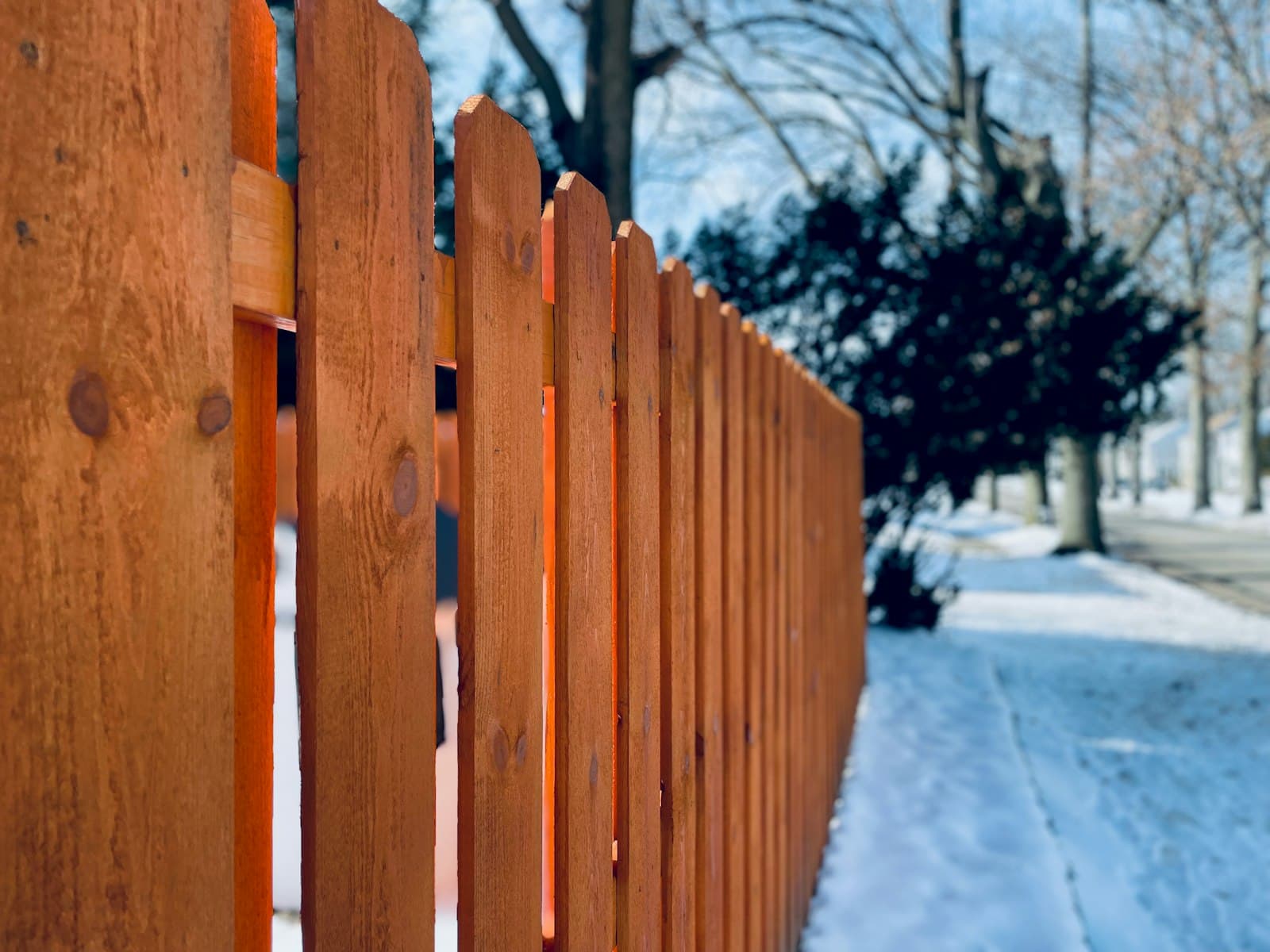
- Solid or open? A solid board fence catches the most wind. Spaced pickets, lattice tops or split rail let air through and stand up longer on an exposed lot.
- Post depth and setting. In loose, sandy ground, ask how deep the posts go, whether they are set in concrete or tamped gravel, and how the contractor keeps them from leaning after the first winter.
- Wood and finish. White cedar weathers to gray and suits the Cape's look; pressure-treated posts often sit under cedar boards for longer life in the ground.
- Hardware. Hinges, latches, screws and nails should be stainless or hot-dipped galvanized. Plain steel rusts quickly and streaks the wood.
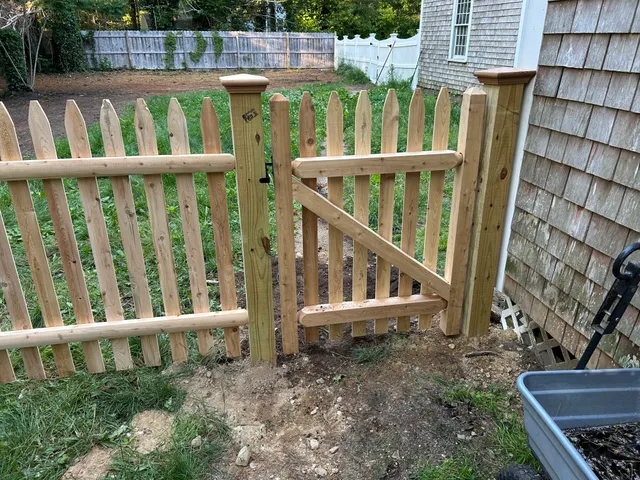
- Gates. Wide gates sag. Ask how the gate frame is braced and whether the posts beside it are heavier.
A contractor who can point you to fences they built in Chatham or Provincetown that have been through several winters is worth a visit.
Does a pool need a fence by law?
Massachusetts building code makes a barrier mandatory for a home pool, with detailed rules for the barrier and its gates. The requirements are technical and change with code editions, so ask your town's building inspector what applies to your pool before ordering material. A fence installer who builds pool enclosures regularly should know the current rules and should help with the permit; if they treat a pool barrier like a garden fence, keep looking.
How do you check a fence company's registration?
On an owner-occupied home, fence building falls under the Massachusetts home improvement law, so the company should show up in the state's HIC records; look it up on the Contractor Hub. Past $1,000 the job also needs a signed agreement under the contract statute. For a fence, make sure it spells out the wood species and grade, post size and depth, gate hardware, the total and the payment stages, the dates, any permit, and your cancellation notice. Expect to pay no more than a third before work starts, unless custom gates or panels made for you cost more.
How do length, height and gates move a Cape fence price?
For a typical fence, the market's calculator lands between $3,800 and $7,500; the Cape Cod fence cost page explains how. Long runs, tall privacy fence, custom gates or pool enclosures push higher. Hand-digging under a conservation order, or setting posts around septic components, adds labor.
Timing matters too. Spring is busy as owners prepare for summer; booking in fall or early winter, when the ground in Mashpee or Harwich is still workable, can mean a shorter wait.
Ask, finally, where the property line is. Many older Cape lots in Barnstable, Dennis and Sandwich were laid out long ago, and stone walls, hedges and old fences do not always follow the deed. A fence company is not a surveyor, and most will build where you tell them. If you are not sure, have a surveyor set the corners first; a fence put up a few feet onto a neighbor's land is expensive to move, and a dispute over it can outlast the fence.
Questions for each fence company
- Will you file the Dig Safe ticket, and how will you find my septic system and private lines?
- Have you worked under a conservation commission order or historic district certificate?
- What wood or material, posts and hardware are you quoting?
- Does the price include removing the old fence?
- What warranty covers posts that heave or lean?