House cleaning in New Hampshire is two businesses. One is the familiar weekly or biweekly visit to a home in Bedford, Amherst or Derry. The other is the turnover cleaning that keeps the state's second homes and rentals running: ski condos in Lincoln and Waterville Valley, chalets in Bartlett and Jackson, lake houses in Gilford and Meredith, beach rentals in Hampton and Rye. They need different things from a cleaner, and the same few questions sort out who fits.
No license, so check insurance, bonding and who employs the cleaner
New Hampshire does not license house cleaners, and there is no state credential to look up. What protects you is the business arrangement:
- Liability insurance. If a cleaner breaks a window, floods a bathroom or damages a floor, the company's liability policy pays. Ask for a certificate of insurance from the agent.
- Bonding. A bond covers theft by the cleaner. Ask whether the company is bonded and for how much.
- Employees or contractors. A company may employ its cleaners or send independent contractors. Employees are covered by the company's workers' compensation if they are hurt in your home. An independent cleaner who falls down your stairs may look to your homeowner's insurance instead.
Independent cleaners can be excellent, and often cost less. If you hire one directly, ask about their own insurance, and check with your insurer about household workers.
If a company takes payment and stops showing up, or misrepresents its services, report it to the state: the Attorney General's office answers consumer calls on its consumer hotline at 1-888-468-4454.
Ski-rental turnovers in the White Mountains
From December to April, the ski towns run on turnover cleaning. Condos and chalets in Lincoln and Waterville Valley, the Conway, Bartlett and Jackson rentals of the Mount Washington Valley, and the houses around Gunstock and Sunapee change guests every weekend, often with a few hours between checkout and check-in.
A turnover cleaner does more than clean: they strip and remake beds, run laundry, restock supplies, check for damage and report problems to the owner or manager. If you own a rental, ask:
- Can you handle same-day turnovers on Saturdays, and how many can your crew do in a day?
- Do you do linens on site, or take them away?
- Will you send photos after each turnover and report damage or missing items?
- What happens when a snowstorm makes the drive impossible? Ask who is the backup.
Big storms affect the schedule. The National Weather Service office in Gray, Maine, which forecasts for New Hampshire, is worth watching on a turnover weekend; a crew stuck behind a closed mountain road means a guest arriving to an unmade bed.
Lake season, Motorcycle Week and summer rentals
Summer brings the same pattern to the lakes and the coast. Camps and lake houses rent from Memorial Day to Columbus Day, and Laconia's Motorcycle Week in mid-June, which bills itself as the world's oldest motorcycle rally, fills every rental in the Lakes Region at once. Beach rentals in Hampton and Rye turn over every week in July and August.
Book a reliable turnover crew before the season starts. Many cleaners in the lake towns fill their summer weekends by spring, and owners who wait until June may find no one.
Opening and closing a camp is also a cleaning job. In spring, that means dust, mouse droppings and cobwebs after a winter closed up; in fall, emptying the refrigerator, cleaning out cupboards and leaving nothing that draws animals.
Mud season, wood stoves and the New Hampshire house
Regular cleaning here has its own seasons. Mud season in March and April tracks grit into entryways and across floors. Wood and pellet stoves, common heat in much of the state, leave a fine ash and dust through the winter. And pollen season in May coats everything.
Ask a regular cleaner how they handle these: whether they clean around the stove and hearth, whether a spring deep cleaning is priced separately, and what they use on wood floors scarred by grit. If your house is on a private well and septic system, ask which products they use, and say so if you want products labeled safe for septic systems.
Move-out cleaning and getting a deposit back
Move-out cleaning peaks with the college calendar. Apartments near UNH in Durham, Dartmouth in Hanover and the state colleges in Keene and Plymouth turn over in May and late August, and landlords inspect closely for deposits.
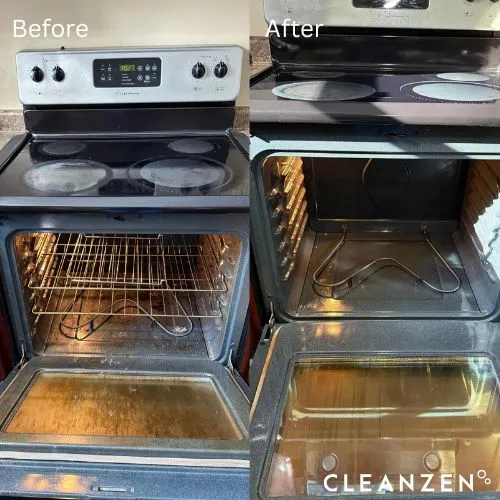
A move-out cleaning is more thorough than a regular visit: inside cabinets, the oven and refrigerator, baseboards, windows and closets. Ask for a checklist and compare it with what your lease or your landlord expects. Landlords converting older units should know that preparing a pre-1978 unit for its first tenant is not just a cleaning job: under RSA 130-A:5-d, a state-licensed risk assessor has to certify the unit lead-safe before the first renter arrives.
Cleaning up after a remodel
Post-construction cleaning is a separate job from a regular visit. After a kitchen or bath remodel, fine dust settles on every surface in the house, inside cabinets, on light fixtures and in heating ducts, and it keeps reappearing for weeks. Ask whether a company does post-construction cleaning, what it includes, and whether it uses vacuums with HEPA filters, which trap fine dust rather than blowing it around.
One caution for older homes. If the remodel disturbed paint in a house built before 1978, the cleanup of lead dust is the renovation contractor's legal responsibility under federal lead-safe rules, including a final check that the work area is clean. A house cleaner coming in afterward is not a substitute for that step. Make sure the contractor has finished and verified their cleanup before the regular cleaner starts.
The first visit and a schedule that lasts
Most regular cleaning relationships start with a longer first visit, often priced as a deep cleaning, that brings the house to a standard the regular visits can keep up. Walk through the house with the cleaner on that first day. Point out what matters most to you, what should not be touched, and any surfaces that need special care, such as old wood floors, marble or a cast-iron tub. Write it down so whoever comes on later visits follows the same list.
Agree on how you will give access when you are out, whether a key, a code or a lockbox, and how the cleaner should lock up.
Pricing a biweekly visit
A recurring every-other-week cleaning of a three-bedroom, two-bath home runs about $130 to $220 a visit in the New Hampshire house cleaning cost estimate. A first deep cleaning usually costs more, often much more if the house has not been professionally cleaned in a while. Weekly service costs less per visit; monthly costs more.
Ask what the visit includes, how long it takes, how many cleaners come, whether the same people come each time, how to reschedule, and what notice is needed to cancel. Get the price and the list in writing, even in a text. For turnover work, ask for a per-turnover price and what counts as extra, such as a party cleanup or a second load of laundry.