Landscaping in New Hampshire runs on a short season and two very different kinds of property. In the southern suburbs, Bedford, Amherst and Stratham, it is lawns, beds and weekly mowing from April to October. On the lakes and in the hill towns, Gilford, Moultonborough, Sunapee and New London, it is waterfront, woods and ledge, where the state's shoreland law decides what can be cut, moved or fertilized. The questions you ask a landscaper should follow which kind of property you have.
Lakefront lots: what stays in the 50-foot buffer
Lake Winnipesaukee is where shoreland rules bite hardest, but they apply on every great pond, river and tidal water the state protects. The Shoreland Water Quality Protection Act covers land within 250 feet of protected waters, and its strictest zone is the waterfront buffer, the first 50 feet from the water. Under RSA 483-B:9, in that buffer:
- Rocks and stumps, and their root systems, are to be left intact in the ground, unless the state approves removal.
- Natural ground cover can be removed only for a foot path to the water, access ways and normal maintenance.
- Trees can be cut only where the 25-by-50-foot segment keeps a minimum score, with larger trees earning more points; a segment below the minimum cannot be cut at all.
- Fertilizer may not be applied within 25 feet of the water, and beyond that only slow-release fertilizer.
- Between 50 and 150 feet, at least a quarter of the area must stay natural woodland.
That changes what a landscaper can offer. A lawn to the water's edge in Laconia or Alton, a new beach or a cleared view may not be legal. Larger projects need a state shoreland permit, and smaller ones file a permit by notification through NHDES's shoreland forms. Ask any landscaper working on your frontage whether they know the point system, whether your project needs a state filing, and who files it. One who proposes pulling stumps at the shoreline has not read the law.
Tick and weed spraying: the state pesticide certificate
New Hampshire licenses the person applying pesticides, not the landscaper. Under RSA 430:33, no one may apply pesticides commercially without a certificate of registration from the Division of Pesticide Control, and getting one requires passing an exam and showing proof of financial responsibility. That covers tick and mosquito spraying, weed control on lawns and grub treatments.
The Division does not offer a searchable public lookup, so ask the company for the applicator's registration number and the name of the person who will spray, and confirm it with the Division of Pesticide Control by phone or email. Ask which products they use, how they keep spray off gardens, wells and neighbors' yards, and whether they will tell you when they are coming so pets and children can stay inside.
Ticks are active from April through November across the state. Clearing leaf litter and brush where the lawn meets the woods, and keeping grass short, reduces them without spraying, and many landscapers fold that into a maintenance plan.
Before the excavator: Dig Safe on planting and patios
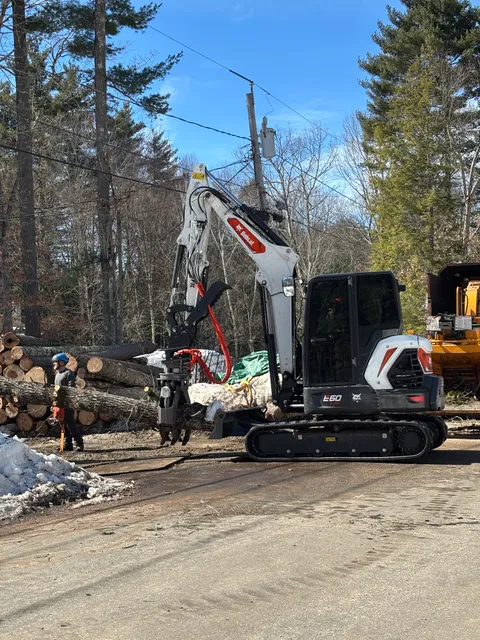
Landscaping is digging. A new tree, a row of shrubs, a patio base, a drainage trench or a fence line all count as excavation under RSA 374:51, so the crew outlines the spot in white and calls 811 three business days or more before the shovel goes in. The landscaper normally calls it in. Ask them to confirm the ticket before any machine arrives.
Utility marks cover public lines only. Point out your septic tank and leach field, any irrigation, the line to your well pump and buried electric lines to lamps or outbuildings. Heavy equipment driven over a leach field can crush it, which turns a planting job into a septic replacement.
The season, from mud to leaf drop
New Hampshire's landscaping year is short and crowded:
- Spring cleanup begins once the snow is gone and the ground is firm, usually April in the south and later up north. Mud season can push it back.
- Mowing runs roughly from late April to October, about 26 weekly visits.
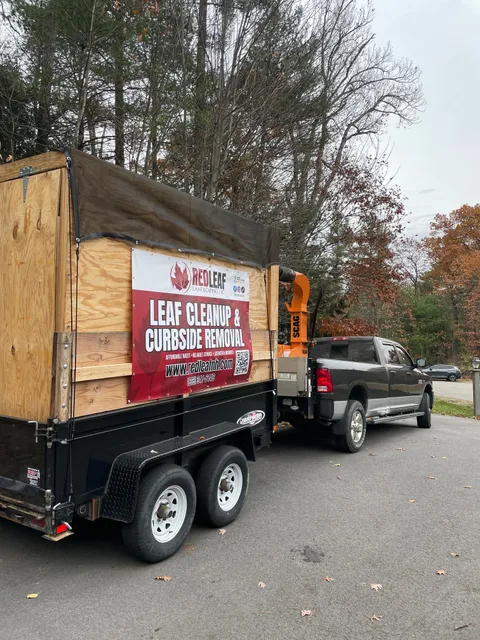
- Fall cleanup follows leaf drop, from late October into November. In foliage season the White Mountains fill with visitors, and crews in Lincoln and Franconia work around the traffic.
Most companies fill their schedules for the year by early spring. If you want weekly service, sign up in winter. Ask what happens in a dry August, whether you pay for mowing that does not happen, and how the contract ends.
Ledge, slopes and stone walls
New Hampshire soil is thin and rocky. A patio in Durham or a garden bed in Hanover may hit ledge or boulders a few inches down. Ask the landscaper what they do when they find rock and what it costs. Old stone walls run through many properties; moving or rebuilding one is skilled work, and in some towns a wall marks a boundary that should not be moved without a survey.
On slopes, ask about drainage and erosion. Bare soil on a hillside sheds sediment into the nearest stream or pond in the first heavy rain. On shoreland lots that is exactly what the state's rules are meant to stop.
The same crew in winter: plowing contracts
Many New Hampshire landscaping companies turn into plowing companies in December, and a year-round customer often gets first call when the snow comes. If you are signing for both, read the winter terms as carefully as the summer ones:
- Is plowing priced per push, per storm or for the season? A seasonal price is predictable; a per-push price can run high in a heavy winter like those common in the Lakes Region.
- At what snowfall does the crew come out, and how often do they return in a long storm?
- Does the price include the walkway, the steps and the mailbox, or just the driveway?
- Who pays for damage to lawn edges, curbing or a fence hit by the plow, and when is it repaired?
Ask the company to stake the driveway edges before the first storm. It saves a spring of patching torn turf.
What $40 to $60 a visit covers
Weekly mowing of a quarter-acre lot runs about $40 to $60 a visit in the New Hampshire landscaping cost estimate. Full-service maintenance, with edging, weeding and bed work, costs more, and spring and fall cleanups and mulch are priced on their own. Larger lots in towns such as Amherst or Hollis cost more per visit, and a long drive to a lake house adds to it.
Ask for a written agreement that lists the services, the frequency, the price per visit or per season, how cleanups are priced, what happens on a rainy week and how either side can cancel. If you hire a separate company for spraying, keep that contract apart and make sure the applicator's registration number is on it.