Floors in New Hampshire houses tell the age of the place. Wide pine boards, some more than a foot across, run through eighteenth-century houses in Exeter, Kensington and Hampton Falls. Narrow strip oak covers the floors of 1920s houses in Manchester and Keene. Wall-to-wall carpet and sheet vinyl went over a great deal of it in the 1960s and 1970s. And new houses in Amherst or Bow have engineered planks or luxury vinyl. Each calls for a different kind of flooring contractor, and the first question is often whether to refinish what you have.
Wide pine and old oak: refinish before you replace
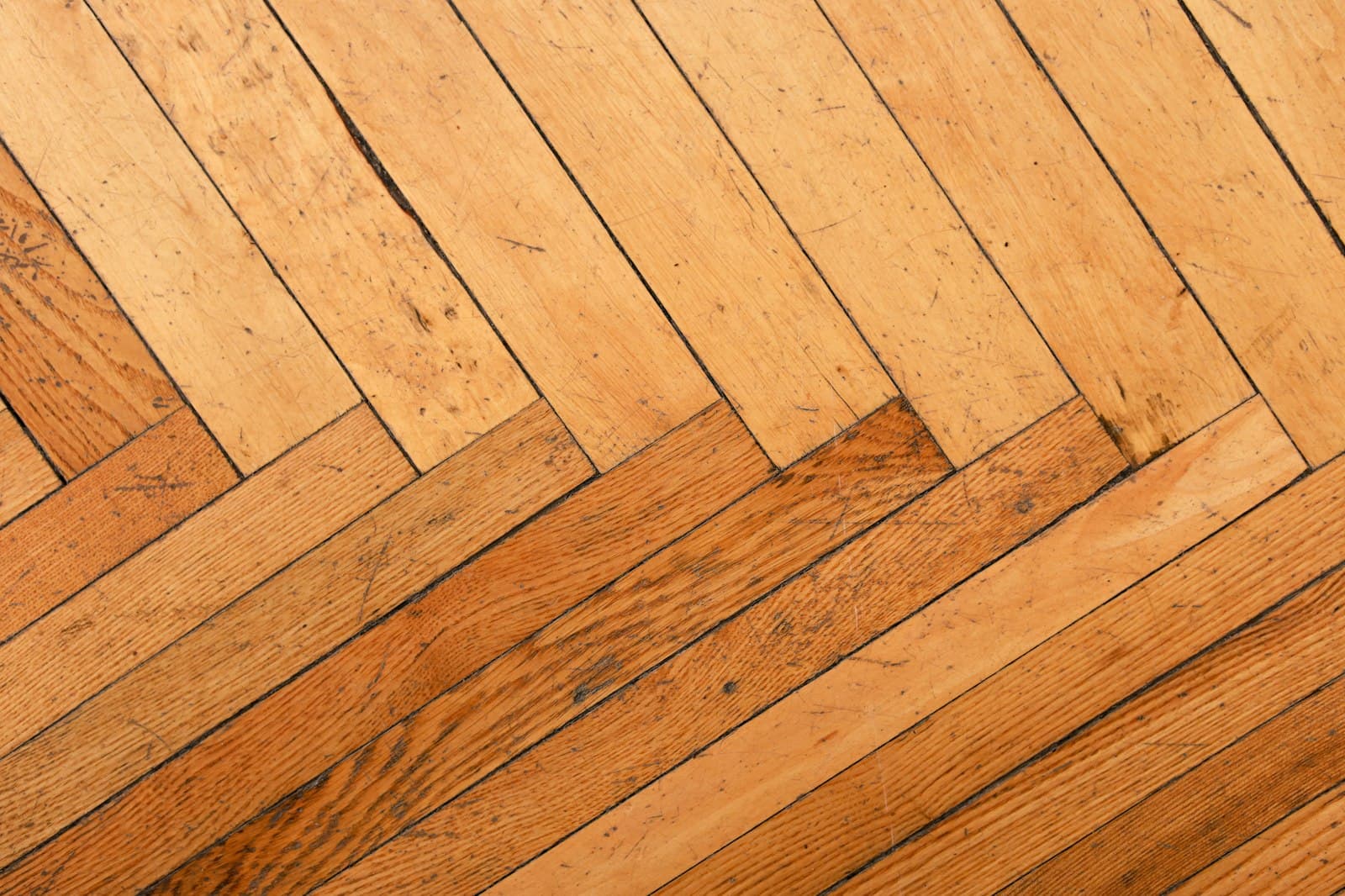
Old wood floors can often be refinished several times. The limit is the thickness of wood above the tongue, which sanding wears away. A flooring contractor can check by lifting a heating register or a threshold and looking at the edge of a board.
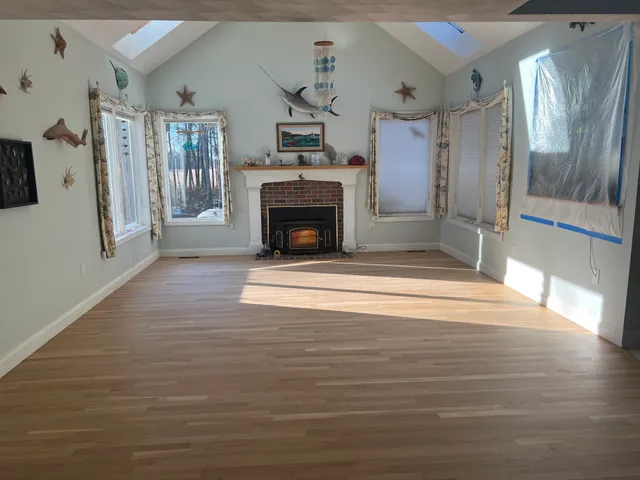
Wide pine in a colonial in Mont Vernon or Lyndeborough is softer than oak and dents easily. Refinishing it is careful work: aggressive sanding takes off the patina and can leave the floor wavy. Ask a contractor how many old pine floors they have done, what grit they start with, and whether they recommend a hard finish or an oil that can be spot-repaired. Ask to see one.
If boards are missing or damaged, matching old pine or oak is possible with salvaged wood. Ask where the contractor would find it and what it costs.
Dry winters, humid summers and acclimation
Wood moves with humidity. New Hampshire houses swing from very dry air in January, when the heat has run for months, to humid air in July. A floor installed in August can open gaps between boards by February. A floor installed tight in a dry winter can cup or buckle in summer.
A careful installer deals with this in three ways:
- Acclimation. The boards sit in the house, at living conditions, for a period before installation. Ask how long, and whether they measure the wood's moisture and the subfloor's before starting.
- Expansion gaps. A gap at the walls, hidden by the baseboard, lets the floor move.
- Advice on humidity. A humidifier in winter or a dehumidifier in summer keeps the floor stable. Ask what range the manufacturer recommends.
Wide boards move more than narrow ones, and solid wood moves more than engineered planks. If you want wide planks over radiant heat, ask whether an engineered product would be the safer choice.
What is under the old vinyl and the black glue
Many older homes have layers of flooring: carpet over sheet vinyl over vinyl tiles over the original wood. Vinyl floor tiles, sheet vinyl backing and the black mastic used to glue them down were often made with asbestos in the middle decades of the last century. Intact and left in place, they are usually not a hazard. Sanding, grinding or breaking them up can release fibers.
The EPA's asbestos guidance advises leaving suspect material alone if it is in good condition and having it tested before disturbing it. Before a flooring crew tears out old tile in a 1950s ranch in Concord or a 1960s split-level in Hudson, ask:
- Will you test the tile and adhesive before removal, or do I need to arrange it?
- If it contains asbestos, will you cover it with new underlayment instead of removing it, or bring in a licensed abatement firm?
A crew that wants to grind black mastic off a slab without testing is a crew to send away.
Old floors can also carry lead paint, especially painted porch floors and the edges of rooms in houses built before 1978. Sanding painted wood in an older home is work covered by the federal lead-safe renovation rule, which calls for a certified firm and containment.
Basements, camps and mud season
Basements in New Hampshire are damp in spring, even when they do not flood. Water vapor rises through a concrete slab, and in mud season it can rise a lot. Solid hardwood glued or nailed below grade is asking for trouble. Tile, luxury vinyl plank and some engineered products tolerate it better, ideally over a vapor barrier or a raised subfloor.
Lake camps and ski houses in Gilmanton, Canterbury or Orford have their own problem: a house left unheated, or heated low, over the winter. Wood floors in an unheated building take on moisture and move. If your camp is closed for the season, ask the installer which products the manufacturer allows in unheated or seasonal buildings, because many warranties exclude them.
Fix any water problem before the new floor goes in. A new floor over a damp slab fails within a year, and no flooring warranty covers water from below.
Stairs, transitions and the small details
The details are where floors look finished or not: stair treads and risers, nosings at the top of a step, transitions between rooms with different floor heights, thresholds at exterior doors, and how the floor meets the old baseboard. Ask whether the quote includes removing and reinstalling baseboard and shoe molding, undercutting door casings, trimming doors that will no longer clear, and moving furniture and appliances.
In older houses, floors are rarely level. Ask how the contractor will handle a sloped floor in a house in Lyme or Hanover that has settled over two centuries. Some unevenness is part of the house's character; some may need the subfloor shimmed.
Refinishing in winter, when the windows stay shut
Indoor flooring work goes on all year, but the season changes the job. Site-applied finishes need ventilation and time to cure, and in a New Hampshire January the windows stay closed and the house is full of people. Ask the contractor which finish they would use in winter, how long the house must be empty or the rooms sealed off, and whether the heat must stay at a set temperature while it cures. An oil-based finish can mean days out of the house; a water-based one usually less.
Plan around the calendar too. If you want the floors done before holiday guests arrive, book in early fall and ask for the finish date in writing, because a refinish cannot be rushed once the coats are going on.
Pricing 500 square feet of red oak
Installing 500 square feet of red oak, finished on site, runs about $5,300 to $8,450 in the New Hampshire flooring cost estimate. Wider planks, harder or rarer species, prefinished boards, stairs, removal of old flooring and subfloor repair change the price, and refinishing an existing floor costs far less than installing a new one.
Compare quotes on: square footage measured, species, grade and width, prefinished or site-finished, number of finish coats and product, removal, subfloor work, trim, moving furniture and the warranty. Get it in writing. If a contractor misrepresents the material, such as installing a cheaper grade than you paid for, the Consumer Protection Act gives you a claim for at least $1,000 and more if the deception was willful (RSA 358-A:10).