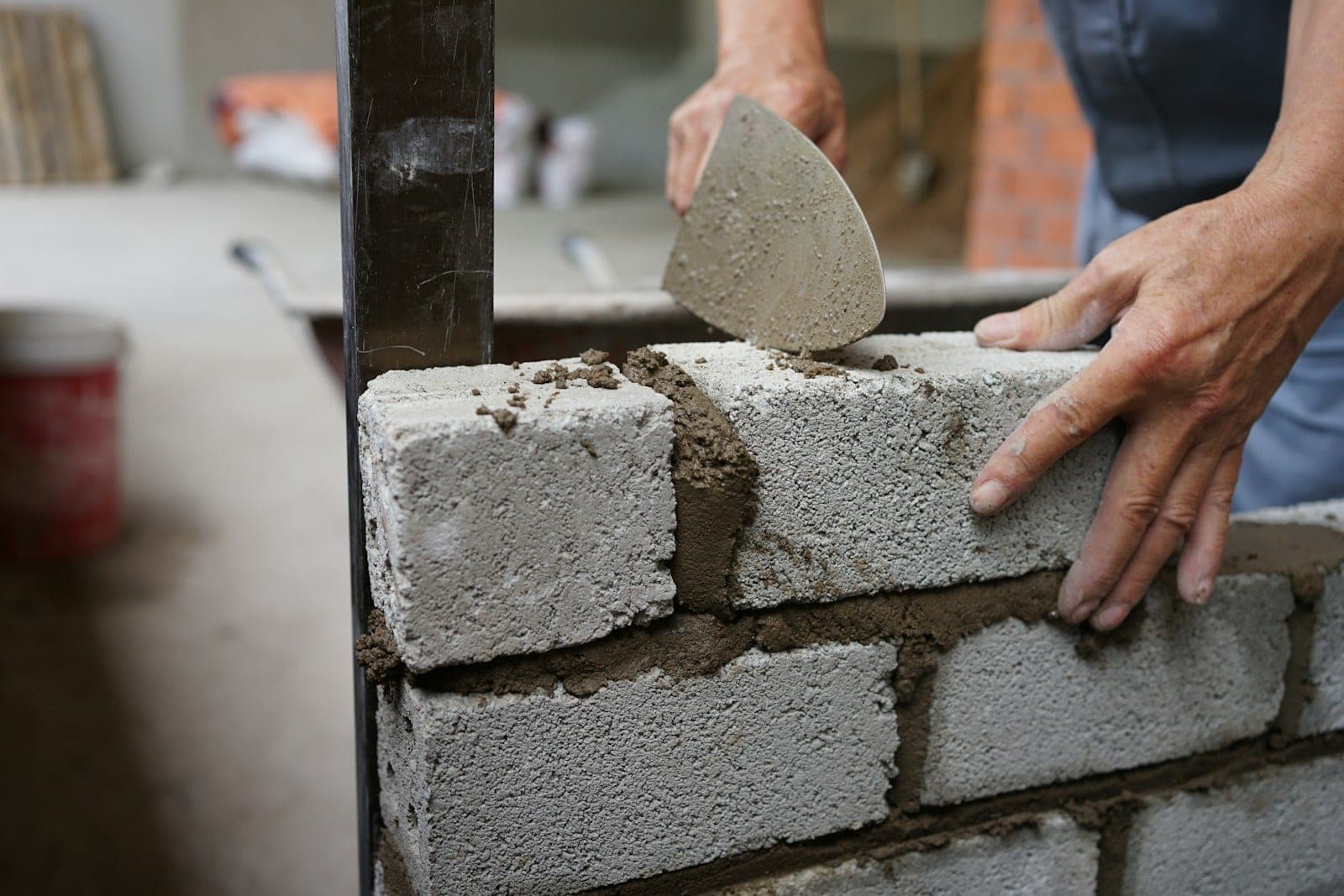
New Hampshire is the Granite State, and its masons work with the stone underfoot. Milford grew up as a granite and mill town on the Souhegan. Fieldstone walls line the roads of Hollis, Hancock and Dublin. Brick chimneys rise from colonials in Exeter and Dover, and wood stoves vent through masonry flues in houses from Northwood to Gorham. What ties the work together is the weather: water gets into stone, brick and mortar, freezes, expands and breaks it a little more each winter.
Chimney crowns, flashing and the freeze-thaw winter
A chimney takes the worst of it. Rain and snowmelt soak into the top of the chimney, freeze overnight and thaw by day, dozens of times a winter. The first part to fail is usually the crown, the cement cap at the top, which cracks and lets water into the brick below. Then the mortar joints open, bricks spall and the flashing where the chimney meets the roof starts to leak.
When a mason looks at your chimney, ask:
- Is the crown cracked, and will the new one project past the brick face so rain falls off its edge instead of running down the chimney?
- Which joints need repointing, and how deep will you cut?
- Does the chimney need a cap or a screen to keep out rain and animals?
- Who handles the flashing, you or a roofer?
- Will you apply a breathable water repellent, and what kind?
Autumn, before the heating season, is when chimney work and sweeping peak, especially in September and October. Book in summer if you can.
Liners, oil boilers and wood stoves
A chimney is also a flue, and what it vents matters. About two in five New Hampshire homes heat mainly with oil, according to the federal EIA state profile, and wood and pellet stoves are common across the north and the hill towns. Each fuel is hard on a chimney in its own way: wood leaves creosote that can catch fire; oil and gas exhaust carries moisture and acids that eat old mortar from the inside.
Many older chimneys have no liner or a clay liner that has cracked. When a boiler is replaced, or a wood stove is added, the flue often needs a new stainless-steel liner sized to the appliance. Ask the mason or chimney specialist to inspect the flue with a camera, to explain what liner the appliance needs and to include it in the quote. Agree in writing whether the heating installer or the mason is responsible for it, so nothing falls between the two.
Gas inserts and the hearth technician license
Masons are not licensed in New Hampshire, but one part of fireplace work is. Converting a fireplace to gas, or installing a gas insert, stove or log set, is gas work, and the state licenses it. RSA 153:29 lists a hearth system installation and service technician license among the fuel gas licenses the Mechanical Licensing Board issues.
A mason may rebuild the firebox, the hearth or the surround. The gas line and the appliance should be connected by a licensed hearth or gas technician. Ask who that will be, and look up the license on the OPLC verification page.
Stone walls, steps and patios
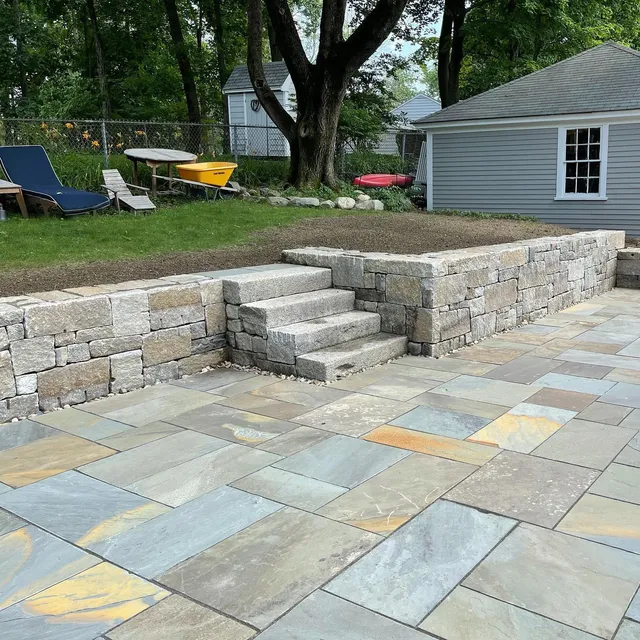
Outside the house, masonry in New Hampshire means stone walls, granite steps and patios.
Stone walls. Dry-laid fieldstone walls run through old farmland across the state. Rebuilding one is slow, skilled work, and masons usually price it by the face foot. If a wall sits on or near a property line, confirm the boundary before stones are moved.
Steps and walkways. Granite steps settle and tip as frost works under them. Resetting them means digging out, building a compacted base and resetting the stone level.
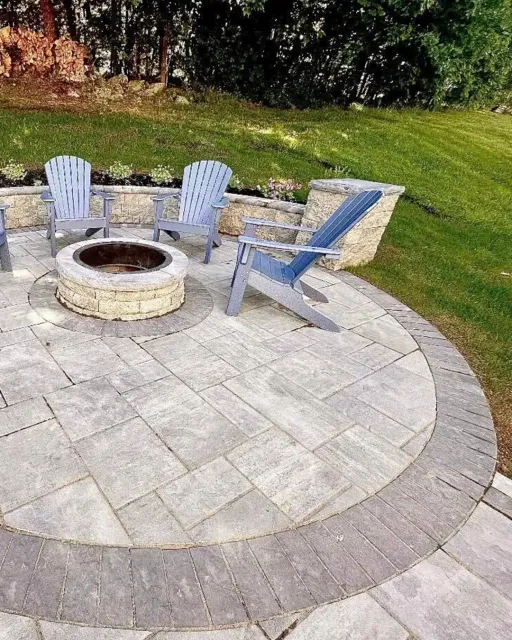
Patios. A paver or stone patio lasts if the base is right: excavation to firm subsoil, a thick layer of compacted gravel, edge restraints, and a pitch so water drains away from the house. Ask how deep the base will be and what it is made of, because the base, not the pavers, decides whether the patio heaves.
All of this is digging. Under RSA 374:51, the mason must outline the area in white and notify Dig Safe at least three business days before excavating. Ask whether they have placed the call, and point out your septic tank, leach field and any private buried lines.
Ledge, slopes and drainage
New Hampshire's thin soil and frequent ledge shape outdoor masonry. A patio in Pittsfield or Concord may hit bedrock a foot down. A retaining wall on a slope in Littleton or Peterborough holds back soil that turns to heavy mud in spring.
Ask how the mason handles rock if they hit it, and what it costs. For any retaining wall, ask about drainage behind the wall: perforated pipe and clean gravel let water out. Soil that stays saturated behind a wall gets heavier and expands when it freezes, and a wall with no drainage leans a little more every year until it fails. Walls above a certain height may need an engineer's design or a permit in your town.
Mill-era brick in Manchester, Nashua and Dover
The old mill cities hold a great deal of brick: the mill buildings themselves, now offices and condos, and the brick rowhouses and commercial blocks around them. Masonry on those buildings is often a job for a condo association or a building owner rather than a single homeowner, and it usually means staging or lifts, sidewalk access and work several stories up.
If you serve on an association board or own a brick building, ask a mason for a condition survey before asking for a price. A survey that photographs and maps the cracked lintels, open joints and spalled brick lets you compare bids on the same scope and plan the work over several years. Ask how the mason will protect windows, cars and pedestrians below, who obtains any permit for staging on a public sidewalk, and how long each section of the building will be covered.
Historic brick in Portsmouth and the Seacoast
Brick and stone buildings in Portsmouth's Historic District are subject to the city's Historic District Commission, whose approval some outside alterations need before a permit is issued. On old brick there, and in Exeter and Dover, ask whether the mason will match the color, texture and joint profile of the original mortar, and whether they will use a mortar softer than the brick. Old, soft brick repointed with hard modern mortar can crack as the joints stop flexing.
Pricing a 300-square-foot paver patio
A 300-square-foot paver patio runs about $3,600 to $7,200 in the New Hampshire masonry cost estimate. Natural stone, steps, curved designs, retaining walls and poor access add to it. Chimney work is priced by scope, from a crown repair to a rebuild above the roof.
With no state license to look up, ask for references and addresses of jobs a few years old, check the mason's insurance, and get a written contract with the materials, base depth or chimney scope, price, payment schedule and warranty.