Electrical work in New Hampshire runs on two clocks this year. The first is the usual one: fall is when owners in Bedford and Goffstown finally get the generator inlet installed before the first ice storm, and when heat pump installers book the circuits they need. The second is the building code, which changed in the middle of 2026 and gives anyone planning a bigger job a reason to ask which edition their electrician is designing to.
Who may wire a house here, and the owner's exception
Electricians are licensed by the state through the OPLC's Electricians' Board, at the master and journeyman levels. The rule is simple: someone wiring a house that is not their own needs that license. You can look up a name or license number on the OPLC verification page and confirm the status is active and the license type is what the quote claims.
The exception is written into RSA 319-C:15. It allows a homeowner to make electrical installations in or about a single-family residence they own and live in, or will live in as their own home. It does not stretch to a duplex you rent in Rochester, a camp you only visit, or a friend's house. And because the exemption is about who may do the work, not whether it must be safe, the code and any town permit still apply.
Manchester gets this question often enough that its building division lists "Can a resident homeowner do their own electrical work?" on its Building FAQ. If you are thinking of doing part of a job yourself and hiring the rest, settle in writing which parts are whose before the first wire is pulled.
The 2023 NEC took effect on July 1, 2026
New Hampshire's state building code is set in statute. RSA 155-A:1 now names the 2023 National Electrical Code alongside the 2024 residential and building codes. The update took effect on July 1, 2026. A memo from the Town of Bow lays out the transition: through December 31, 2026, permits may be filed under either the 2021 code set or the 2024 set, and from January 1, 2027 only the newer set applies.
For a homeowner that has two practical meanings:
- If you are planning a renovation or addition that will be permitted around the new year, ask the electrician which edition they will file under. Mixing the two on one project is what inspectors push back on.
- A quote prepared last spring may have been priced to the older edition. If the scope moves into 2027, ask whether anything in the newer code changes the materials or the labor.
You do not need to read the code yourself. You need an electrician who can tell you in plain terms which edition applies to your permit and what, if anything, it adds.
Panel swaps and when Manchester wants a permit
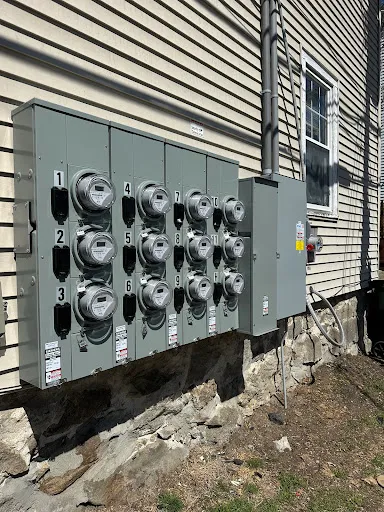
Replacing an electrical panel or upgrading a 100-amp service is the job most owners of older houses face sooner or later, whether it is a 1920s two-family near Manchester's mills or a 1970s raised ranch in Salem. It usually involves the utility, a meter disconnect and an inspection before the power goes back on.
Where a town has a building department, a panel or service change goes through it. Manchester's FAQ asks "When do I need a permit?" and points to the building division for the answer. Many smaller towns have no building inspector at all, and in those places the State Fire Marshal may run the permit process under RSA 155-A:2. Practice from town to town is uneven, so a line in the contract stating who files the permit and who books the inspection saves arguments later.
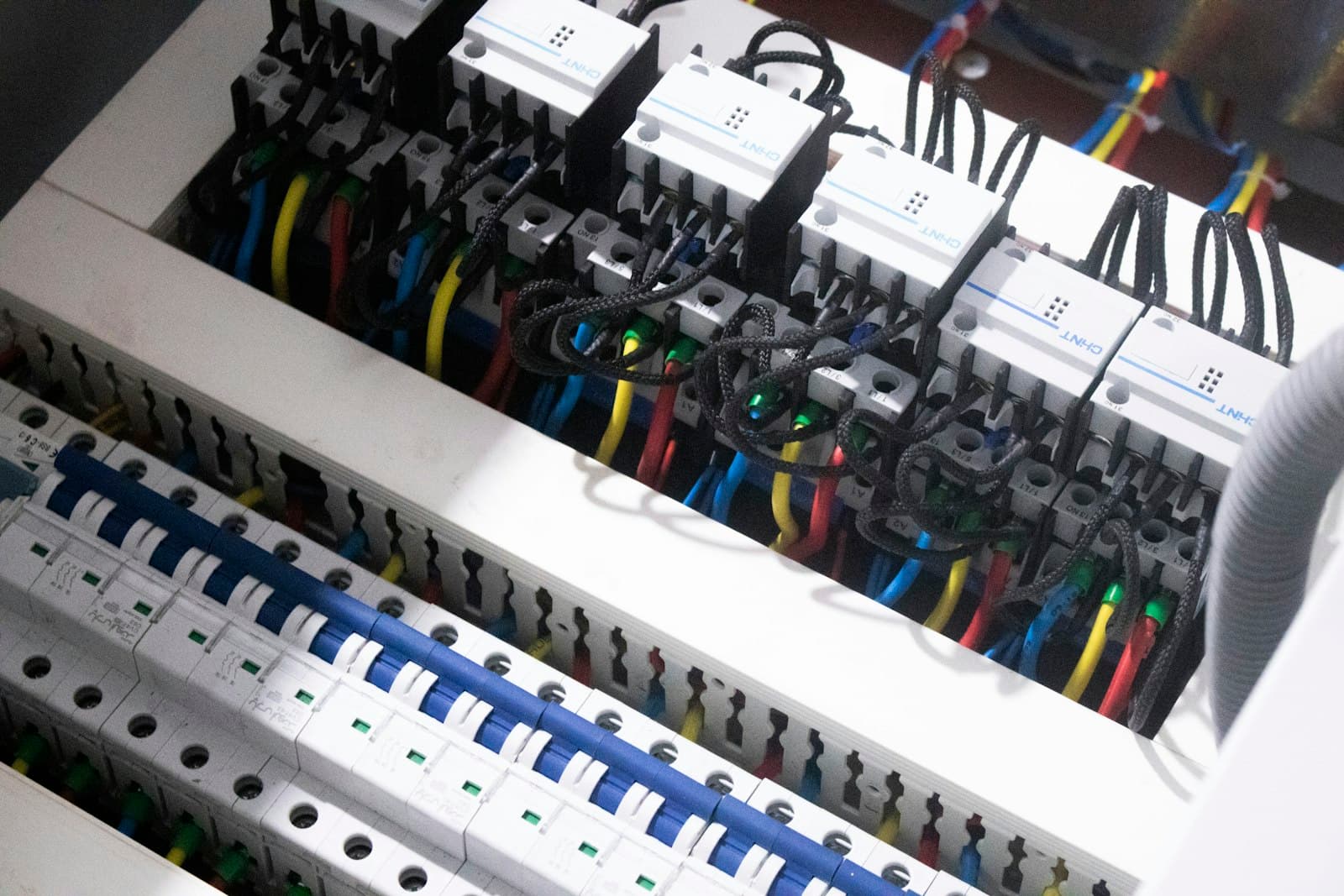
Ask for the panel brand and size, the number of circuits it will carry, and whether the price includes surge protection, labeling every breaker, and patching the wall around the new box.
Circuits for heat pumps, chargers and standby generators
Three kinds of electrical work have grown fastest in the state, all of them tied to how New Hampshire heats and how often its power fails.
Heat pumps. An air-source heat pump needs a dedicated circuit and an outdoor disconnect, and the heating installer may not be licensed to wire it. NHSaves pays a 2026 rebate of $250 a ton on a qualifying air-source heat pump, and up to $2,000 a ton when it replaces electric baseboard heat after pre-verification, capped at five tons (NHSaves electric equipment). Make sure the electrical work is on the same timeline as the rebate paperwork.
Car chargers. A Level 2 charger in a Concord or Exeter garage is a 240-volt circuit. Whether your panel has room for it is the first question; a load calculation answers it.
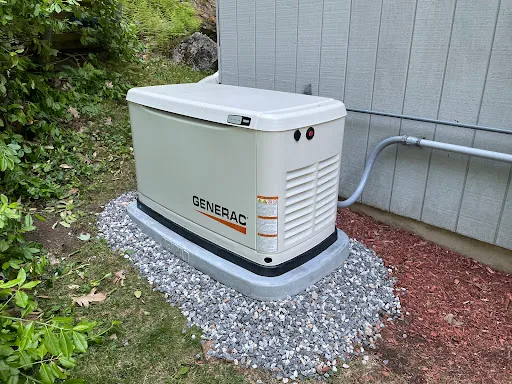
Generators. After long winter outages, standby generators and manual transfer switches are common requests from Keene to Conway. A generator connected to house wiring without a transfer switch or approved interlock can back-feed the utility line, which endangers line crews. Ask how the generator will be isolated from the grid, where the inlet and the fuel supply will sit, and which circuits it will carry, and get all of it in the written scope. A portable unit with an inlet box and a small interlock costs far less than a standby generator on a pad, and the choice decides what stays on during a three-day outage.
Old wiring in mill-era houses from Nashua to Somersworth
Much of the housing near the old mill districts of Nashua, Dover and Somersworth went up between the 1880s and the 1920s, and the wiring in those buildings has usually been patched by several generations of owners. An electrician walking through one of them is looking for a few things: cloth-insulated cable, two-prong outlets with no ground, a fuse box or an undersized panel feeding a modern kitchen, and splices hidden in walls or attics with no junction box.
None of those means the house is unsafe today, but each one limits what you can add. A new heat pump, an induction range or a car charger may be the job that forces the question. Before you agree to a whole-house rewire, ask for a written assessment that ranks what has to change now, what can wait, and what can be left alone. A good electrician will also tell you how many walls will be opened and who patches the plaster, because in a house of that age the patching can cost as much as the wire.
If you are buying an older house in Rochester or Manchester, consider paying an electrician for that walkthrough before closing. A home inspector notes visible problems; an electrician can price them.
What $460 to $970 buys on an electrical call
A typical electrical job in New Hampshire runs about $460 to $970 in the New Hampshire electrical cost estimate. The default prices a couple of outlets replaced or added and one light fixture installed, the kind of small list most service calls carry. A service upgrade, a standby generator with a transfer switch or rewiring part of an old house costs many times more.
Travel is the hidden variable. An electrician based in Lebanon may cover the Upper Valley on both sides of the river, and one in Berlin may drive an hour each way to a camp in Errol. Ask how travel is billed and whether there is a minimum charge.
Because New Hampshire has no state contractor registration or home-improvement contract law, the written quote carries the whole bargain. List the work, the fixtures or equipment, the permit and inspection, the price and when payment is due. Keep the deposit tied to materials you can see on site.