New Hampshire has a season named for wet ground. Mud season runs through March and April, when snowmelt and spring rain soak into soil that is still frozen a foot or two down. The water has nowhere to go but sideways, and it finds the basement. Owners in Hooksett, Pembroke and Allenstown along the Merrimack, in the old fieldstone cellars of Lee and Durham, and in hillside ranches in Plymouth and Enfield all see the same pattern: dry all year, then a puddle in April. The question is who to call and what to pay for.
Why basements leak in March and April
Most basement water is not a mystery. It comes from one of a few places:
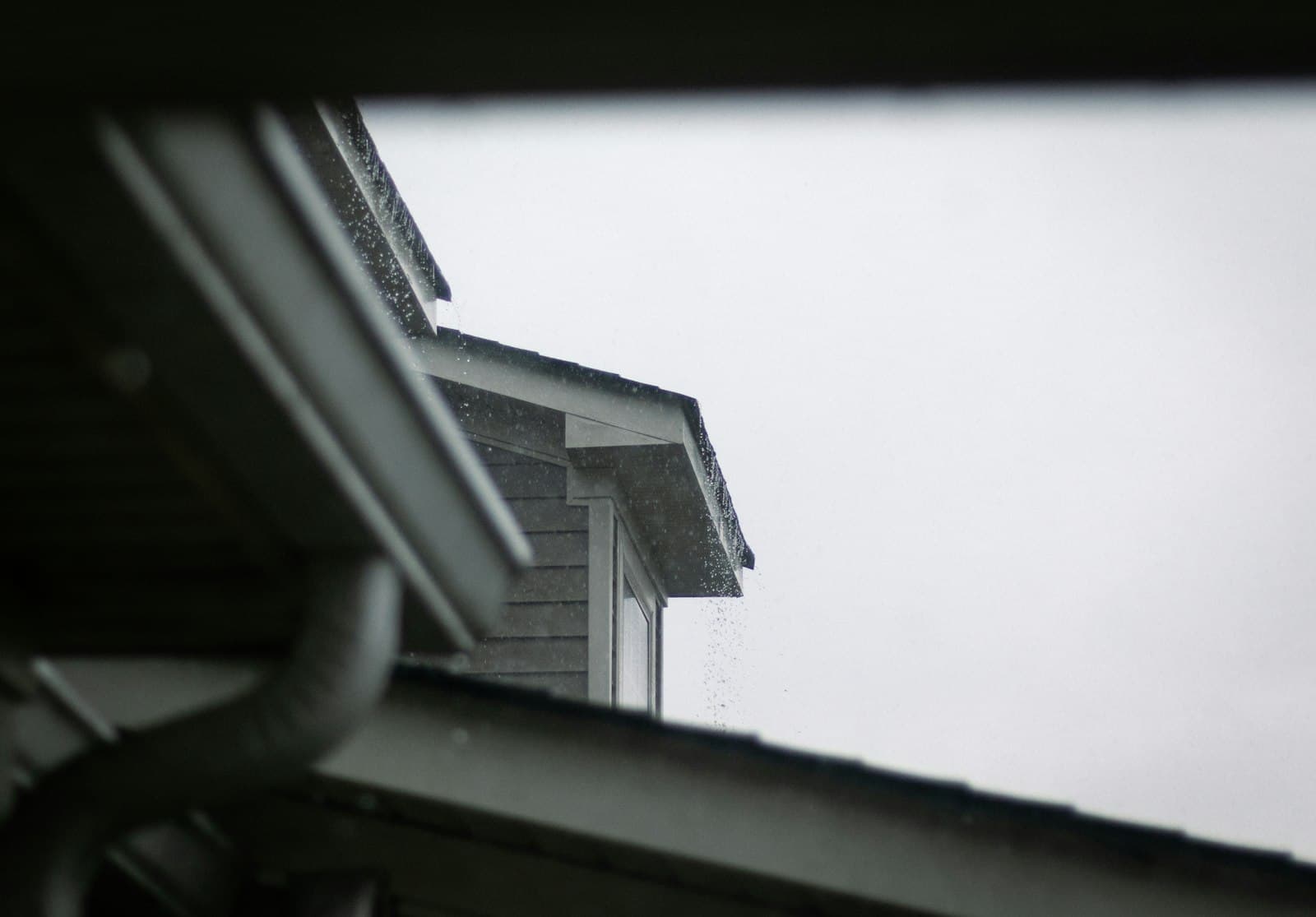
- Surface water from roofs and driveways, dumped next to the foundation by short downspouts and soil that slopes toward the house.
- Groundwater pushing up as the water table rises, coming through the joint between the floor slab and the wall, or through cracks in the slab.
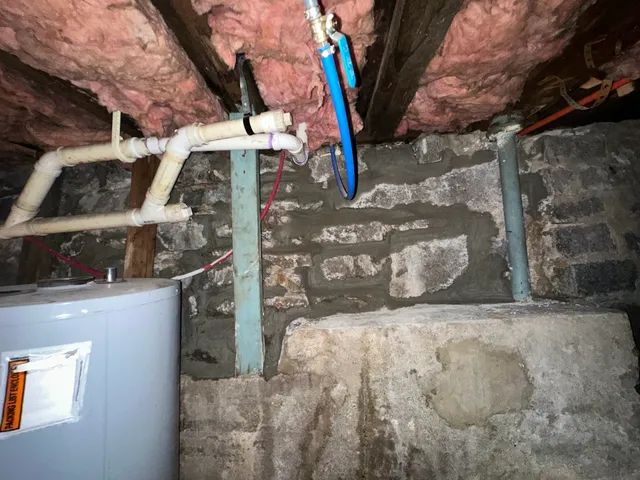
- Cracks in poured concrete walls, or open joints in older block, brick or fieldstone foundations.
- Condensation, which looks like a leak but is humid summer air meeting cool walls.
A contractor who sells the same system to every house without asking where the water appears, when, and after what kind of weather is selling a product, not solving a problem. Walk the outside of the house with them and look at gutters, downspouts and grading before you talk about drains.
The cheap fixes outside the house come first
Before an interior system, fix what is outside. Extending downspouts ten feet or more from the foundation, cleaning gutters that overflow in a thaw, and regrading soil to slope away from the house cost little and solve a surprising share of spring leaks. A good waterproofing contractor will tell you so, even though it is not their product. Be wary of one who does not mention it.
If the leak is through one crack in a poured wall, crack injection from inside, with epoxy or polyurethane, is a small job. A whole-perimeter system is for water that comes in along the base of the walls in many places.
Interior drain and sump versus digging outside
Two approaches handle groundwater:
Interior perimeter drain. The crew cuts a trench in the slab along the inside of the foundation walls, lays perforated pipe in gravel, which carries the water to a pit; a pump in the pit then lifts it out of the house. A membrane on the walls directs water from the wall down into the drain. It manages water rather than stopping it, works year-round, and does not disturb landscaping.
Exterior excavation. The crew digs down the outside of the foundation, applies a waterproof coating or membrane, installs a footing drain, and backfills with gravel. It stops water at the wall but costs more and tears up whatever is next to the house: a deck, a walkway, plantings. Because it is digging, it needs the Dig Safe notice under RSA 374:51, with the area outlined in white before the call. It also needs thawed ground, which in Berlin or Gorham may mean waiting until late spring.
Ask each contractor which they recommend for your house and why. If one says interior and another says exterior, ask each to explain what the other would miss.
Discharge lines in January and pumps in an outage
A sump pump lifts water from under your basement to somewhere else, and where that is matters. Water discharged right outside the foundation can cycle back in. Discharge across a sidewalk freezes into a sheet of ice in January. Some towns have rules about connecting sump pumps to sewers or storm drains; ask your town before the line is run.
Ask the contractor where the discharge will end up, how the line will be kept from freezing, and whether there is a check valve so water does not run back into the pit. A storm that raises the water table is often the same storm that cuts power, and in rural New Hampshire outages can last days. If the basement is finished or holds a boiler and a freezer full of food, ask about a battery backup pump or a generator connection.
Seal the basement, then test the air for radon
Most of New Hampshire sits on granite bedrock, and EPA's radon zone map shows much of the state with high radon potential. Testing is advised in any home here. Radon comes up through the soil and enters through the same cracks and gaps that let water in.
A waterproofing job changes the basement in ways that affect radon. A sump pit is a hole in the slab; an open pit can pull in soil gas. Ask the contractor whether the sump will have a sealed, airtight lid. If radon is already high, a mitigation system can often use the same sub-slab drain. Test before the work and again after.
If you are on a private well, radon can come in through the water too. NHDES estimates that a majority of private wells exceed its advisory level for radon in water and recommends testing every three to five years (NHDES private wells).
Lifetime warranties: read what they actually cover
Waterproofing companies often sell a "lifetime" or transferable warranty, and it is a big part of the price. Before you sign, read it:
- Does it cover the system working, or only the parts? Is labor included?
- Does it cover water through the walls, the floor, or only the area the system was installed in?
- Does it transfer to a buyer, and is there a fee or a form to do so?
- Does it require an annual service visit to stay valid, at your cost?
- What happens if the company is sold or closes?
New Hampshire does not license waterproofing contractors, so there is no state record to check. The Attorney General's office says home-improvement scams are among its most common complaints and lists its hotline, 1-888-468-4454, in its consumer alert. A company that sells you a warranty and then refuses to honor it can be pursued under the Consumer Protection Act, which lets a court award actual damages or $1,000, whichever is greater, and up to triple that for willful conduct (RSA 358-A:10).
Pricing an interior drain and sump
An interior perimeter drain with a sump pump runs about $6,700 to $13,200 in the New Hampshire waterproofing cost estimate. Crack injection costs a fraction of that; exterior excavation costs more. Fieldstone foundations, common in older houses in Dover and Lebanon, are harder to work with and may cost more.
Get at least two quotes and compare: linear feet of drain, the pump model and horsepower, backup, discharge line, wall membrane, cleanup and removal of the cut concrete, the warranty, and the payment schedule.