Fences in Maine go into some of the hardest ground in New England. A post hole in Scarborough or Saco may go down easily through sand, while one in Hermon or Poland hits a glacial boulder a foot down, and one on the coast near Topsham meets ledge. Then winter heaves whatever is in the ground. Choosing a fence company here is partly about wood and vinyl, and mostly about how they handle what is under your yard.
Who has to call Dig Safe, and how far ahead?
Maine's underground-facility law, 23 M.R.S. §3360-A, applies to anyone who excavates, and auguring post holes counts. The rule sets a window: the excavator must notify Dig Safe at least three business days before digging, but no more than thirty calendar days before. Once notified, the companies that own buried lines have two full business days to mark them.
In practice that means:
- A call placed on a Wednesday afternoon won't clear the digging for the following Monday; count business days, not calendar days.
- A call placed in early April for a fence that slips into June has gone stale and must be made again.
- Marks are painted on the ground or flagged. Ask the crew not to start until every utility listed in the ticket has marked or cleared.
Dig Safe takes calls at 811 or 888-344-7233. Normally the fence company places the call in its own name, since it is the one digging. Ask for the ticket number and keep it. Dig Safe covers the utilities' lines up to the meter, not your own buried wires to a garage light or the pipe from the well to the house. Mark those yourself or tell the crew where they run.
What happens to posts in frost and ledge?
Frost is the reason fences in Maine lean. Ask every bidder how deep they set posts, whether they use concrete, gravel or both, and how they keep water from collecting around the base. A contractor who has worked around Augusta or Presque Isle for years will have opinions about this, and that is a good sign.
Ledge is the other issue. When an auger hits rock, the crew can drill and pin a post to the ledge, use a surface-mounted bracket, or shift the post. Each has a different cost. The most useful line in a fence contract is a stated price per post for rock: a per-hole charge for drilling and pinning, written before the job, prevents an argument afterward. Ask too how the fence line will be adjusted if a buried boulder sits where a gate post should go.
Can a fence go in on a lake or coastal lot?
Often, but check first. Maine sets a shoreland zone within 250 feet of the normal high-water line of great ponds, rivers and tidal waters, plus a 75-foot zone along certain streams (38 M.R.S. §435). Each town enforces its own shoreland ordinance, and DEP sends homeowners to the local code enforcement officer as the first contact (Maine DEP shoreland zoning).
Shoreland rules focus on cutting vegetation, disturbing soil and building structures near the water. A fence near a camp on Sebago or Moosehead may raise questions about clearing a path for the line, or about soil disturbance on a steep bank. Describe the fence and its route to the town office before you order materials.
Shoreland rules apply whether or not the town has a building inspector. In Fryeburg or Waterboro, as in the larger towns, the code officer is the person to ask.
Does a fence need a contract and a permit?
Maine licenses no fence contractor; the Attorney General notes that most building trades go unregulated. Whether a fence on its own counts as "home construction" under the state's contracts Act isn't spelled out the way windows and carpeting are. Ask for a contract in the Act's form anyway. Under §1487, a covered job above $3,000 must be on paper with both signatures, must say when work should begin and end, and may require only a third of the price at the start. Those protections cost the contractor nothing and give you a clear record.
For permits, size of town matters. Maine's building code must be enforced only where more than 4,000 people live (10 M.R.S. §9724), and fence height and setback limits come from local zoning rather than the state code. Some towns want a permit for a fence over a set height or within a set distance of the road; others have no rule. If the fence also has to keep children out of a pool, tell the town that when you ask, because pool barriers can carry their own local rules.
Before the crew lays out the line, find your survey pins. A fence a foot over a boundary is a long-lasting problem with a neighbor. If you can't find pins, a survey is cheaper than moving the fence.
Which material holds up to a Maine winter and a plow?
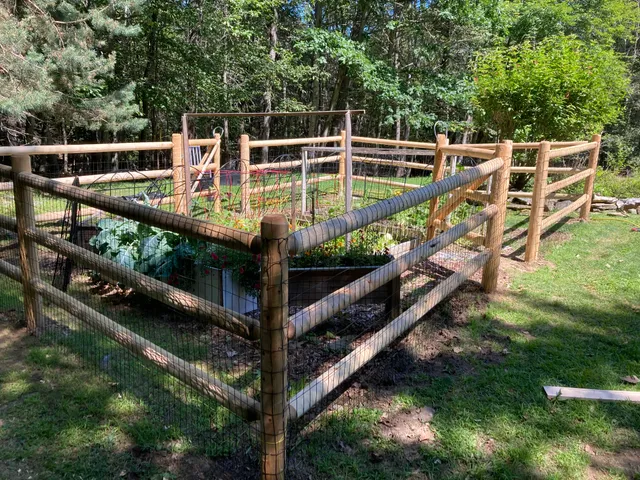
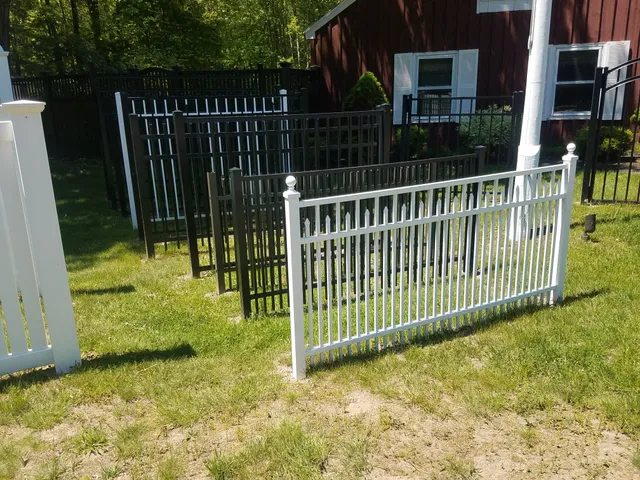
Ask the question about your own yard, not in general. A fence along the road takes salt spray and the wing of a town plow; one at the back of the lot mostly takes snow load and shade. Wood, vinyl, aluminum and chain link each fail differently, and a contractor who works in your area should be able to tell you which they replace most often and why.
Some practical points to raise:
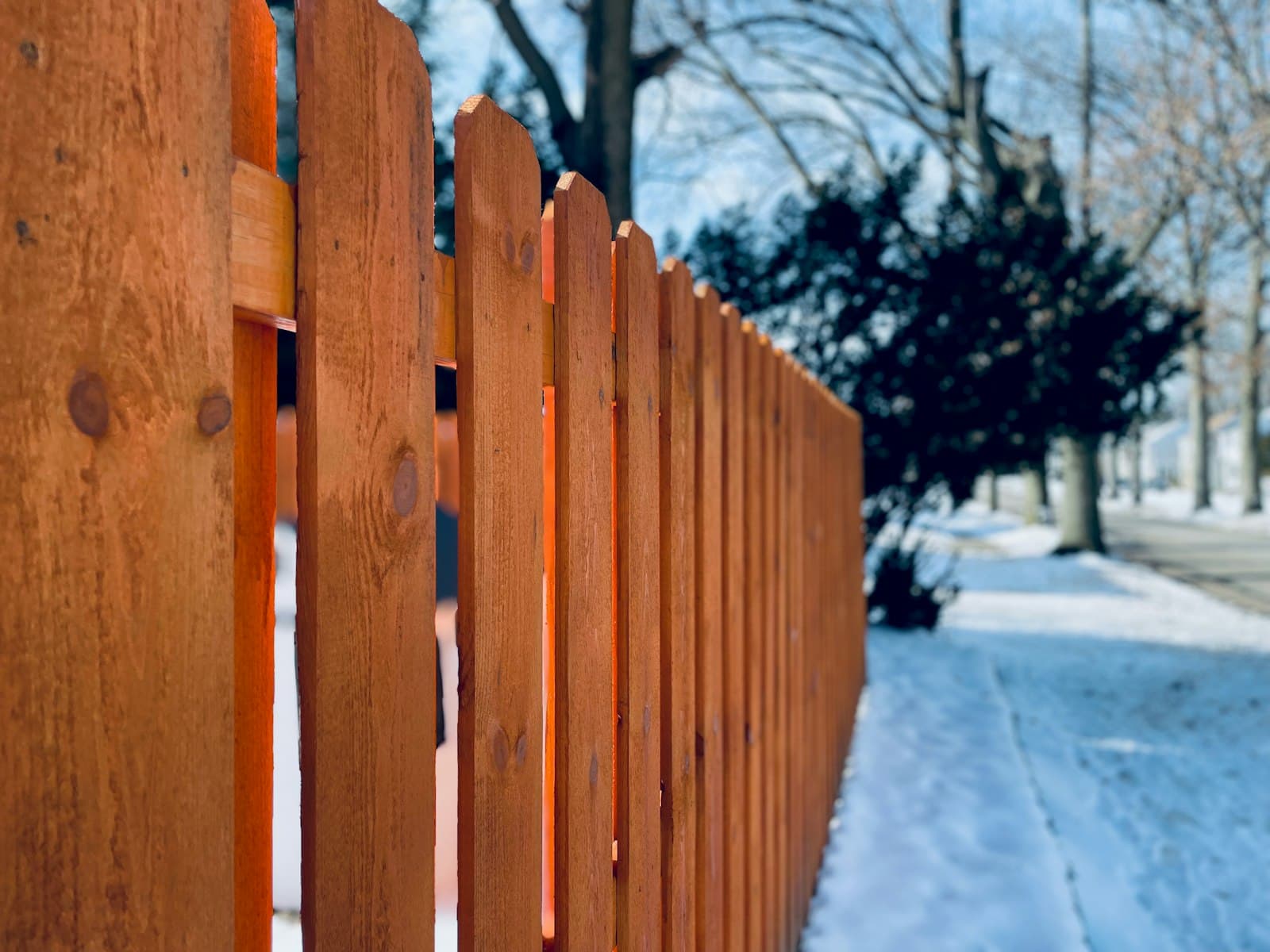
- Snow. Solid privacy panels catch drifting snow and can lean or crack under the load. Spaced boards or picket styles let wind and snow through.
- Plow line. Keep the fence back from the edge of a plowed road or driveway, where snow is thrown hardest. Ask how far the crew recommends.
- Gates. Frost can lift one gate post and not its partner, and a gate that latched in July drags in February. Ask how they set gate posts and what adjustment the hardware allows.
- Warranty. Ask what the company covers on workmanship and for how long, separate from any manufacturer's warranty on the material, and get it in writing.
What should a Maine fence quote list?
The Maine calculator default for a typical fence job is about $3,650 to $7,150; the Maine fence cost estimate explains the assumptions. A good quote includes:
- the total linear feet and the material, by species or product line
- post spacing, post depth and the footing method
- the number and width of gates, with hardware named
- a per-post price for rock
- who calls Dig Safe and who handles any town permit
- removal of the old fence and the spoils from post holes
- an estimated start date, which in Maine depends on frost leaving the ground
Fence crews in Buxton, Gorham and Glenburn tend to book spring work during the winter. If you need a dog fence by a certain date, say so before you sign.