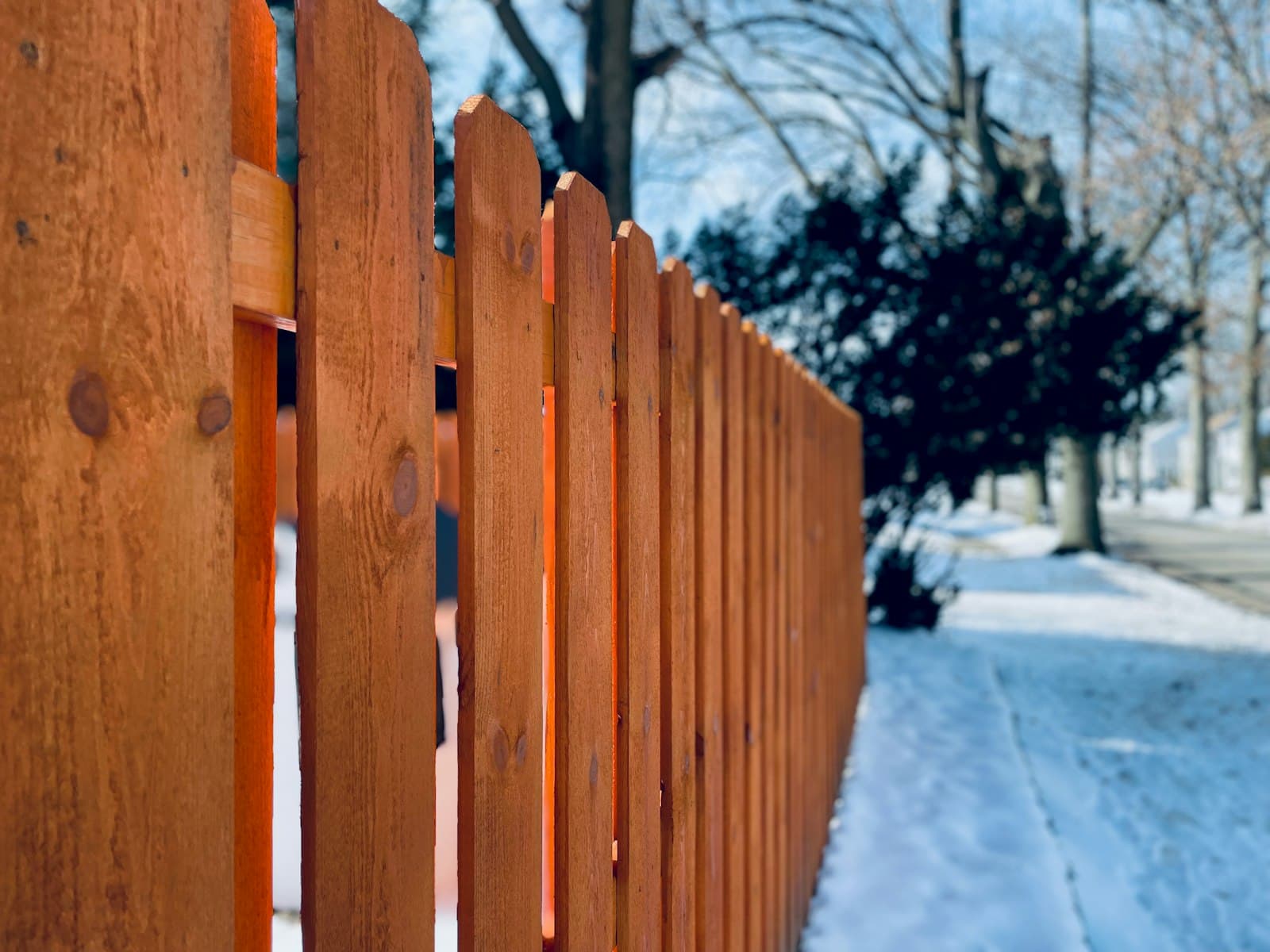
Fence building in Vermont covers a wide range of jobs: a picket fence along a sidewalk in Burlington, a privacy fence between new houses in Williston, a cedar rail along a pasture in Georgia or Danville, a deer fence around a garden in Woodstock. What they share is that the state takes a light hand with them, the ground is hard to dig and freezes deep, and a buried line is never far away. That puts most of the checking on you and your town.
Why a fence builder needs no state registration
Under 26 V.S.A. chapter 106, most residential construction over $10,000 can only be contracted by someone registered with the Office of Professional Regulation. Its list of exemptions in section 5502 includes work on a structure that is not attached to a residential building. A freestanding fence is exactly that. So a fence company in Fairfax or Bennington does not need to appear on the state register, however large the job.
That changes where the protection comes from. Without a registration requirement, the statute's written-contract and deposit rules for registered contractors do not frame the deal either. Ask for a written quote anyway, with the length, height, material, gate count, post spacing and setting method spelled out, and the start date. The Attorney General's home repair checklist applies to any home job, and it frames a sensible deposit as somewhere around a tenth to under a third of the price; for a fence, a deposit that covers ordered materials is reasonable.
There is one gray area worth asking about. A fence that ties into the house, a deck railing or a gate attached to the building is no longer freestanding. If the contract includes work on the house itself and the total passes $10,000, the registration rule may come back into play.
The 811 call and the 72-hour marking clock
Every post hole is an excavation. Before any digging, someone has to call 811. Dig Safe is the free notification center Vermont uses; it passes your request to the member utilities and does not mark lines itself. Under 30 V.S.A. § 7006, the utilities then have 72 hours, not counting weekends and holidays, to mark their facilities.
In practice that means a call on Thursday may not produce marks until the middle of the next week. Ask the fence contractor who places the call, and make sure the marks are in place before the auger comes out.
Private lines are the gap. A Dig Safe call brings out the companies that own lines up to your meter, not the pipe from your well, the line to your septic tank or a buried power feed to a garage. On a rural lot in Barnet or Middlesex those private runs can cross exactly where a fence line wants to go. Walk the line with the contractor and mark anything you know of.
Zoning, setbacks and Burlington's short form
No state permit covers a residential fence. Towns do. Burlington's construction permits page exempts nonsolid fences from the building permit and lists fences among the short-form applications; zoning approval still comes first, and height and placement rules apply. In South Burlington or Shelburne, expect zoning rules on how tall a front-yard fence can be and how close to the property line it may sit.
In smaller towns, the zoning administrator is the person to call. Many towns have no fence rules at all; some do, especially in village centers. A survey or at least a clear boundary is worth having before you build. A fence a foot onto a neighbor's land is a dispute that outlasts the fence.
Clearing a fence line near a lake or pond
A fence near the water can run into Vermont's shoreland law before it runs into zoning. The band within 250 feet of a lake of more than 10 acres is protected, and clearing vegetation there may need a permit from the Department of Environmental Conservation, as its lakes permit page explains. The statute's standards, in 10 V.S.A. § 1444, generally keep new cleared area and impervious surface at least 100 feet back from the water and off steep slopes.
A fence post itself is small. A cleared strip for a fence through lakeside woods is not. If your property in Waterbury, Shelburne or the Northeast Kingdom fronts a lake, ask DEC before you cut.
Setting posts in ledge and frost
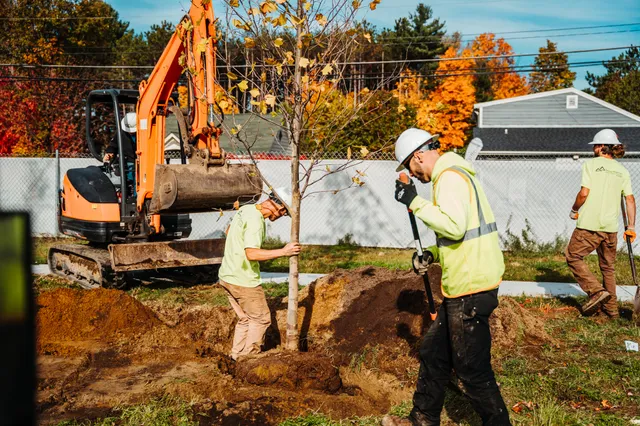
Two Vermont conditions shape a fence quote more than the material does. The first is rock. Much of the state has shallow soil over ledge or glacial stones, and a contractor who hits rock has to drill, move the post or set it on a pin. Ask how the quote handles that: a per-hole charge, an hourly rate, or a fixed price that includes the risk.
The second is frost. Winters are long and the ground freezes deep, and posts set too shallow get pushed up over a few seasons, leaving gates that no longer latch. Ask how deep the posts go, whether they sit in concrete or compacted gravel, and how the contractor keeps water from pooling at the base. A fence company that has worked in the hills around Pownal or Arlington will have a firm answer.
Booking around mud season and the first snow
The fence season in Vermont is shorter than the calendar suggests. In spring, snowmelt and mud season soften the ground and damage back roads, and a loaded truck with an auger may not be welcome on a soft driveway or a muddy back road in Danville or Barnet. In late fall, frozen ground ends digging. Most installers fill their summer schedules early. If you want a fence by July, ask in March, and ask the company what happens to your place in line if the ground is too wet on the scheduled day.
Gates, snow and the plow
A gate that works in August can be useless in February. Snow piles against it, ice locks the latch, and frost heave shifts the posts so the gate drags. Ask the contractor how the gate posts are set compared with the line posts, whether the gate swings in or out, and how far it sits from where the plow throws snow at the end of the driveway. A driveway gate in a snowy town is a different design from a garden gate, and a good fence company will raise that question before you do.
Matching the fence to the land
The Vermont calculator default for a typical fence project is about $3,550 to $7,000; the Vermont fence cost page shows how material and length change the total. Agricultural fencing, a long run of split rail or a high-tensile wire fence for livestock is priced differently from a suburban privacy fence, and some fence companies do only one kind. Ask for photos of fences the company built at least three years ago, not just last month. How a fence looks after a few winters is the real reference.