Tavlee
Coverage map
  • Explore
  • Saved
  • Log in
Tavlee
Coverage map
Tavlee

A trustworthy directory of home contractors — every claim sourced, licenses verified, rankings that can't be bought.

Trades in Greater Hartford

  • Plumbers in Greater Hartford
  • Electricians in Greater Hartford
  • HVAC Contractors in Greater Hartford
  • Roofers in Greater Hartford
  • General Contractors in Greater Hartford
  • Bathroom Remodelers in Greater Hartford
  • Kitchen Remodelers in Greater Hartford
  • Window, Siding & Gutter Contractors in Greater Hartford
  • Fence Contractors in Greater Hartford
  • Landscapers in Greater Hartford

Hiring guide · Connecticut

Hiring a Fence Contractor in Connecticut: Height Permits, 811 Calls and Rural Yards

By Tavlee · Published November 3, 2026

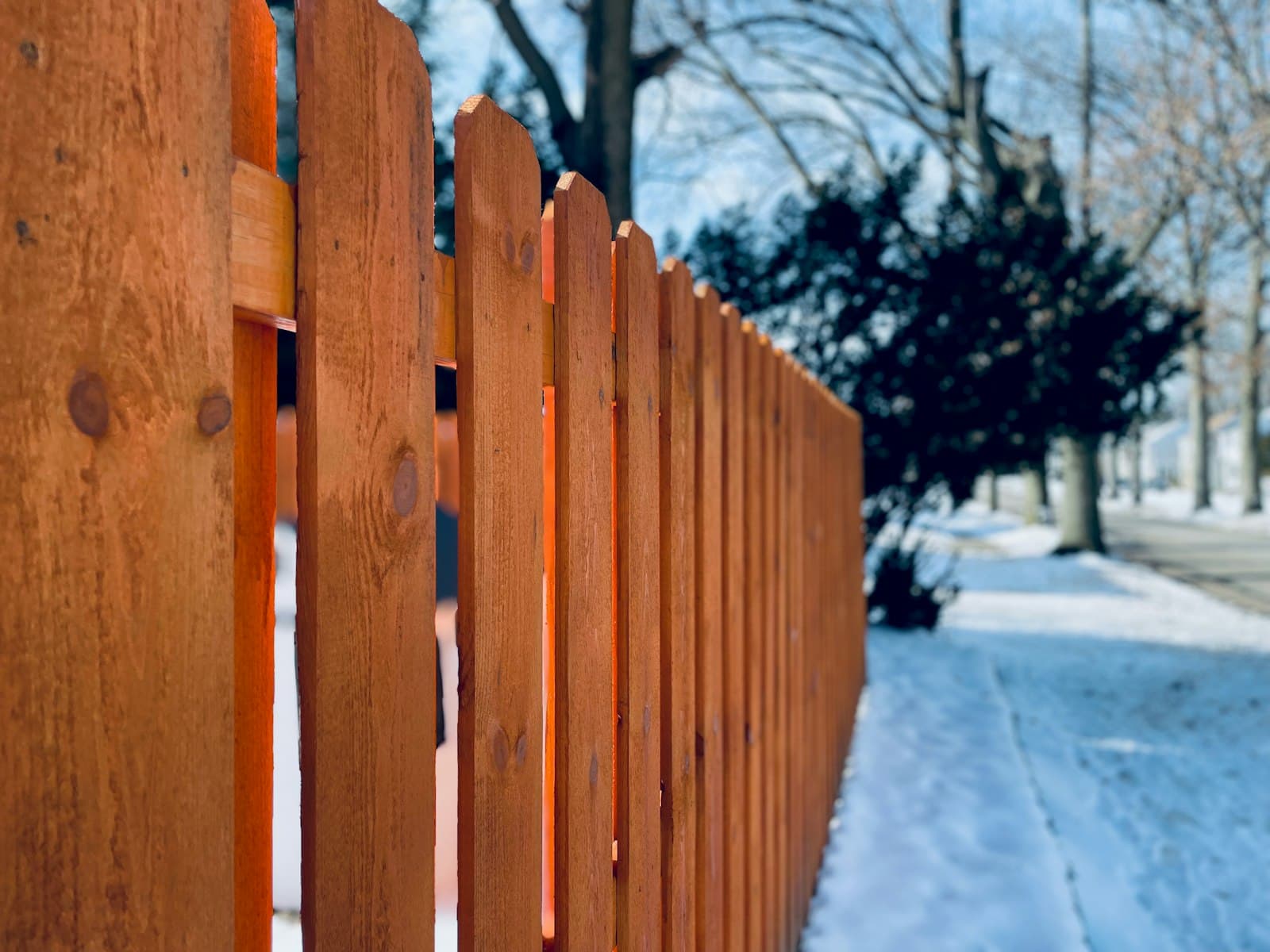
A wooden fence line in winter
Photo: Steve DiMatteo on Unsplash

The short answer

A typical Connecticut fence job costs about $4,050 to $7,950. Fences are listed in the Home Improvement Act, so the installer should hold an HIC registration you can find on eLicense. Permit rules are local: Bridgeport, for one, requires a permit for fences over 7 feet. State law also requires notice to Call Before You Dig, at 811, before any post hole is dug.

Credential
Home Improvement Contractor registration (fences are named in the law)
Before digging
Call Before You Dig (811) notice is required for any excavation
Typical fence
About $4,050 to $7,950 (Connecticut calculator default)
Typical cost
$4,050 – $7,950
Tracked on Tavlee
65 fence contractors in Greater Hartford

A fence is a simple project with more rules attached than most owners expect. In Connecticut, the installer has to be registered with the state, the town may want a permit or a zoning sign-off, and the utilities have to mark their lines before a single post hole goes in. In the rural half of the state, a well line and a septic field add two more things not to dig through.

Why a fence installer needs a state registration

The Home Improvement Act defines home improvement broadly and lists fences specifically, along with patios, driveways and pools (CGS Sec. 20-419). Any fence job on a home above $200 falls inside it. The company building yours should hold an active Home Improvement Contractor registration with the Department of Consumer Protection; search the name on eLicense and match it to the quote.

The law excludes a person whose home improvement contracts total $1,000 or less over any 12 months. That carve-out is for the neighbor who builds one fence a year, not a fence company. Anyone advertising fence installation is well past it.

When fence height means a building permit

Connecticut doesn't set one fence permit rule for the whole state. Each town's building official and zoning office decide what needs approval. Bridgeport's building department, for example, lists the projects it permits on its building permit page: decks, in-ground and above-ground pools, retaining walls over 3 feet, and fences over 7 feet. Most residential fences in Bridgeport are lower than that and don't need a building permit there, though zoning rules on height and placement still apply.

Other towns draw the lines elsewhere. In Fairfield, Shelton or Trumbull, in Cheshire or Tolland, call the building and zoning offices before ordering materials and ask three questions:

  • Does a fence of this height need a building permit or a zoning permit?
  • How tall can a fence be in a front yard, a side yard and a back yard?
  • Are there setback, sight-line or corner-lot rules for driveways and intersections?

Pool fences and fences in historic districts carry their own rules. Write who is responsible for the permit into the contract. DCP's contracting guidance treats it as the owner's responsibility in the end.

Calling 811 before the first post hole

Connecticut requires notice to the one-call center before any excavation (CGS Sec. 16-349), and an auger for fence posts counts. The state's center is Call Before You Dig: dial 811 or file online at cbyd.com, which has a section for homeowners digging on their own property.

The notice brings the utilities out to mark their buried gas, electric, cable and water lines. It doesn't mark lines you own, such as:

  • the electric feed to a detached garage or lamp post,
  • an irrigation system,
  • a propane line to a generator,
  • the pipe from a well to the house,
  • the line to the septic tank and the leach field.

Those are your job to locate before the fence company arrives. Walk the line with the installer and flag anything you know about.

Wells and septic fields in rural yards

About 23% of Connecticut residents get their water from a private well, and in towns such as Newtown, Brookfield, Colchester, Ledyard, Coventry or Sharon a well and a septic system are the default. The Department of Public Health notes that local health departments and districts approve where wells go, and that owners are responsible for testing their own water.

Two practical points for a fence:

  • Keep posts and concrete off the leach field. A row of footings through a septic field can damage pipes and compact the soil. If you don't know where the field is, the town or health district may have the original plan on file.
  • Leave access. A well pump needs a truck to reach it someday, and a septic tank needs a pumping truck every few years. A fence with no wide gate in the right place becomes an expensive problem later.

Ledge, slopes and long runs in the hills

If your yard is rocky, the auger will find out quickly. Ledge and boulders stop a post hole short, and a post that can't go deep enough has to be pinned to rock or shifted along the line. Ask a fence contractor who works in Southbury, Middlebury or Monroe how they price ledge: a flat rate per post, an hourly charge, or a change order once they hit it.

Sloped yards raise a second question: whether the fence steps down the hill in level sections or racks to follow the grade. Both work, but they look different and cost differently. Settle it on paper before the panels are ordered.

Picking a material for shore and inland yards

Material choice shifts with location. Near Long Island Sound, salt air shortens the life of some metal hardware, so ask about stainless or coated fasteners and hinges. Inland, the bigger enemies are frost and wet soil, which heave posts and rot wood at the ground line.

When you compare quotes, line them up on:

  • post material, spacing and depth;
  • whether posts are set in concrete, gravel or driven;
  • gates, latches and hardware, including the hinge brand;
  • removal and disposal of an old fence;
  • who handles the 811 notice and any permit.

Materials up front: how to stage the payments

Fence companies often ask for a larger first payment than other trades, because they order panels, posts and gates for your job before they start. That's reasonable within limits. The Department of Consumer Protection's general guidance is that a first payment should normally be no more than about a third of the project, with the remainder paid as work progresses, and never in cash. There's no legal cap, so the number is something you negotiate.

A workable pattern for a fence is a deposit at signing, a second payment when materials are delivered to your property, and the balance when the last gate swings properly and the old fence is gone. Ask for the delivery to be itemized so you can count what arrived.

The written contract still has to meet the Home Improvement Act: signed and dated by both of you, carrying the installer's registration number, a starting date and a completion date, and your three-day cancellation notice. A one-line estimate on a business card isn't a contract the installer can enforce against you.

Fences between neighbors

Shared fences cause more friction than any other part of the job. If the fence will sit on or near the line, talk to the neighbor before the posts go in, and put any cost-sharing agreement in writing between the two of you. The contractor's contract is with whoever signs it, not with both households.

Fence pricing by the foot, and the spring backlog

The state's calculator puts a typical fence at $4,050 to $7,950. Adjust for length, height and material on the Connecticut fence cost page. Fence quotes in Fairfield County tend to be highest, and quotes in eastern Connecticut and the Northwest Hills lower. Spring is the busiest season, so getting quotes in late winter usually means an earlier install date.
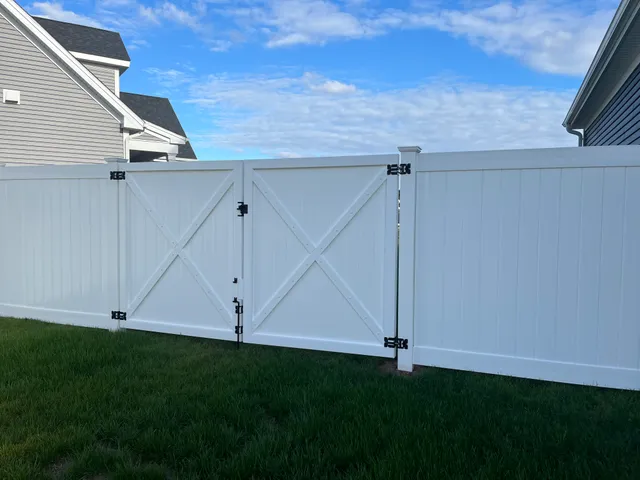

What does a fence cost in Connecticut?

Most fencing projects in Connecticut run $4,050 – $7,950. Adjust the estimate for your job in the fence contractor cost guide.

Top-rated fence contractors in Greater Hartford

These are the strongest fence contractors on the evidence: reviews and public mentions weighed across sources, every claim linked to where it was found. Rankings can't be bought.

Connecticut Fence Works LLC work photo
License verified

Connecticut Fence Works LLC

Tree-damaged fence repaired within a week5.0

Cox Fence work photo
License verified

Cox Fence

Owner handled the permit and call-before-you-dig5.0

RSVP Fence LLC work photo
License verified

RSVP Fence LLC

Temporary fence put up after a vehicle strike4.8

See all 65 fence contractors in Greater Hartford

Hiring fence contractors in Connecticut: your questions

Do fence contractors in Connecticut need a license?
Most home-improvement work in Connecticut calls for a registered home-improvement contractor. Ask for the license number and look it up with the Connecticut Department of Consumer Protection (www.elicense.ct.gov) before you sign. Connecticut's Home Improvement Act (CGS 20-429) makes a contract unenforceable against you unless it is in writing, signed by both sides, dated, shows the contractor's registration number, a start date and a completion date, and your cancellation rights; the Home Improvement Guaranty Fund pays up to $25,000 per claim to a homeowner harmed by a registered contractor.
How much does a new fence cost in Connecticut?
The state calculator's default for a typical fence is about $4,050 to $7,950. Material drives most of the spread: chain link and basic wood picket stay near the bottom, while vinyl privacy, cedar board or ornamental aluminum on a long run cost more.
Who is responsible for calling 811 before a fence is installed?
State law requires notice before any excavation, and the person digging is normally the one who files it. Agree in writing that the fence company will submit the request and wait for marks, and ask for the ticket number before posts go in.
Do I need a survey before putting up a fence?
It is wise if you plan to build near the line. A fence contractor sets posts where you tell them to; they generally don't certify where your property ends. Pins found by a licensed surveyor avoid a dispute with a neighbor after the concrete has cured.
Which side of the fence faces out?
Many towns and neighbors expect the finished side to face out, and some zoning rules address it. Ask the fence company what your town requires, and check with the zoning office before you order panels.

Sources

  • CGS chapter 400: Home Improvement Act
  • CT eLicense: license and registration lookup
  • Bridgeport Building Department: building permit
  • Call Before You Dig (CBYD)
  • CGS chapter 293: excavation notice (Sec. 16-349)
  • CT DPH: private wells
  • CT DCP: contracting and working with a home improvement contractor

More guides

In other states: Greater Boston · North Shore · Greater Worcester · South Shore · Cape Cod · Western Massachusetts · Maine · New Hampshire · Vermont · Greater Providence

Other trades in Connecticut: Plumbers · Electricians · HVAC Contractors · Roofers · General Contractors · Bathroom Remodelers · Kitchen Remodelers · Window, Siding & Gutter Contractors · Landscapers · Painters · Waterproofing Contractors · Handymen · Carpenters · Flooring Contractors · Exterminators · Home Inspectors · Movers · House Cleaners · Pool Cleaners · Masonry Contractors

All Connecticut hiring guides →

  • Painters in Greater Hartford
  • Waterproofing Contractors in Greater Hartford
  • Handymen in Greater Hartford
  • Carpenters in Greater Hartford
  • Flooring Contractors in Greater Hartford
  • Exterminators in Greater Hartford
  • Home Inspectors in Greater Hartford
  • Movers in Greater Hartford
  • House Cleaners in Greater Hartford
  • Pool Cleaners in Greater Hartford
  • Masonry Contractors in Greater Hartford
  • Fence Contractors nearby

    • Fence Contractors in Greater Boston
    • Fence Contractors in Merrimack Valley
    • Fence Contractors in North Shore
    • Fence Contractors in MetroWest
    • Fence Contractors in Greater Worcester
    • Fence Contractors in South Shore
    • Fence Contractors in Southeastern Massachusetts
    • Fence Contractors in South Coast
    • Fence Contractors in Cape Cod
    • Fence Contractors in Greater Nashua
    • Fence Contractors in Greater Providence
    • Fence Contractors in Greater Springfield
    • Fence Contractors in Greater Portland
    • Fence Contractors in Greater Manchester
    • Fence Contractors in The Berkshires
    • Fence Contractors in Seacoast
    • Fence Contractors in Lakes Region & Central NH
    • Fence Contractors in Monadnock & Upper Valley
    • Fence Contractors in North Country
    • Fence Contractors in South County
    • Fence Contractors in East Bay & Newport
    • Fence Contractors in Greater Hartford
    • Fence Contractors in Greater New Haven
    • Fence Contractors in Fairfield County
    • Fence Contractors in Eastern Connecticut
    • Fence Contractors in Litchfield Hills
    • Fence Contractors in Southern Maine
    • Fence Contractors in Lewiston-Auburn & Western Maine
    • Fence Contractors in Midcoast & Mid-Maine
    • Fence Contractors in Bangor & Downeast
    • Fence Contractors in Aroostook County
    • Fence Contractors in Champlain Valley
    • Fence Contractors in Central Vermont
    • Fence Contractors in Northeast Kingdom
    • Fence Contractors in Southern Vermont
    • Fence Contractor cost in Greater Hartford
    • Guide to hiring fence contractors in Connecticut
    © 2026 Tavlee Inc. All rights reserved.AboutPress & MediaGuidesBlogPrivacyTermsSupport Center

    Ratings weighed across every source · state-license verified · citations you can open.