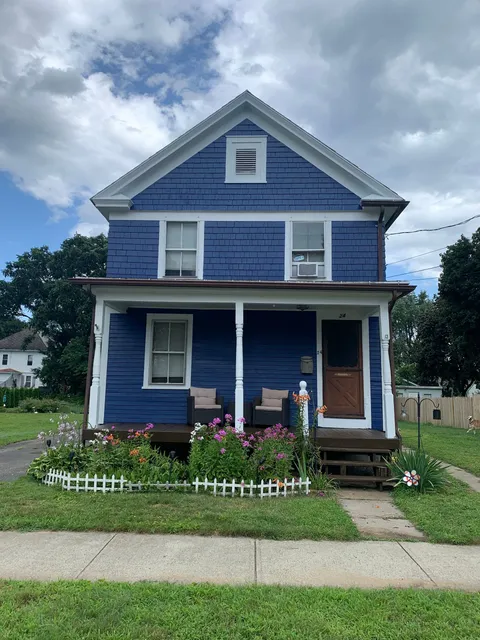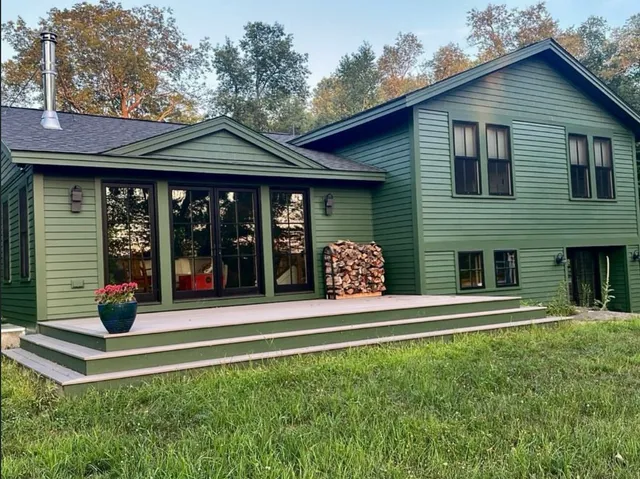
Paint is what most of Western Massachusetts' old wooden houses are held together with. A Longmeadow colonial, a Northampton Victorian, a Williamstown farmhouse and a Holyoke worker's cottage may each carry a dozen coats laid down over a century. A painter who works these houses spends far more time on preparation than on the finish, and how they handle that preparation is the difference between a job that lasts and a lead hazard in your yard.
Exterior versus interior: why only one side needs a registered painter
Massachusetts draws an unusual line through painting. The state's HIC homeowner resources list interior painting among the jobs that need no Home Improvement Contractor registration. Exterior painting is different: on an owner-occupied home of one to four units, the state treats it as home improvement work, so the painter needs an HIC registration, searchable on the Contractor Hub.
That has practical effects. A registered exterior painter falls under the state's home improvement contract rules: above $1,000 the agreement has to be on paper, per c.142A §2, with the start and completion dates, the payment terms and the registration number, and the money taken before work begins may not pass a third of the price. Paint is not a special-order item, so a painter who wants half up front for an exterior is asking for more than the statute allows. Registered painters also stand behind the state's arbitration program and Guaranty Fund.
For interior work, none of that applies by law, but all of it is still worth asking for: a written scope, a payment schedule tied to rooms finished, and an insurance certificate.
Scraping a Victorian's clapboard under the state Lead Law
Lead paint was used on houses until 1978, and in Western Massachusetts much of the stock is far older. The Census Bureau's survey puts 36.7% of Berkshire County homes and 26.7% of Hampden's in the pre-1940 group. On those houses, the bottom layers on clapboard, trim, porch rails and window sash almost certainly contain lead.
Exterior prep is where it escapes. Dry scraping, power sanding and heat guns turn old paint into chips and dust that settle in the soil around the foundation, where children play and gardens grow. The Massachusetts Lead Law makes the owner of a pre-1978 home strictly liable for lead hazards where a child under six lives, and refusing to rent to a family because of lead is illegal. A paint job that leaves chips on the ground does not help.
Ask each painter:
- Do you assume lead on this house, or test first?
- How will you collect chips, with ground sheeting, and how wide around the house?
- Do you wet-scrape, or use sanders with dust collection?
- What cleanup do you do each day, and at the end?
Get the answers written into the quote. A low bid that skips containment is low for a reason.
The short painting season in the Berkshire hills
Exterior paint has a temperature floor, printed on the can, that applies to the air and the surface while it cures. In Springfield and the lower valley, that leaves a long season from spring to mid-autumn. On the plateau and in the Berkshires, the window is shorter: cold nights arrive earlier, dew lingers on north walls into the late morning, and autumn rain can stall a job for a week. Berkshire forecasts come from the National Weather Service in Albany, worth checking before a scheduled start in Pittsfield, Adams or Lenox.
Ask the painter:
- What is the minimum temperature for the product you plan to use, and what will you do if a cold night is coming?
- How late in the day will you paint on north and west walls, to avoid dew on fresh paint?
- If the season ends before the job does, what is finished and what waits for spring?
A painter who starts a full exterior in Florida or Savoy in late October without a plan for the cold is gambling with your money.
Turnover painting in college rentals between May and August
In Amherst, Northampton and South Hadley, and in Williamstown around Williams College, rentals turn over on the academic calendar. Most move-outs come in May and most move-ins in late August. Owners of rental two-families need painters in that window, and so does everyone else.
If you own rentals, book early, give the painter a unit-by-unit list, and agree on what counts as a touch-up versus a full coat. In older buildings, ask how the painter will handle the lead rules on interior trim and windows, since turnover is often the moment those surfaces are disturbed.
Barns, sheds and stained shingles on hill-town properties
Rural properties in Hatfield, Whately, Shelburne, Hinsdale or Sheffield often come with more to paint than the house: a barn, a carriage shed, a woodshed, a run of board fence. Those outbuildings are frequently rough-sawn boards that were never primed, or cedar shingles that were meant to be stained rather than painted. They take a different approach from clapboard on the house.
Ask a painter bidding on outbuildings:
- Stain or paint? Rough-sawn boards and shingles often hold a penetrating stain better than a film-forming paint, which can peel off weathered wood.
- Spray or brush? Spraying covers rough surfaces quickly but needs back-brushing to work into the grain, and overspray carries in the wind across a field.
- How the old coating is removed. An old barn's paint is as likely to contain lead as the house's, and the same containment questions apply.
- Access. Barns are tall, and the ground around them is rarely level. Staging and lifts can cost as much as the paint.
Many house painters will quote a barn as a separate job, sometimes for a later season. That is fine, as long as the price and the method are in writing before work starts.
What prep line items separate a $5,500 bid from an $8,300 one
The Western Massachusetts calculator sets a typical painting job at about $5,500 to $8,300, and the painting cost estimate for this market adjusts it for your house. The spread between bids is mostly preparation:
- Scraping and sanding. Spot prep or a full scrape to a sound surface.
- Priming. Spot-prime bare wood or prime the whole house.
- Caulking and glazing. Old window glazing in particular takes time.
- Carpentry. Rotted clapboard, sills and trim replaced or patched.
- Access. Ladders, staging or a lift on a tall Victorian.
- Coats. One or two finish coats, and on which surfaces.
Ask each painter to price these separately. Two bids on a Greenfield or Easthampton house that differ by thousands almost always differ in prep and coats, not in the paint.