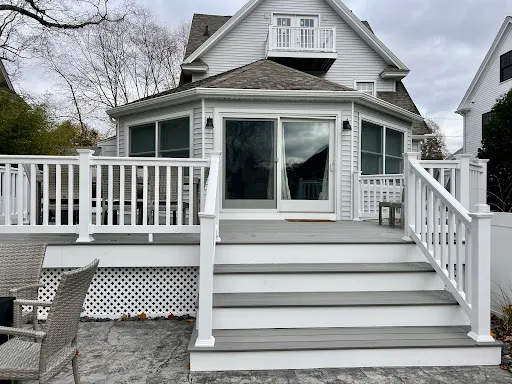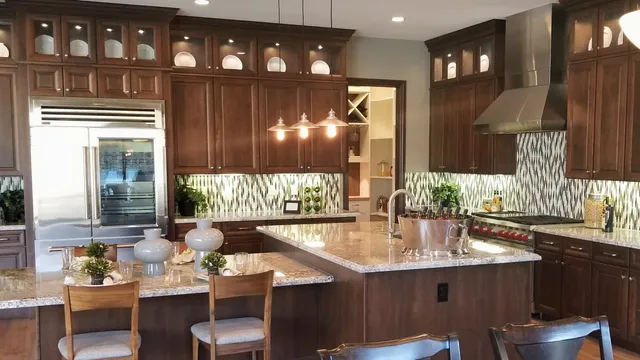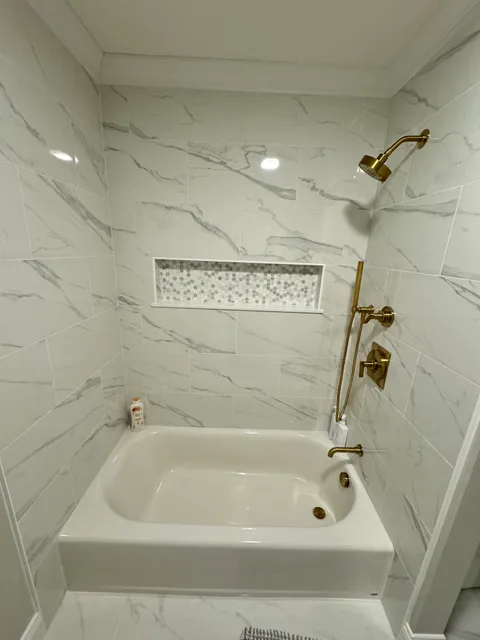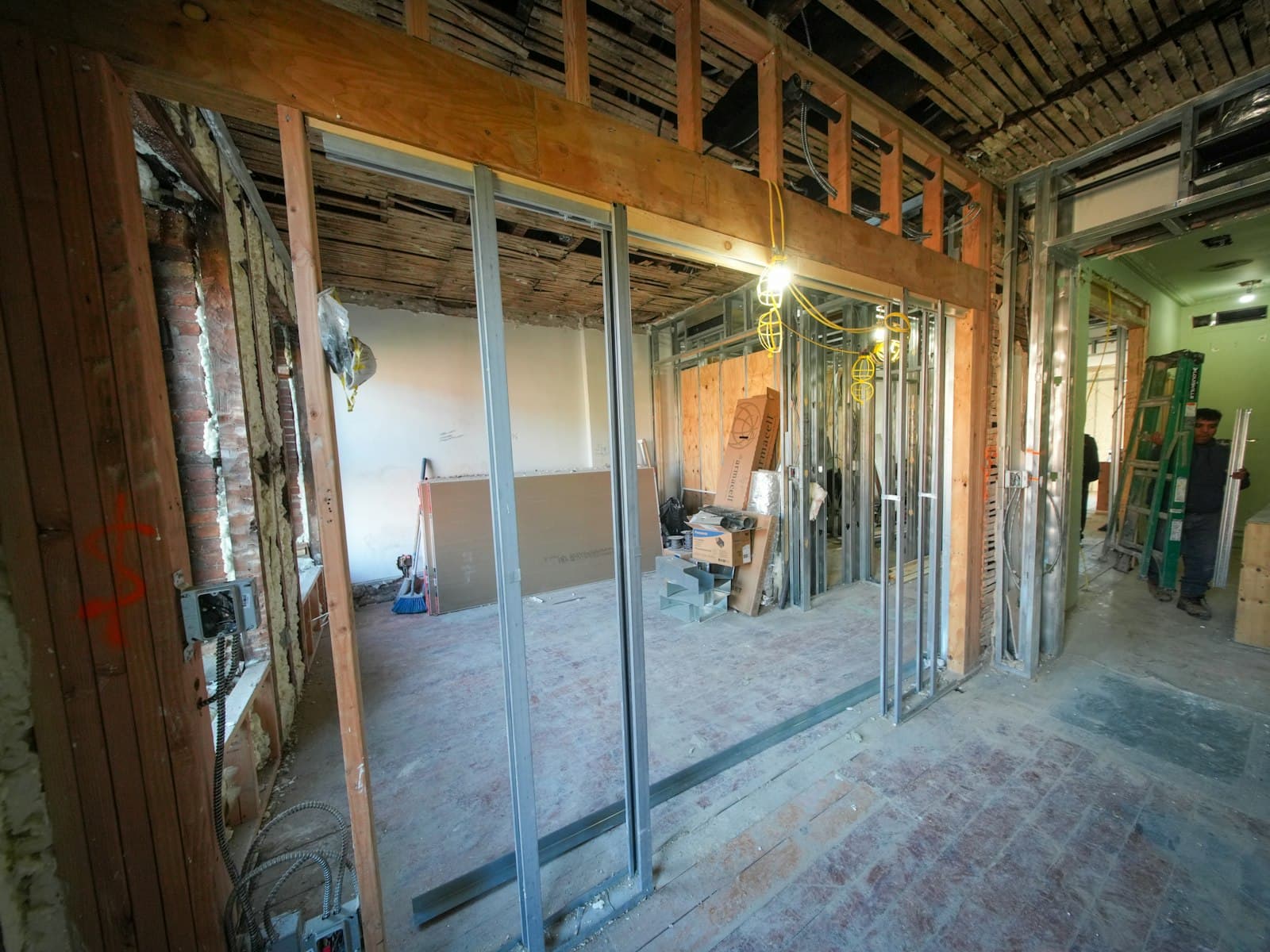
Springfield grew up around the federal Springfield Armory, and the city's housing still reads like a factory town's: worker two-families and three-deckers near the old plants, Victorian streets for the managers, and a ring of postwar ranches for the generation that followed. North and west, the Pioneer Valley and the Berkshires add farmhouses, mill blocks and second homes. Almost all of it is old enough that a remodel turns up surprises, which is why the person you hire to run the job matters more than the price on the first page.
HIC registration versus a construction supervisor license on a remodel
Massachusetts uses two different credentials for residential building, and a full-service remodeler usually needs both.
- Home Improvement Contractor (HIC) registration belongs to the business. It covers contracting on a house that already stands, that its owner lives in, and that holds between one and four units, and it is what gives you access to state arbitration and the Guaranty Fund. Search it on the Contractor Hub.
- The Construction Supervisor License (CSL) belongs to a person. The state requires a licensed supervisor for building work on one- and two-family homes of any size, as the CSL page puts it. Structural work such as moving a wall, an addition or a new porch is the reason it exists. Look the name up on eLIPSE.
Ask a general contractor for both numbers in the first conversation, and ask whose name will be on the building permit. If it is a supervisor who works for a different company, find out why. The plumbing, wiring and gas on the job need their own licensed trades, and the contract should say who hires them.
The one-third deposit ceiling and what counts as special-order
Any residential contracting agreement over $1,000 has to be written down. Section 2 of chapter 142A lists what it must contain, including the dates the work will start and be substantially complete, a schedule of payments, the contractor's registration number and a notice of your cancellation rights. The same section limits what the contractor may collect up front: a third of the full contract price at most, unless the special-order materials alone cost more, in which case that figure is the ceiling.
"Special-order" is where disputes start. Custom cabinets, made-to-measure windows and ordered stone count. Stock lumber from the yard in West Springfield does not. If a contractor asks for half down on a kitchen-and-bath job in East Longmeadow, ask them to list the special-order items and their cost. If the list does not add up to the extra, the deposit is over the limit.
When a contractor walks off the job: arbitration and the Guaranty Fund
Chapter 142A gives Massachusetts homeowners two tools that most states lack. The first is state-run arbitration through the Office of Consumer Affairs and Business Regulation, an alternative to court. The second is the Residential Contractor's Guaranty Fund under section 5, which pays an owner's actual losses after a court judgment or arbitration award against a registered contractor who then fails to pay.
Both depend on registration. A contractor who never registered leaves you with an ordinary lawsuit against whatever they own. That is the most practical reason to look up the HIC number before signing, not after a problem.
Homeowner permits and the Guaranty Fund waiver on the form
Some contractors suggest that the homeowner take out the building permit, to save a fee or speed things up. Massachusetts treats that as a choice with consequences. The state's building permit warning tells homeowners that by applying for the permit themselves they give up their Guaranty Fund rights, and many town building departments repeat that warning on their homeowner permit forms. The homeowner on the permit also takes on responsibility for the work meeting code.
If a general contractor will not pull the permit for a job you are paying them to run, treat it as a question about their registration or their insurance, and ask it directly.
Running a South County renovation from Boston or New York
A large share of high-end remodeling in the Berkshires happens in houses whose owners live somewhere else. Great Barrington, Stockbridge, Lee, West Stockbridge and Egremont all have second homes renovated between visits. That is workable, and many South County builders are set up for it, but the contract has to do more work when you are not there to see the job.
Ask for:
- A weekly photo update tied to the payment schedule.
- A named person who will be on site for each inspection.
- A clear rule for change orders, signed by you before the extra work starts, with a price.
- An agreement about the heat and water in winter if the house is open to the weather.
The Census Bureau counts about one Berkshire County home in nine as held for seasonal use, so a builder who has never worked for an absentee owner is unusual here. Ask for a reference from one.
Renovating a Springfield or Holyoke two-family you rent out
Two-family houses make up close to a tenth of Hampden County's housing, and three- and four-unit buildings, including the city three-deckers, add another 7–10%, per the Census Bureau's survey. Many are owner-occupied on one floor and rented on the others. That changes the job in two ways.
First, registration. An HIC registration covers work on an owner-occupied building of up to four units. If you do not live in the building, the HIC rules and the Guaranty Fund may not apply in the same way, so ask the contractor how they treat the project and keep the construction supervisor requirement in view either way.
Second, lead. Most of these buildings predate 1978, and a great many predate 1940. Under the Massachusetts Lead Law, an owner must abate or cover lead hazards wherever a child younger than six lives in a house built before 1978, the liability is strict, and turning away a family because of lead paint is illegal. A renovation that opens painted walls, windows and trim in a rental is the moment those rules bite. Ask the general contractor who on the crew handles lead-safe work, how the unit will be cleaned before tenants return, and whether the scope should include bringing the unit into compliance while the walls are open.
Comparing $21,200–$32,200 bids from valley and Berkshire contractors
The Western Massachusetts calculator sets a typical general-contractor project at about $21,200 to $32,200, and the general contractor cost estimate for this market lets you adjust it. Bids that look far apart usually differ in a few predictable places:
- Allowances. A low bid with a $2,000 tile allowance and a high bid with $6,000 are not quoting the same bathroom.
- Unknowns behind the walls. In a Springfield or Holyoke house from before 1940, ask how rot, old wiring or lead paint will be priced if found.
- Travel and lodging. A Northampton builder working in Hampden or Southwick is local; one driving to Otis may add a daily charge.
- Permits and dumpsters. In or out of the number.
Ask each bidder to price the same written scope, and keep the change-order rule identical across them. That is the only way the comparison is fair.