Roofs in Western Massachusetts take a beating that changes with the elevation. In the Connecticut River valley, the worry is summer wind, hail and the occasional violent storm. On the plateau west of the river and in the Berkshire hills, it is the weight of snow and the ice that builds at the eaves of old, poorly insulated houses. A roofer from Longmeadow and a roofer from Adams may install the same shingle very differently.
The 2011 tornado path: roofs that were all replaced at once
On June 1, 2011, an EF3 tornado cut a 39-mile path from Westfield through Springfield, Wilbraham and Monson to Sturbridge. Whole streets lost their roofs in an afternoon. Three years later, GBH News reported Monson's town manager pointing to replanted trees on Main Street that had grown to 15 feet.
The rebuilding left an unusual roof stock behind it. Along that corridor, a large number of houses got new roofs within the same year or two, put on while every crew in the region was booked. Those roofs are now about fifteen years old. Many will have years left. Some, finished fast under pressure, will show their age early, and the crew that installed them may no longer be in business to honor a warranty.
If your house is on the old tornado path and you are getting a roof assessed, ask the roofer:
- Is the decking that went down in 2011–12 sound, or was it laid over damaged boards?
- Were ice-and-water membrane and drip edge installed at the eaves, or skipped in the rush?
- Is the ventilation balanced, or was a ridge vent added without soffit intake?
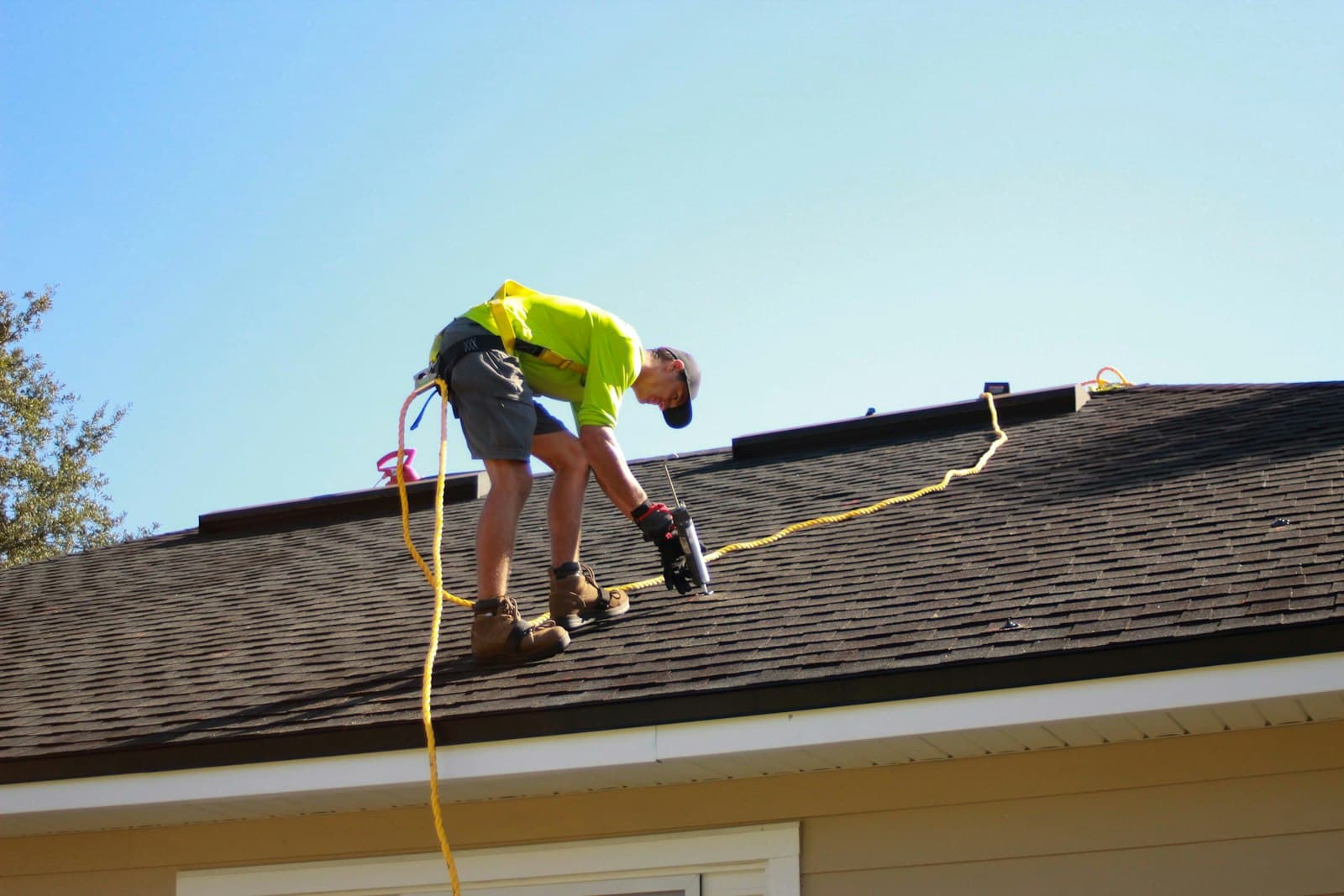
A roofer who climbs up, photographs the problem spots and shows you is worth more than one who quotes from the driveway.
Snow load in Peru, Windsor and the other high towns
Massachusetts writes its design snow load into the building code by municipality. The 10th edition, in effect since October 11, 2024, sets the figure in Table 1604.11 of chapter 16, and calls for increases where a site sits above its town's average elevation. On a ridge in Savoy, Florida or Windsor, that adjustment can matter. Nobody should quote you a pounds-per-square-foot figure from memory; ask the roofer or the building inspector to look it up for your address.
For a reroof, snow load mostly matters in three situations: adding a second heavy layer (some towns and some manufacturers do not allow it), switching to a heavier material such as slate or solar panels, and repairing rafters that have already sagged. If the roofer finds a dip in the ridge or cracked rafters when the old shingles come off, the fix is structural, and the permit changes with it.
Ice dams on old capes: insulation before shingles
Ice dams start indoors. Warm air escaping into the attic thaws the snow sitting high on the slope; the meltwater runs down to the overhang, which is as cold as the outside air, and freezes there into a ridge. Water pooling behind that ridge works up under the shingles and finds the walls. Pre-1940 capes and farmhouses are prone to it: more than a third of Berkshire County homes and about a quarter of Hampden's were built in 1939 or earlier, per the Census Bureau's American Community Survey, and many have little insulation in the attic floor.
A new roof with a membrane at the eaves helps, but it treats the symptom. The cause is the heat getting into the attic. Mass Save's no-cost home energy assessment looks at air sealing and insulation, and the program itself describes that work as reducing the chance of ice dams. Schedule the assessment before the roof if you can: an insulation crew may need attic access that a finished roof and new vents could change.
Asphalt, metal or slate on a hill farmhouse, a camp or a barn
Outside the city cores, the roof you are replacing is often not a simple suburban gable. It might be a steep farmhouse roof in Conway or Charlemont, a low-slope camp in Becket with a woodstove chimney through it, an attached barn in Hinsdale, or a slate roof on a nineteenth-century house in Williamstown. Each pulls you toward a different material and a different kind of roofer.
- Architectural asphalt is the default and what the calculator range assumes. Most crews in the region install it.
- Standing-seam or screw-down metal is common on farm buildings and camps because it sheds snow. It needs a roofer who does metal routinely, and the snow it drops has to land somewhere safe.
- Slate is a specialty. A slate roof in good shape is usually worth repairing rather than replacing, and a general asphalt crew may suggest tearing it off because that is the job they do. Ask for a slate repairer's opinion before agreeing.
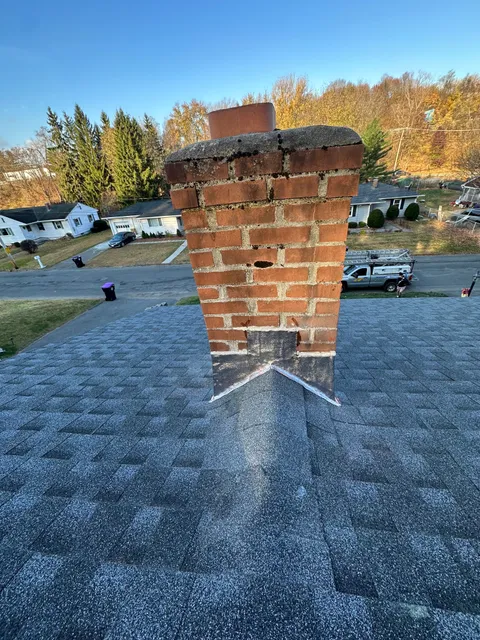
On any of them, ask how the roofer will deal with chimneys and stovepipes. A metal roof with a wood stove below needs proper flashing and clearance at the pipe, and that detail is where leaks and fire risk start.
Reroof permits in Springfield, Pittsfield and the hill towns
A roof replacement needs a building permit from the town. In Springfield, start from the city's permitting guide, which links the building inspectional services guide and the code-violation and permit portal. Pittsfield takes building permits online only. In the Franklin County towns that belong to FRCOG's cooperative inspection program, the building inspector is regional.
If your house is inside one of Springfield's local historic districts, a change of roofing material on a street-facing slope can also need the historical commission. Ask before you choose a color or switch from slate to asphalt.
The registration, the supervisor and what goes on paper
Reroofing a one- to four-unit house its owner lives in falls under the state's home improvement law, which means the roofer needs a Home Improvement Contractor registration. You can find it, along with any complaint record, on the state's Contractor Hub. Most roofing crews also have a construction supervisor on the permit; Massachusetts offers a restricted license limited to roof covering, and the state's CSL page explains that one- and two-family homes need a licensed supervisor whatever their size. Look the supervisor up on eLIPSE.
A roofing contract over $1,000 must be in writing under c.142A §2, carrying the start and finish dates, the payment schedule and the roofer's registration number. The roofer may not take a deposit larger than a third of the price, unless special-order material, such as a custom metal panel run, costs more. Let the roofer take out the permit. A homeowner who files it personally gives up the state Guaranty Fund if the job goes wrong.
Weighing quotes against the $8,300–$17,100 default
The Western Massachusetts calculator puts a typical roof replacement at about $8,300 to $17,100; size yours with the roofing cost estimate for this market. The quotes you collect will differ on:
- Tear-off. One layer or two, and the dumpster.
- Decking. A per-sheet price for replacing rotted boards, stated in advance.
- Eaves protection. How many feet of membrane up from the edge.
- Flashing. New step and chimney flashing, or reuse.
- Travel. A Pittsfield crew roofing in North Adams is local; the same crew in Sandisfield may add time.
Line those five up and most of the spread between quotes explains itself.