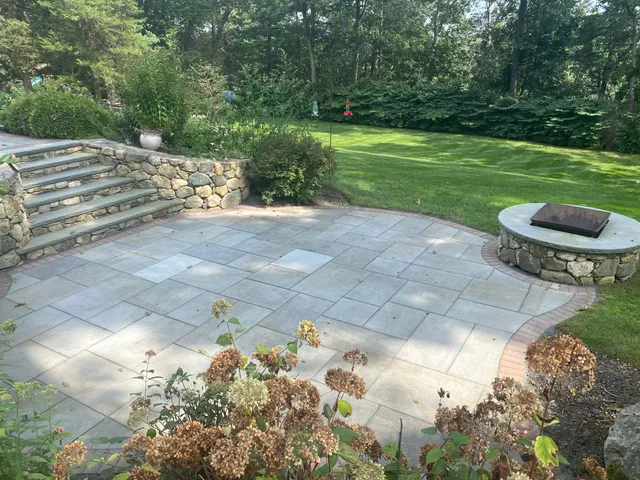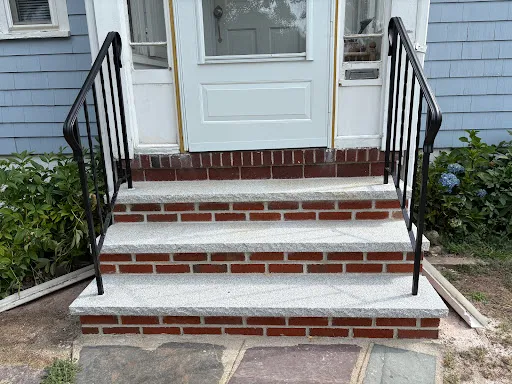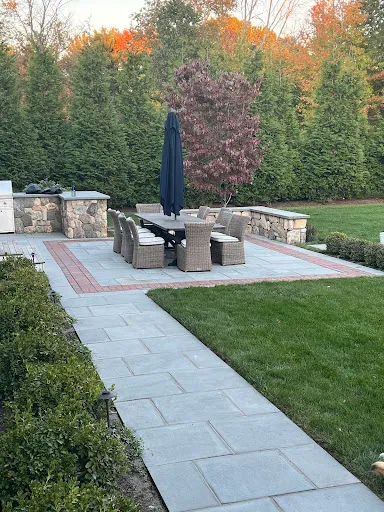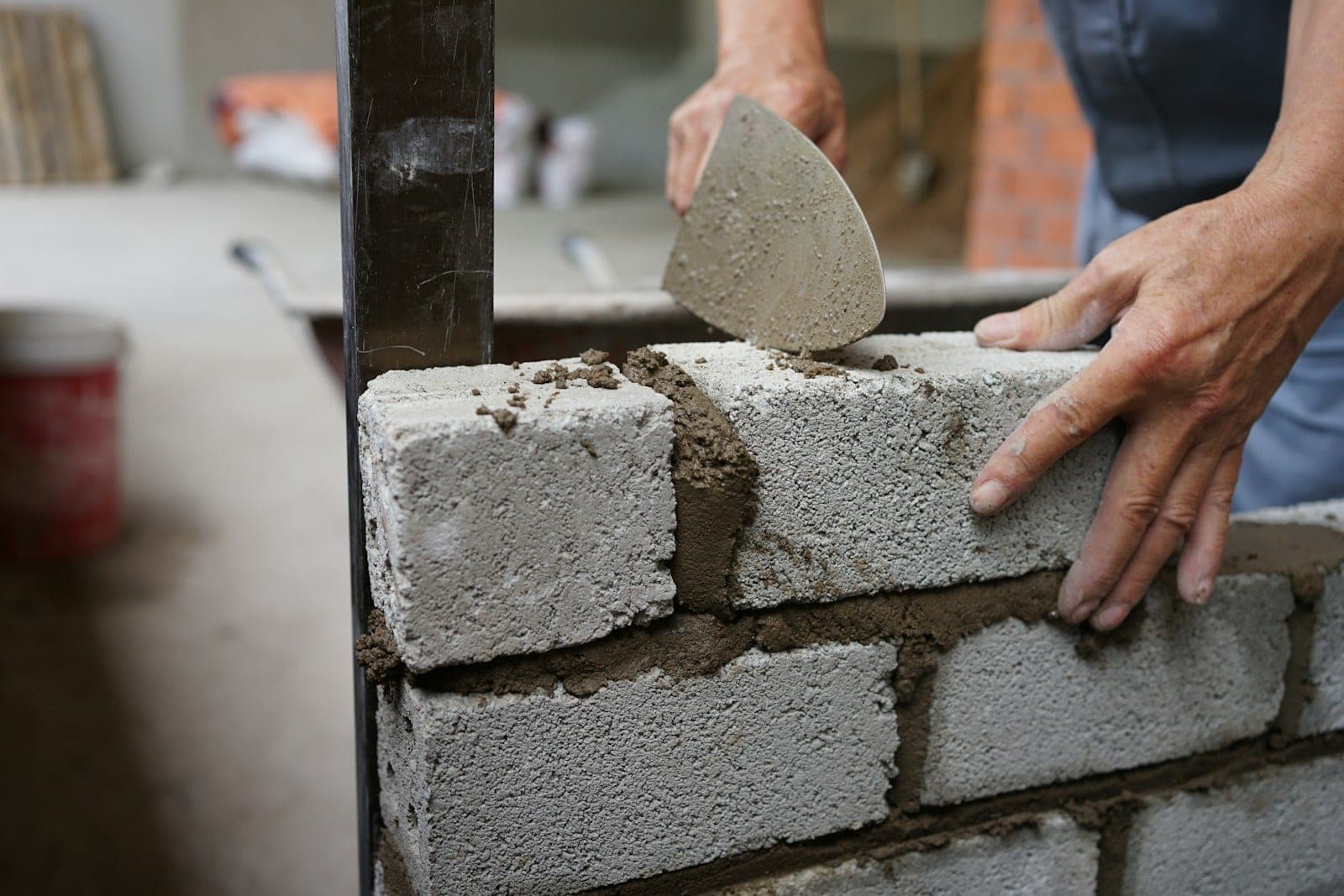
Greater Boston is built of brick and stone to a degree few American regions are. Brick and brownstone row houses line Back Bay, the South End and Beacon Hill. Brick mill buildings and their worker housing fill Lowell, Lawrence and Haverhill. Granite steps, fieldstone foundations and chimneys sit under and above thousands of wood-frame houses in Somerville, Medford and Quincy. Every freeze-thaw winter opens a few more joints. Sooner or later most owners here call a mason.
Does repointing a Back Bay facade need approval first?
If your building is in the Back Bay Architectural District, yes. The district requires a Design Approval Application before any exterior work, and masonry is very much exterior work: repointing, replacing brick or brownstone, rebuilding a stoop, resetting a chimney cap.
Boston has nine local historic district commissions. On Beacon Hill, the architectural commission reviews work visible from public space, which includes views from the Common, the Public Garden and Storrow Drive. The South End's commission reviews all exterior changes in its district.
What the commissions care about on masonry is usually matching: the color and texture of mortar, the joint profile, and brick or stone that looks like the original. Ask any mason who works in these neighborhoods:
- How many commission applications have you prepared?
- Will you make a sample panel of the mortar for approval?
- Where will replacement brick or brownstone come from?
Build the approval time into your schedule. A mason who starts grinding joints on a district facade without approval can leave you with a stop-work order and joints the commission wants redone.
Which credentials should a Massachusetts mason hold?
Masonry repair on an existing owner-occupied home with one to four units counts as home improvement. That means the mason should hold a Home Improvement Contractor registration, which you can look up yourself on the state's Contractor Hub. Without that registration, a homeowner with a botched chimney has no route to state arbitration or the Fund's payout.
Load-bearing brick and stone add a second credential. A Construction Supervisor License is held by an individual and covers structural work, and the state's CSL page is explicit that it does a different job from the consumer registration. Rebuilding a chimney, a load-bearing wall or a foundation is structural. Ask who holds the construction supervisor license that will go on the building permit, and look that person up on eLIPSE.
So the rough line is this: repointing a few joints on your steps is home improvement; rebuilding the chimney above the roof is structural.
Chimney rebuilds: the mason, the roofer and the flashing
Chimneys sit where two trades meet. The brick, mortar, crown and flue liner are masonry. The flashing where the chimney passes through the roof, and the shingles disturbed around it, are roofing. On triple-deckers in Dorchester and Cambridge and on row houses with shared chimney stacks, a partial rebuild above the roofline involves both.
When you hire for a chimney job, ask:
- Who will remove and replace the flashing, and with what material?
- Will the crown be rebuilt, and will it overhang so water drips clear of the brick?
- Is a flue liner part of the job, or will a chimney specialist assess it separately?
- Who patches the roof around the chimney?
Put the answers in the contract. Leaks at the chimney are one of the most common winter complaints, and a gap between what the mason did and what the roofer assumed is where they start.
Autumn is peak season for chimney and masonry work, as owners prepare for heating season. Book early in the year if you want the work done before the first cold snap.
Repointing versus tuckpointing on old brick
Two terms get used loosely:
- Repointing is the repair. The mason cuts out failed mortar to a set depth and packs in new mortar in layers. This is what keeps water out of the wall.
- Tuckpointing is a finishing style that uses contrasting mortar to make joints look very fine. It is sometimes used on period brick fronts for appearance.
On older brick, the mortar itself matters. Many masons and preservation specialists advise that new mortar should be no harder than the brick around it, so that the joints, not the bricks, take the stress of freeze and thaw. In older buildings that often means a softer, lime-rich mix rather than a hard modern one. Ask your mason what mix they propose, why, and whether they will match the color of the existing joints. On a district facade, the commission may have its own expectations.
Steps, walls and Dig Safe
Granite front steps, stone retaining walls and brick walkways are common masonry jobs in the suburbs, from Newton and Waltham to Framingham and Brockton. Resetting a granite step is home improvement work. Building a new wall or steps on footings means digging.
Footings mean excavation, and Dig Safe wants 72 business hours of warning before a mason's crew breaks ground. Weekends and holidays do not count, the area should be premarked, and the ticket lasts 30 days. On narrow lots in Somerville and Malden, where gas and water services run close to the front steps, this is not a formality.
Retaining walls of any height deserve a question about drainage behind the wall. Water trapped behind a wall is what pushes it over in a wet spring.
Permits
Structural masonry goes through your city or town's building department. In Boston that is Inspectional Services. In Lowell, Haverhill or Quincy it is the local building commissioner. Let the mason pull the permit: a homeowner who pulls their own permit is excluded from the Guaranty Fund.
What the contract must say
Masonry contracts above $1,000 have to be written down, per MGL c.142A §2. It must carry the start and completion dates, a detailed description of the work, the price and payment schedule, and the mason's registration number. The deposit may not exceed one-third of the price, unless special-order materials such as matched brick or cut stone cost more. The contract must also state the cancellation rights that other consumer laws may give you, and say that owners who pull their own permits lose Guaranty Fund cover.
If a registered mason fails to finish or does defective work, the Guaranty Fund can pay up to $25,000 of your losses on an unpaid arbitration award or judgment.
Staging, access and the price
A typical Greater Boston masonry project runs about $4,500 to $9,000, and you can check a quote against the Greater Boston masonry cost estimate. A few joints on a front stoop sit well below that range. A three-story row-house facade or a chimney rebuild can sit above it.
Access drives much of the difference. A three-story facade in Brookline or the South End needs staging or a lift, and may need a sidewalk permit, before any joint is cut. Ask each mason to price staging separately, along with the number of bricks to be replaced and the depth of joints to be cut. Two quotes that differ by thousands usually differ on those three lines.