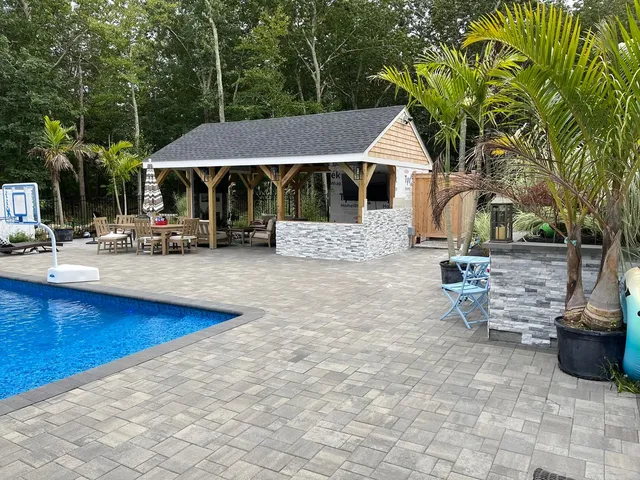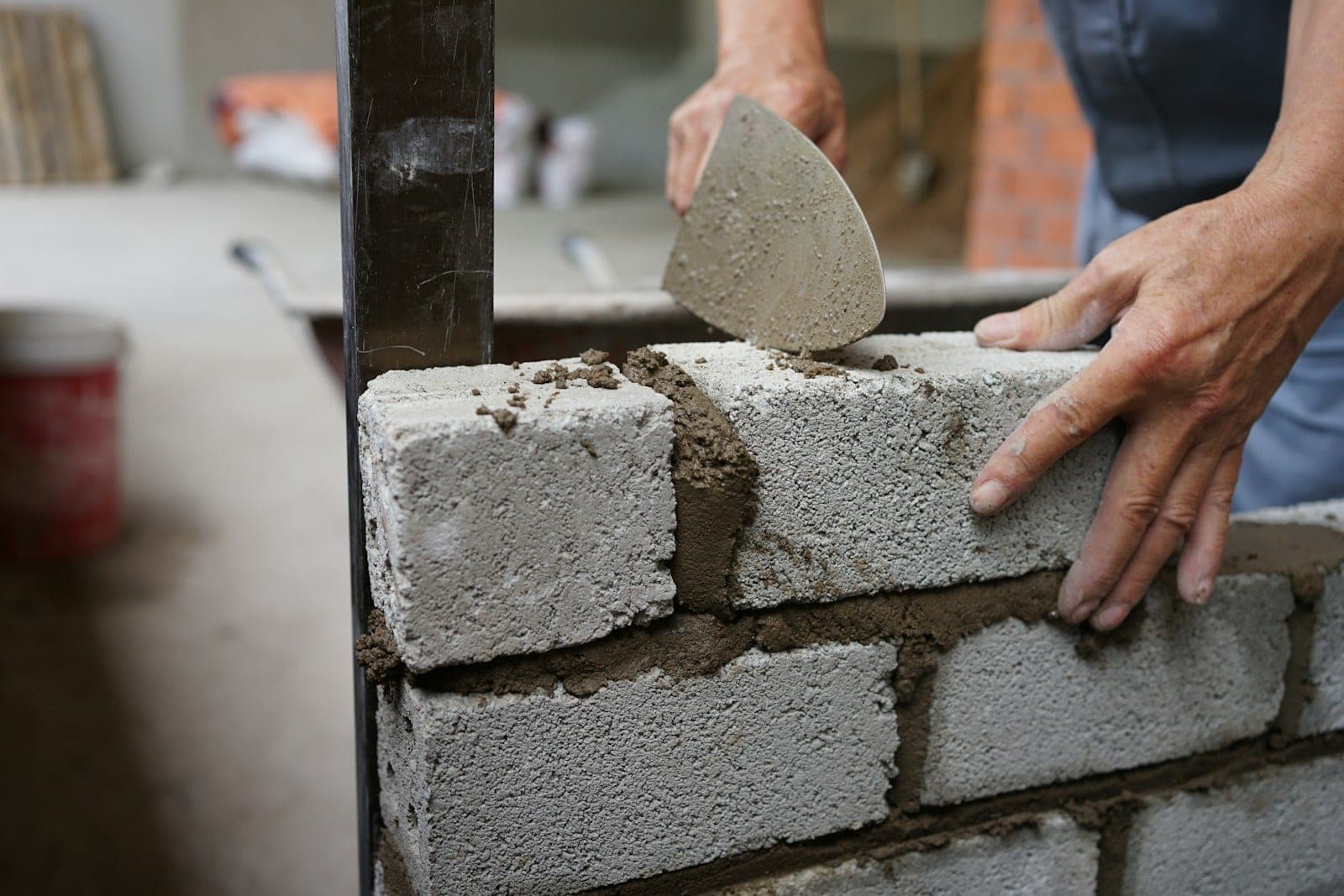
Masonry in this market covers brick mill housing in Pawtucket and Lincoln, granite mills and brick blocks in Fall River, Federal-era chimneys in Bristol and Warren, and stone walls and seawalls along the bay from Tiverton to Narragansett. The common thread is age and water. Old mortar fails, chimneys take the weather from all sides, and anything built near the shore takes salt and waves. The right mason depends on which of those you are dealing with.
Masons and chimney builders on the registration list
Rhode Island's contractor statute names "masons, including chimney installers, fireplace installers, and general masonry erectors" among the subcontractor trades that need their own registration (RIGL 5-65-3). A one-person chimney repair business, a stone wall builder and a brick restoration company all fall under it unless they work for a registered contractor as employees. Check the name on the CRLB contractor search, and ask for a certificate of insurance. Masonry is heavy work done on ladders and staging, and the workers' compensation coverage that registration requires is not a formality.
Repointing old brick without sandblasting it
Much of the brick in Providence and Pawtucket was laid with soft, lime-based mortar. When it is repointed with a hard modern mix, the joints can end up stronger than the brick, and the brick faces start to crack and spall as the wall moves with freeze and thaw. Ask any mason working on pre-war brick:
- What mortar mix do you propose, and why?
- Will it match the color, texture and joint profile of the original?
- How deep will you cut out old mortar, and with what tools?
- How will you protect the brick edges while cutting?
Cleaning is the other place old brick gets damaged. Providence's Historic District Commission states plainly that sandblasting "will not be approved" in its districts, because it strips the hard outer face of the brick and leaves it to absorb water. Outside the districts the same damage happens, it just is not prohibited. Ask for the gentlest cleaning method that works.
If your building is in one of the city's local districts, such as College Hill, the Armory or Broadway, repairs and replacements to the exterior go through the commission before a building permit. Repointing a facade is a repair the commission reviews. A mason who has worked in the districts will know how to present a mortar sample and a method.
Chimneys: crown, flashing and the roof
A chimney is two jobs sharing one structure. Everything from the flue and crown down through the brick belongs to the mason; the metal that seals the chimney to the roof deck, and the shingles disturbed around it, belong to a roofer. Leaks at the chimney are usually one of three things:
- a cracked crown letting water into the top of the chimney;
- failed mortar joints near the top, where weather is worst;
- flashing that has pulled away or rusted.
When you hire for a chimney job, ask who handles the flashing and who repairs the roof around it, and put the answer in the contract. On a two-family in Cranston or Central Falls with a shared chimney, or a Newport house with several, ask whether the mason will inspect all of them while the staging is up.
Older chimneys may also have unlined or deteriorated flues. If a heating appliance vents into the chimney, that is a safety question, not just a masonry one. Ask whether a chimney specialist should assess the flue before rebuilding the top.
Seawalls, revetments and waterfront walls
Waterfront masonry is a category of its own. The Coastal Resources Management Council permits work in the state's coastal zone, and new structural shoreline protection, such as a seawall or a revetment, is on its fee schedule as a permitted activity. That means engineering, an application, and a review that can take months, before anyone sets a stone. Repairs to an existing wall may also need approval.
If you own on the water in Tiverton, Little Compton, Warwick or Narragansett, ask any contractor bidding on a wall:
- Have you built or repaired shoreline structures under CRMC permits?
- Who designs the wall, and is an engineer involved?
- How will you work around tides and storms, and at what time of year?
Many house masons do not do this work. Marine contractors do.
Fireplaces and wood stoves
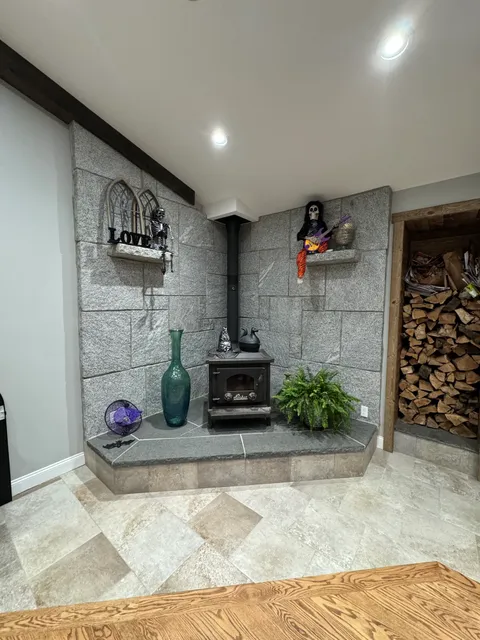
Fireplace installers are on the same registration list as masons, and the work deserves the same care. Old fireplaces in Bristol, Warren and Providence's East Side were built for occasional fires, not daily use, and many were closed up decades ago. Before you light one again or add a wood stove insert:
- have the flue inspected and cleaned;
- ask whether it needs a liner sized for the appliance you plan to use;
- check the hearth extension and clearances to wood trim;
- ask whether the work needs a building permit and inspection in your town.
A fireplace that has not been used in thirty years is not ready because the damper still opens.
Steps, walks and stone walls inland
Granite steps, brick walks and fieldstone walls are the everyday jobs. In Lincoln, Cumberland and Scituate, old fieldstone walls run along property lines and may be partly collapsed. Rebuilding one is a craft job; ask for photos of past work. Steps and walls on footings need excavation, which means a Dig Safe notice by the mason before digging, and retaining walls need drainage behind them or they will be pushed out by water.
New Bedford, Fall River and Massachusetts rules
New Bedford, "the City that Lit the World," built its fortune on whaling, and its history runs through the Underground Railroad, immigration and textile mills as well (National Park Service). Its brick and stone downtown, and Fall River's granite mills and brick blocks, keep South Coast masons busy. Those cities are in Massachusetts, and Massachusetts rules apply there. A mason working on an owner-occupied one-to-four-family house must hold a home improvement contractor registration, searchable on the Massachusetts Contractor Hub. Under MGL c.142A §2, contracts over $1,000 must be written, and the deposit cannot exceed a third of the price or the cost of special-order materials, whichever is more. Rhode Island sets no such cap, so on the Rhode Island side, keep the deposit tied to materials and pay the balance as the work is done.
Staging, brick counts and the masonry bill
The Greater Providence calculator puts a typical masonry project at about $4,200 to $8,350; adjust scope on the masonry cost estimate for this market. Resetting a few granite steps in Warren sits low. Rebuilding a chimney above the roof of a three-story Providence house, with staging, sits high, and a seawall is a project of a different scale. Ask every mason to price staging separately and to state how many bricks or how many feet of joint the price covers.