Masonry on the North Shore covers a wide spread of houses. There are brick chimneys on postwar capes in Peabody and Saugus, chimneys and walls on the Federal-era houses of Salem's McIntire District, granite foundations and steps on Cape Ann, and stone walls running along old farm lots in Topsfield and Hamilton. On the water in Nahant, Marblehead and Swampscott there are sea walls that take the full force of winter storms. The trade is the same in each place, but the paperwork, the review and the risk are not.
The question most homeowners get wrong is whether their job is structural. That is where to start.
Is my chimney rebuild "structural," and why does that change who I hire?
A chimney that needs repointing and a new cap is maintenance. A chimney that is leaning, has a failed crown letting water into the flue, or has to come down past the roofline and go back up is a rebuild, and a rebuild is structural work. Massachusetts handles structural work with a separate credential.
The state's page on when a construction supervisor license is required explains the split. A home improvement contractor (HIC) registration is a consumer-protection registration for the business. A construction supervisor license (CSL) belongs to a person, shows that person is qualified to supervise structural work, and lets them pull the building permit. The state says the two are not interchangeable, and plenty of jobs on existing one- to four-family homes need both.
So on a chimney rebuild in Danvers or Beverly, ask two questions:
- Which company is registered as the home improvement contractor? Search it by name on the state's Contractor Hub.
- Whose name is on the building permit as construction supervisor? Look that person up on the state's eLIPSE license search.
If the answer to the second question is "nobody, we don't pull permits for this," ask your town's building department how it treats a rebuild before you sign.
Why do North Shore masons fill their calendars in the fall?
Chimney and masonry work bunches up before the heating season. People notice a stained ceiling or a crumbling crown over the summer, then call in September hoping to use the fireplace or run the boiler through that flue by November. Good masons are booked out in that window.
The practical advice is to have the chimney looked at in late spring or summer, not in the first cold week. A crew that can see your Swampscott chimney in July can usually schedule the repair before the rush. One that sees it in late October may leave you with a tarp and a promise.
Water is the enemy in both seasons. When water gets into cracked mortar joints, a failed crown or a gap around flashing, a winter of freezing and thawing opens the cracks further. That is why a small spring repair is usually cheaper than the same chimney a year later.
Does Marblehead's historic commission care about brick and stone?
Yes, if the work can be seen from a public way. In Old Town and on Gingerbread Hill, review falls to Marblehead's Old and Historic Districts Commission, whose process guidelines, updated in September 2025, set out how an application moves through the commission. A mason who has worked in Old Town will know the difference between a repair that matches what is there and a change that needs a hearing.
The easy cases are like-for-like: repointing with a mortar that matches the color and joint profile, or replacing a few spalled bricks with ones that match. The harder cases are a new chimney cap style, a taller or shorter stack, brick in a different color, or a new stone wall along the street.
Swampscott publishes its own preservation resources for homeowners, and Salem runs local historic districts with their own commission. If you live in any of those districts, put the review into your schedule before you put down a deposit. A mason who tells you approval "won't matter" for a street-facing chimney in Old Town is guessing.
Are granite steps and stone walls home improvement work?
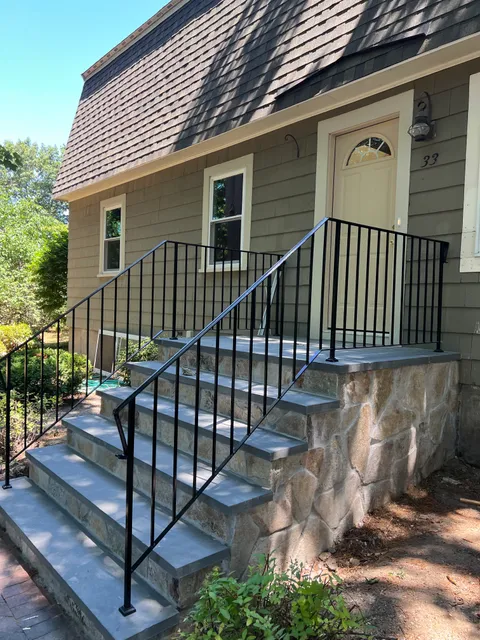
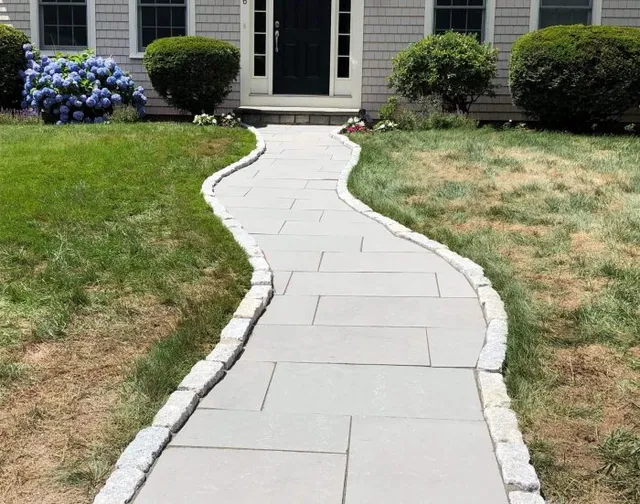
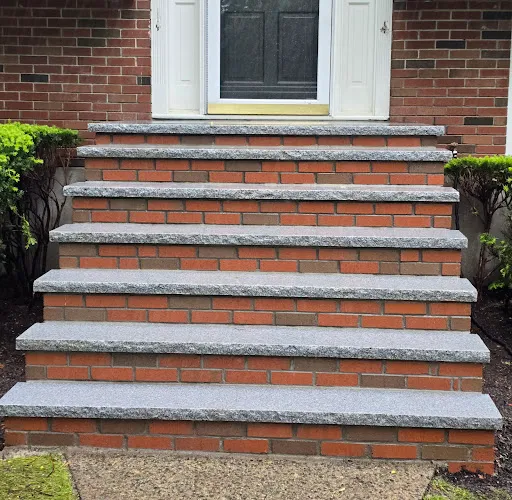
On an owner-occupied house of one to four units, yes. The state's home improvement law covers work on the residence and on structures adjacent to it (MGL c.142A §1). Resetting the granite steps on a Rockport cape, rebuilding a heaved stone wall along a Topsfield driveway or replacing a brick walk in Beverly all fall inside it.
Cape Ann is granite country, and a lot of older houses in Gloucester and Rockport sit on granite foundations with granite steps and sills. Resetting heavy stone is a different skill from laying brick. Ask a mason to show you granite work they have done, not just brick, and ask how they plan to move and set the pieces.
If a new wall, footing or set of steps means digging, someone has to call Dig Safe three full business days or more before the first shovel; Saturdays, Sundays and holidays don't count toward that 72 hours. Normally the mason places it. Ask for the ticket number before the crew starts.
What extra approvals does a sea wall in Nahant or Marblehead need?
A sea wall is not a backyard wall. Work in a wetland, or in the 100-foot buffer zone around one, goes before the town's conservation commission under the Wetlands Protection Act. Structures below the historic high-water line, which is where many sea walls sit, can also need a waterways license from MassDEP under Chapter 91, often after the conservation commission has issued its order.
That changes how you hire. Ask a mason who prices a sea wall in Nahant, Swampscott or Marblehead:
- whether they have done waterfront work that went through the conservation commission;
- who will prepare and file the applications, and whether that cost is in the price;
- what happens to the schedule and the deposit if approval takes longer than expected.
A quote that ignores the approvals is not a cheaper quote. It is a quote for a job you may not be allowed to do.
How much should a masonry project cost, and what pushes it up?
For a masonry project, the calculator's default range is $4,500 – $9,000. That figure is set for Greater Boston as a whole; the North Shore prices in the same market. Run your own numbers on the masonry cost page.
What moves a quote inside or past that range:
- Height and access. A chimney on a three-story house in Lynn needs staging or a lift; a single-story ranch in Saugus does not.
- Repair versus rebuild. Repointing and a new crown cost far less than taking a stack down and rebuilding it.
- Matching old material. Salvaged brick and custom mortar color for a historic house take time to source.
- Stone. Granite and fieldstone are heavy, and moving them safely is slow work.
- Approvals. Commission hearings and conservation filings add time and paperwork to a job.
Get at least two written quotes that describe the same scope. If one includes a liner and a new crown and the other only "chimney repair," you are comparing different jobs.
What should the contract say, and how much can I pay up front?
Any home improvement job over $1,000 has to be in writing under MGL c.142A §2. For masonry that means the contract should list the start date and when the job will be substantially complete, describe the work in enough detail that you could hand it to another mason, give the total price and the payment schedule, and show the contractor's registration number.
The deposit is capped. A mason can ask for up to one-third of the price at signing, or the actual cost of materials ordered specially for your job if that is more. Salvaged brick or cut stone ordered for a historic chimney can be special-order; a pallet of standard brick from the yard is not. Ask for the supplier's paperwork if the deposit goes past a third.
Two more points matter. Don't let the crew start before you have your own signed copy. And leave the final payment until the work is finished and the permit, if there is one, has passed inspection. The law says a contractor can't demand final payment before the contract is complete.
If a dispute comes up later, you can ask for arbitration through the state's consumer affairs office (617-973-8787), which handles home improvement disputes. It applies only when the mason was registered when you signed, which is one more reason to look the registration up first. You can compare North Shore masons on Tavlee, then check each one's registration and license yourself before you sign.