Vermont has a long relationship with stone. Barre built its name on granite, old farms are laced with stone walls, and nearly every house heated by wood has a chimney that needs looking after. A mason here may spend Monday relining a flue in Montpelier, Wednesday rebuilding granite steps in Northfield and Friday laying a dry-stone wall in a field outside Castleton. Each of those jobs sits under a different rule.
When a Vermont mason needs to be on the register
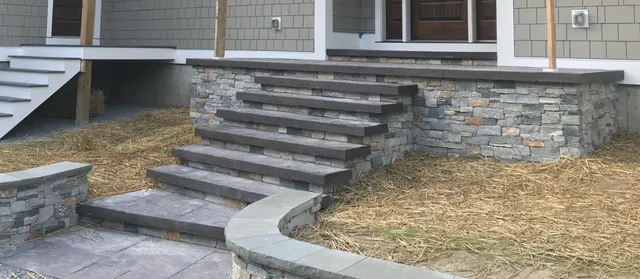
Registration with the Office of Professional Regulation comes into play under 26 V.S.A. chapter 106 once a residential contract runs past $10,000. Masonry on the house itself is inside it: rebuilding a chimney, a brick foundation repair, a stone veneer, front steps attached to the porch.
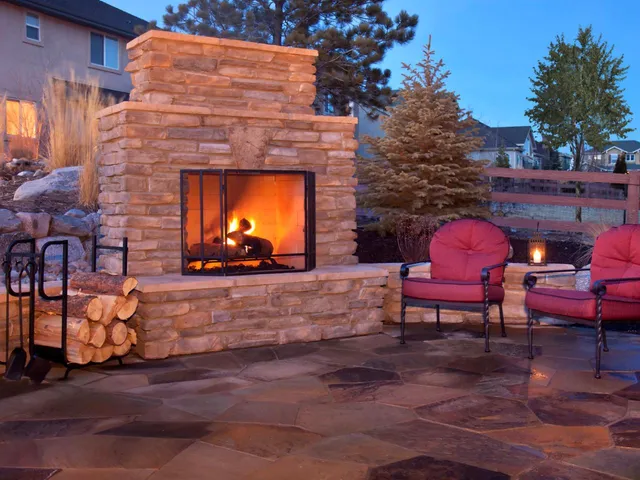
The exemption in section 5502 for work on a structure not attached to the house takes a lot of masonry out. A freestanding stone wall, a patio set apart from the house, a fire pit or a garden wall is outside the registration law, however much it costs. That is worth knowing because the registration brings protections: a seven-figure liability policy, paperwork signed before work starts, and a limit on how much can be paid up front. For a large stone wall, insist on a written contract anyway.
You can check any mason on the OPR lookup. A mason who works on houses often will usually be registered whether or not every job requires it.
Chimney sweeps and the T4 certification
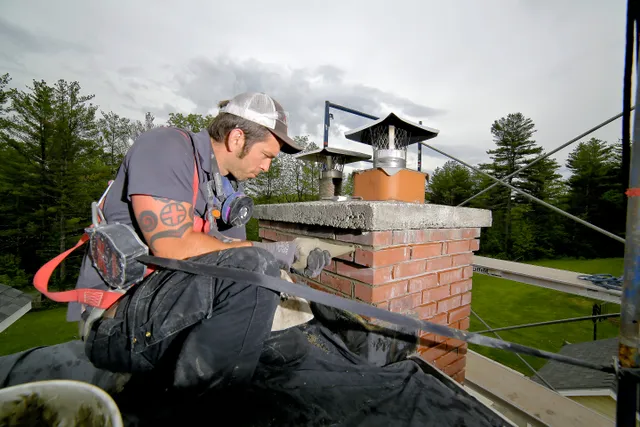
Chimney work is where masonry meets fire safety, and Vermont treats it accordingly. The Division of Fire Safety's licensing page lists chimney sweeps among the trades it certifies, under the T4 credential. A sweep cleaning and inspecting your chimney should hold it.
Ask what an inspection includes. A basic sweep removes soot and creosote; a fuller inspection looks at the liner, the crown, the flashing and the clearances to wood framing, sometimes with a camera down the flue. If the sweep finds a cracked tile liner or a gap in the flue, the repair may be masonry work, a stainless liner installation, or both. Get the inspection findings in writing, with photos, before agreeing to a repair price.
Chimneys serve more than fireplaces. An oil boiler in Bennington, a propane furnace in Brandon or a wood stove in a Lyndon farmhouse all vent through a chimney. Ask the sweep whether the liner is suited to the appliance it serves, since a liner sized for a wood stove may not suit an oil boiler and the reverse.
Wood and pellet stoves: rebates and the hearth
Wood and pellet heat are common enough in Vermont that the state's efficiency program pays toward them. Efficiency Vermont's 2026 rebates put $400 toward a qualifying stove that burns wood or pellets, and $6,000 toward a whole-house wood heating system. A new stove often means masonry: a hearth pad, a surround, a new or relined chimney, or a thimble through a wall.
Ask the mason or the stove dealer who handles each piece, and make sure the chimney work is done by someone who knows the stove's clearance and venting requirements. A hearth built to look good but too close to framing is a fire risk you will not see until it is too late.
Mortar, frost and the old brick in Vermont houses
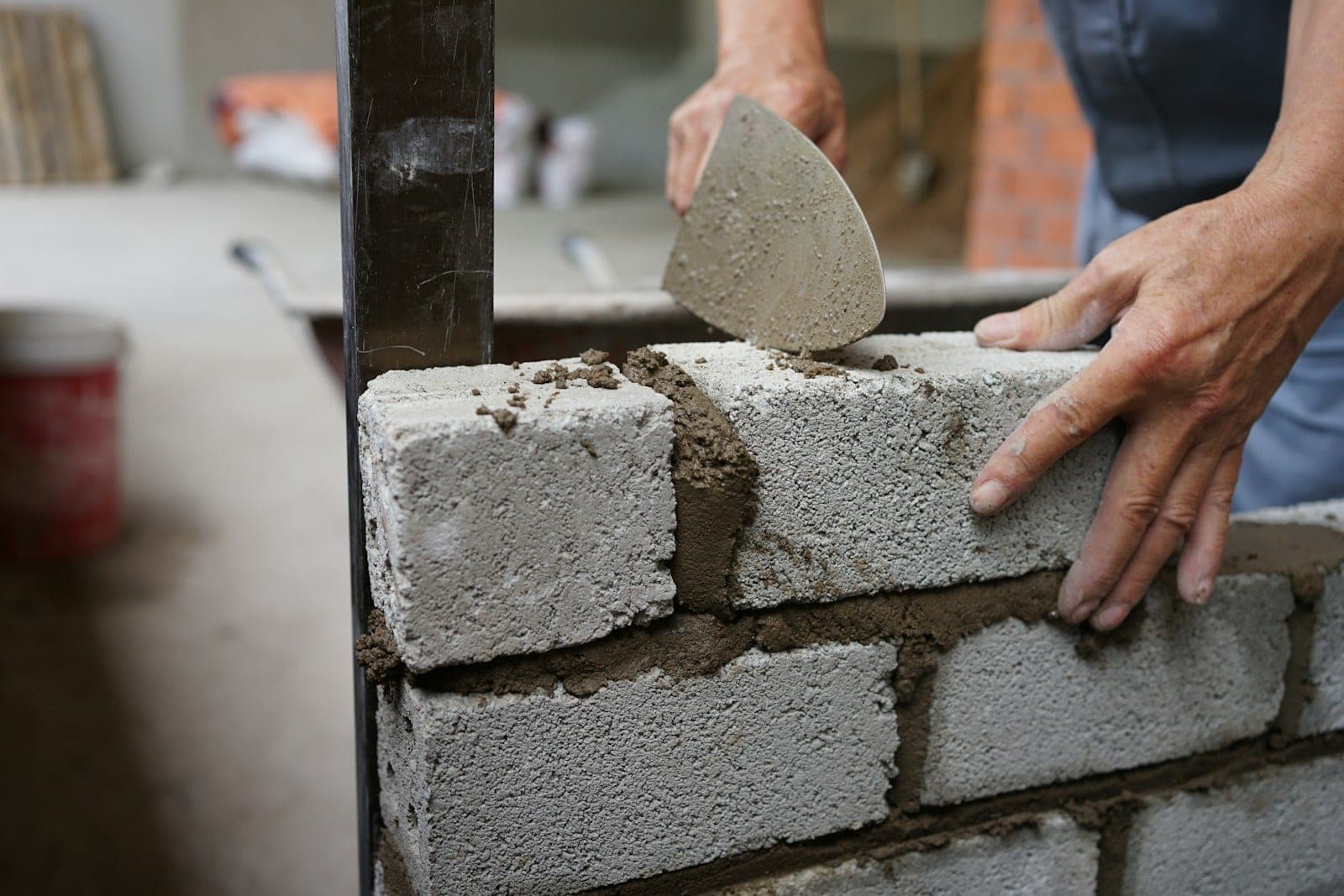
Freeze and thaw is the enemy of masonry. Water gets into mortar joints and porous brick, freezes, expands and breaks it apart. Over decades, that is why chimneys lose their tops and old foundations crumble. A Vermont mason's choice of mortar matters: older brick and stone usually need a softer, lime-rich mortar that moves with them, rather than a hard modern mix that can crack the brick around it.
Ask what mortar the mason will use and why. On an old house in Burlington or Winooski, ask how they will match the color and the joint profile of the existing work. And ask how they will protect fresh mortar from frost if the job runs into the fall. Blankets, tarps and a heated enclosure all work, at different prices, and a mason who plans for a cold October night in Hardwick or Montpelier before it arrives is the one whose joints will still be sound when the snow melts.
Repointing a foundation that carries the house
Below many Vermont farmhouses and village houses is a stone or brick foundation laid a century or more ago. Its mortar washes out over time, stones loosen, and the sill above starts to rot where cold air and water get in. Repointing a foundation is ordinary masonry work, but on a wall that carries the house it calls for care.
Ask the mason how much of the wall they will open at once, how they will support loose sections, and whether any stones need resetting rather than pointing. If the sill is rotted, the carpenter and the mason have to work together, and the order matters. On a foundation in a river valley that flooded in 2023, ask too whether the wall has moved since, because water that undermines a footing shows itself in new cracks and a door that no longer closes. A mason who notices that and says so before quoting is worth the call.
Painted brick and lead in an older house
Some older Vermont houses have painted brick or stone, inside or out. In a house built before 1978, the Health Department presumes the paint contains lead, and its lead-safe rules apply to removing or disturbing painted surfaces above small thresholds. Stripping paint from a brick wall, or grinding out painted mortar joints, is lead-safe work. Ask the mason whether they or a subcontractor hold an RRPM license.
Stone walls, steps and digging
A new stone wall, walkway or set of steps means excavation, and before any digging in Vermont someone calls 811, and 30 V.S.A. § 7006 allows the utility companies 72 hours, weekends and holidays excluded, to put their marks down. Your own lines, such as a well pipe or a septic line, are not marked; show the mason where they run.
For walls and steps, ask about the base. A dry-stone wall in a field near Poultney or Fair Haven needs a well-drained foundation of crushed stone; steps against a house need a base that will not heave in frost. Ask how deep the base goes, what it is made of, and how water drains away from it.
Comparing masonry bids
The Vermont calculator default for a typical masonry project is about $3,600 to $7,200; the Vermont masonry cost page compares chimneys, walls, patios and steps. Ask each mason for the same scope: the materials (brick type, stone source, mortar), staging or lift, debris removal, and any flashing where a chimney meets the roof. Settle in writing which trade owns the flashing at the roof line; when each assumes the other will do it, the leak shows up in the first spring rain. In Middlebury, Rutland City or St. Johnsbury, ask to see work the mason did at least five years ago; masonry shows its quality after several winters, not after one.