Connecticut is stone-wall country. Fieldstone walls run along the roads of Lyme, Salem and Roxbury, brick chimneys rise above capes in Hamden and Naugatuck, and the hilly lots of Waterbury, Prospect and Woodbridge are held up by retaining walls of every age. Masonry work here ranges from repointing a chimney to rebuilding a wall that's leaning toward the neighbor's driveway.
A $9,300 retaining wall, abandoned
The Department of Consumer Protection's May 2026 warning to homeowners opens with the kind of case masonry produces: a $9,300 retaining wall that the contractor abandoned partway through. In 2025 the department handled 1,266 home improvement complaints and recovered $4.19 million in restitution for consumers.
Retaining walls are prone to this. The contractor collects a deposit, digs out the bank, sets a few courses, and stops when the job proves harder or other work pays better. The homeowner is left with an open excavation and a slope that's less stable than before. The protections below are how you avoid that.
The registration masons need
Connecticut doesn't license masons as a trade. Because the Home Improvement Act's definition of home improvement takes in patios, driveways and repairs to the land and buildings of a residence, a mason working on your home needs a Home Improvement Contractor registration (CGS Sec. 20-419). Look the mason up by name on eLicense.
Registration is tied to protection. Only work by a registered contractor is eligible for the state's Guaranty Fund, and a town can't issue a building permit to a contractor who must be registered and isn't. An unregistered mason who offers a lower price is also offering you less recourse.
Retaining walls: height, permits and drainage
Whether a wall needs a permit depends on the town. Bridgeport's building department, for example, lists retaining walls over 3 feet high among the projects that need a building permit (Bridgeport building permit). Your town may draw the line elsewhere, and a tall wall may also need a licensed engineer's design.
A retaining wall fails from water more often than from weight. Ask the mason:
- How deep is the footing, and what goes under it?
- How will water get out from behind the wall: gravel backfill, a perforated drain pipe, weep holes?
- Is the wall dry-laid stone, mortared, or segmental block, and why that choice for this slope?
- Who removes the excavated soil, and where does it go?
State law requires an excavation notice before the footing trench is dug; the request goes to Call Before You Dig by phone at 811 or online. Write into the contract which of you sends it.
Chimneys, liners and the trades behind them
Chimney work is the other big masonry category in Connecticut, where oil and wood heat are common outside the cities. A mason can repoint, rebuild a crown or rebuild a chimney above the roofline. Several connected jobs belong to other credentials:
- Liners for gas or oil appliances. Connecting a boiler, furnace or water heater to a new liner is heating work done under a state heating license.
- Gas fireplaces and inserts. These take a separate gas-hearth credential, set out in Sec. 20-420(d).
- Flashing where the chimney meets the roof is often a roofer's job. Agree in writing who does it.
For a historic house in New Canaan, Darien or Greenwich, or an antique in Hartland or Colebrook, ask about mortar. Old brick and stone were laid in softer lime mortar, and repointing with a hard modern mix can damage the brick.
Old fieldstone walls along the road
The dry-laid fieldstone walls that line Connecticut's back roads and old pastures are part of what owners in towns like Lyme, Roxbury and Bridgewater bought into. Rebuilding a section that frost or a tree root has pushed over is a craft of its own, and not every mason does it. Ask to see walls they've rebuilt, ask whether they'll reuse your stone or bring in new, and agree on how the rebuilt section will be matched to the rest. A wall along a road may sit partly in the town's right of way, so check with the town before moving it.
When masonry can and can't be done
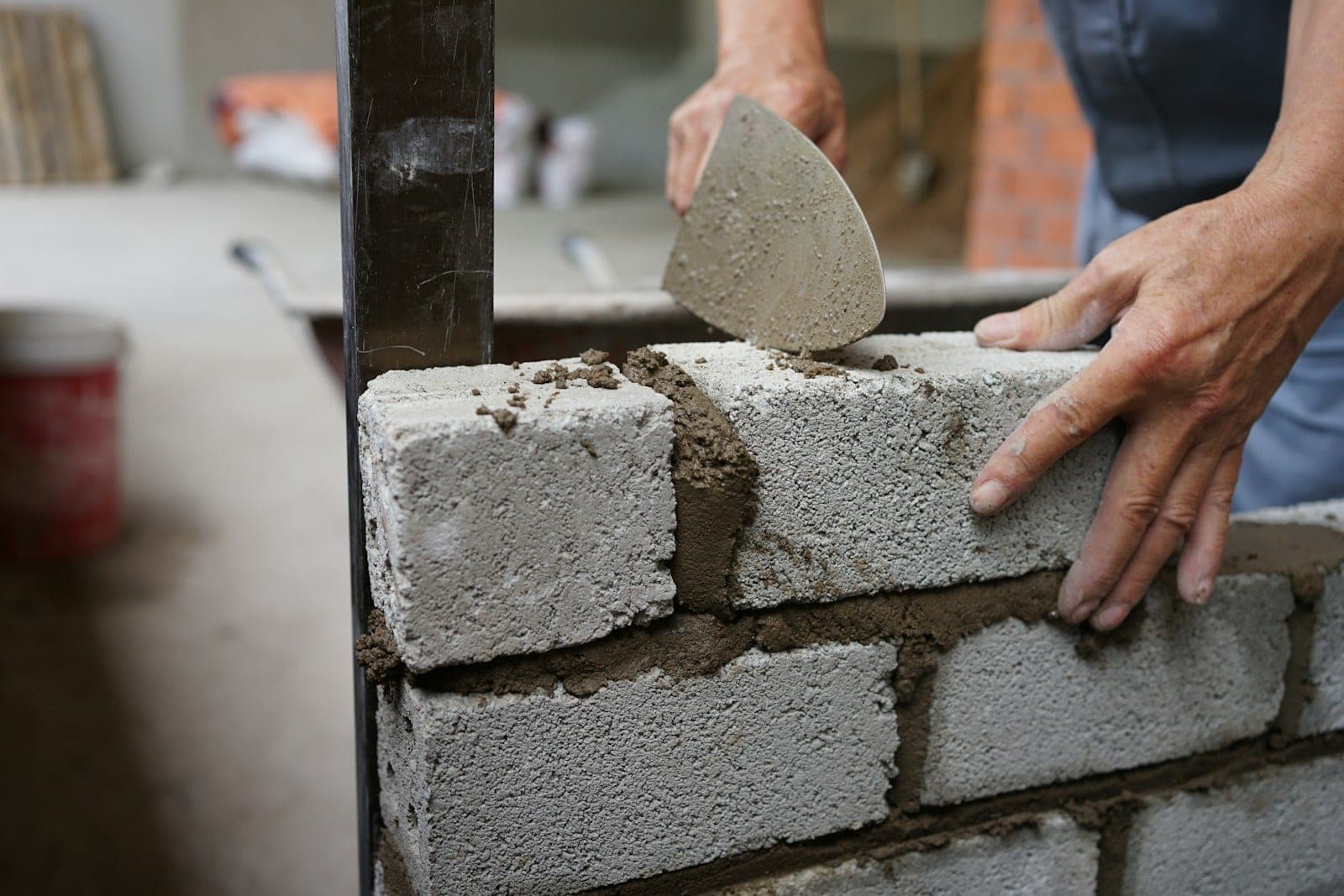
Mortar needs time above freezing to cure. In a Connecticut winter that limits repointing, brick and block work to mild spells, or to jobs the mason can tent and heat. Dry-laid stone is less sensitive. Ask the mason how weather will affect the schedule, and make sure the contract's completion date allows for it. A mason who pushes to repoint in a hard freeze to keep the job moving may leave you with joints that fail by spring.
Patios, steps and walkways
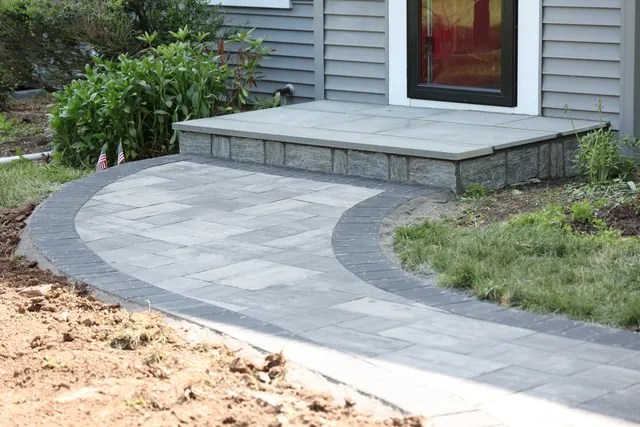
Brick and stone patios, front steps and walkways are the everyday work of masons in the suburbs, from Bethany and Woodbridge to Somers and Bozrah. Front steps in particular should be built to the town's code for rise and run, with a railing where required, and set on a footing below frost. Ask whether the mason will pull a permit for steps and how they'll tie them to the house foundation.
Crumbling foundations aren't a masonry repair
In north-central and eastern Connecticut, foundations made with pyrrhotite-bearing aggregate deteriorate from the inside, and no amount of patching or parging fixes them. Eligible owners apply to the Connecticut Foundation Solutions Indemnity Company, the state-created captive insurer that pays to replace them; its homeowner information page explains how. If a mason offers to repair a foundation with map-pattern cracking, step back and have it inspected by a licensed professional engineer first.
Contracts and payments that keep a mason on the job
A masonry contract in Connecticut is only enforceable against you if it's in writing, signed and dated by you both, carries the mason's registration number, sets a start and a completion date, and includes your notice of cancellation. Change orders have to be written and signed too.
DCP's contracting advice adds what helps most with abandoned jobs: keep the up-front payment to about a third of the price or less, tie the remaining payments to visible stages, such as the footing poured, the wall at half height, and the wall finished and backfilled, and never pay cash.
If a registered mason does walk away, the Guaranty Fund can pay you up to $25,000. You need a court judgment or a court-confirmed arbitration award first, and you apply within two years of it. Claims that qualify are typically paid in under six months, according to the department.
Stonework prices from the Gold Coast to the quiet corner
The state calculator puts a typical masonry job at $4,250 to $8,450. Estimate yours on the Connecticut masonry cost page. Stonework in Fairfield County and along the Gold Coast tends to cost the most, and inland and eastern towns, such as Stonington's back roads and the quiet corner, less.