Tavlee
Coverage map
  • Explore
  • Saved
  • Log in
Tavlee
Coverage map
Tavlee

A trustworthy directory of home contractors — every claim sourced, licenses verified, rankings that can't be bought.

Trades in Champlain Valley

  • Plumbers in Champlain Valley
  • Electricians in Champlain Valley
  • HVAC Contractors in Champlain Valley
  • Roofers in Champlain Valley
  • General Contractors in Champlain Valley
  • Bathroom Remodelers in Champlain Valley
  • Kitchen Remodelers in Champlain Valley
  • Window, Siding & Gutter Contractors in Champlain Valley
  • Fence Contractors in Champlain Valley
  • Landscapers in Champlain Valley

Hiring guide · Vermont

Hiring an HVAC Contractor in Vermont: Heat Pump Rebates, Oil Burner Certifications and Cold-Climate Sizing

By Tavlee · Published November 3, 2026

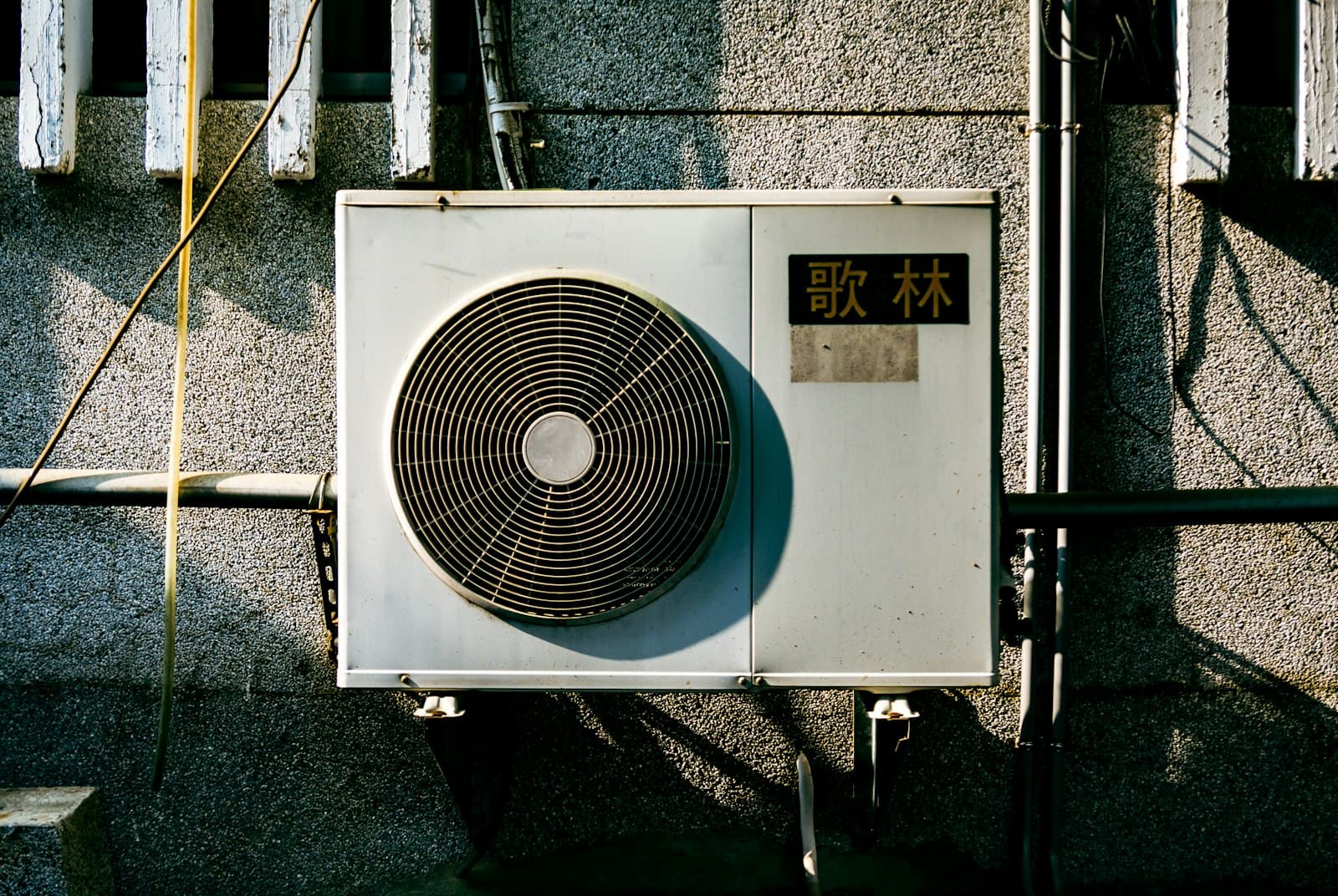
A heat-pump condenser mounted on an exterior wall
Photo: Ticka Kao on Unsplash

The short answer

A typical Vermont heating or cooling project runs about $4,400 to $10,000. There is no general HVAC license here: the credential depends on the fuel, from oil burner and gas certifications to the C3 refrigeration license for heat pumps. Efficiency Vermont's 2026 rebates pay up to $2,200 toward a ducted heat pump and up to $475 for a ductless unit.

Credential
No HVAC license; oil, gas, plumbing P2 or electrical C3 credentials from the Division of Fire Safety, by system
2026 rebates
Up to $2,200 ducted / $475 ductless heat pump (Efficiency Vermont); $2,000 per condenser for income-eligible GMP customers
Typical project
About $4,400 to $10,000 (Vermont calculator default)
Typical cost
$4,400 – $10,000
Tracked on Tavlee
98 hvac contractors in Champlain Valley

Heating is the biggest home system decision most Vermonters make, and the market has changed fast. A decade ago a contractor in Lyndon or Springfield would have quoted you a new oil boiler as a matter of course. Today the same call may end with a cold-climate heat pump, a pellet boiler, or a hybrid that keeps the old burner for January. The right answer depends on your house, your fuel and the rebates, and the right contractor depends on which system you pick.

Why Vermont has no single HVAC license

There is no state license called "HVAC" in Vermont. The Division of Fire Safety's licensing page instead covers each fuel and system separately. Oil burner installers hold a certification from the Division. Gas technicians carry their own. A plumber with the P2 heating system specialty can work on hydronic boilers and their piping. A heat pump's refrigerant circuit calls for the electrical C3 refrigeration and air-conditioning specialist license.

So the useful question is not "are you licensed?" but "which credential covers the system you are proposing?" An installer replacing an oil boiler in Bradford should name an oil burner certification. One running a line set for a mini-split in Colchester should name a C3 holder. If the job crosses trades, the quote should say who holds what.

Price adds a second rule. Heating work is named in the state's residential contractor law, so a contract over $10,000 requires registration with the Office of Professional Regulation unless the contractor is working within a trade license. A full-house heat pump install easily clears that line.

What the 2026 heat pump rebates actually pay

Efficiency Vermont's 2026 rebate announcement sets the statewide amounts: up to $475 for a ductless mini-split and up to $2,200 for a ducted heat pump, the latter run jointly with the electric utility. A smart thermostat can earn up to $100. For wood, the program pays $400 toward a wood or pellet stove and $6,000 off a central wood heating system.

Your utility can add to that. Green Mountain Power says income-eligible customers save $2,000 per condenser on heat pumps. Ask the installer which programs your address qualifies for and whether the quoted price is before or after each one.

The bigger saving may be in the envelope. Efficiency Vermont's weatherization incentive covers up to 90 percent of the cost, with higher amounts for low- and moderate-income households, through the end of 2026 or while funding lasts. A tighter house needs a smaller heat pump; a contractor who suggests air sealing first is doing you a favor.

Sizing a heat pump for a Green Mountain January

The most common heat pump failure in cold country is not a broken machine but a wrong one. A unit sized like an air conditioner, by square footage or by matching the old furnace's output, may leave a drafty farmhouse in Stowe or Morristown cold on the worst nights.

Ask for a room-by-room heat-loss calculation. Ask what outdoor temperature the system is designed to carry the house at, and what happens below it. Ask where the outdoor units go relative to the roof line, since sliding snow can bury a condenser. A contractor who answers with numbers is worth more than one who answers with a brand name.

What a gallon of oil tells you about the payback

The Department of Public Service tracks delivered fuel prices weekly through the heating season. Its retail price survey put the statewide average for heating oil at $5.87 a gallon in September 2026, with kerosene at $6.19 and propane at $3.09. Those numbers drive the math. A contractor estimating your savings should start from what you actually burn in a year, at today's price, not from a national average.

If you heat with propane in a house near Woodstock, the comparison looks different from an oil customer's in Rutland. Ask to see the assumptions behind any payback figure, and treat a quote that promises savings without asking for your fuel bills with suspicion.

Ducted or ductless in a house that was never built for either

Most older Vermont houses were heated by a boiler and radiators, a wood stove, or a forced-air furnace with ducts that run only to the first floor. That history decides the shape of a heat pump job. A house in Randolph with baseboard hot water and no ducts is usually a ductless candidate: one or more wall or ceiling heads, each with its own line set to an outdoor unit. A newer cape in Williston with full ductwork may be a better fit for a ducted unit that uses the existing runs, which is also where the larger $2,200 rebate applies.

Ask the installer to walk the house with you and show where each head or register would go, how the line sets would be routed outside, and what the indoor units will look like on the wall. In a house with closed-off upstairs rooms, ask how heat will reach them. An honest contractor will tell you which rooms a single head will not cover, rather than letting you find out in February.

When the heat goes out on a January night

A no-heat call is an emergency, and Vermont's registration law treats emergency work differently: it is one of the listed exemptions from the requirement to register before contracting. That gives a service company room to act fast, but it does not change your right to know the rate. Before a technician starts on a dead boiler in Barre at midnight, ask for the hourly charge, the after-hours premium and the trip fee. If the fix turns into a full replacement, that is a new decision, and you can ask for a written quote in the daylight.

A service plan can help. Many companies offer an annual tune-up with priority scheduling during cold snaps. Ask what the plan covers, whether parts are included, and how quickly they answer in a storm.

Who services the oil burner and the chimney?

Even with a heat pump, most Vermont houses keep a combustion appliance. Oil burners need an annual cleaning and tune-up by someone holding the Division's oil burner certification. Wood and pellet appliances, and the flue of any oil or gas boiler, are chimney work; Vermont certifies chimney sweeps under its T4 credential. Before the heating season, check that the person cleaning your system holds the certification for it.

Reading the HVAC contract before you sign

The Vermont calculator default for a typical heating or cooling project is about $4,400 to $10,000; the Vermont HVAC cost page breaks out the job types. A contract over $10,000 must be in writing under state law. It should state whether the price is fixed, capped or open time-and-materials, the start and finish dates, the equipment by model number, and how changes are approved. On a fixed or capped contract, the deposit tops out at whichever is bigger: one-half of labor, or one-half of materials.

The Attorney General's consumer page on home improvements is more cautious still, putting a comfortable deposit in the 10 to 30 percent range. For equipment that has to be ordered, a contractor may want more up front; ask whether the deposit is tied to delivery of the units to your house in Essex or St. Johnsbury.
What does heating and cooling work cost in Vermont?

Most HVAC projects in Vermont run $4,400 – $10,000. Adjust the estimate for your job in the hvac contractor cost guide.

Top-rated hvac contractors in Champlain Valley

These are the strongest hvac contractors on the evidence: reviews and public mentions weighed across sources, every claim linked to where it was found. Rankings can't be bought.

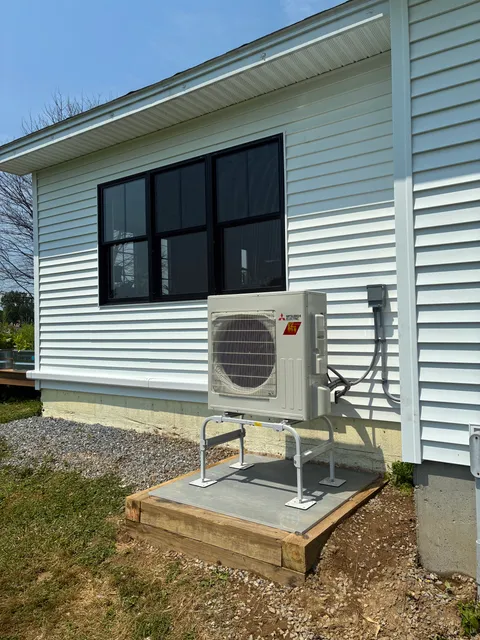
Heat Pump Services LLC work photo

Heat Pump Services LLC

Exterior line routing that blends with house trim5.0

BD

Blazing Design, Inc.

Yearly fireplace maintenance4.8

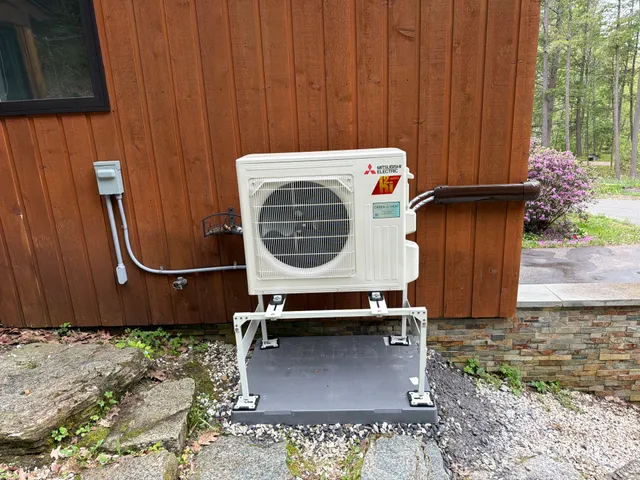
Green Heat work photo

Green Heat

Stopped boiler diagnosed, part bought and installed4.7

See all 98 hvac contractors in Champlain Valley

Hiring hvac contractors in Vermont: your questions

Do HVAC contractors in Vermont need a license?
Vermont has no general heating-and-cooling contractor license. The parts of the job that touch gas, oil or electricity are licensed trades, so ask who holds the gas-fitting, oil-burner or electrical license on your job and look that person up. Vermont (26 VSA chapter 106) requires a contractor to register with the Office of Professional Regulation before taking a residential job over $10,000 and to put the agreement in writing; on a fixed-price or capped contract the down payment may not exceed half the labor cost or half the materials price, whichever is greater, and the Office takes complaints.
How much does a heat pump or furnace replacement cost in Vermont?
The Vermont calculator default for a typical heating or cooling project is about $4,400 to $10,000. A whole-house ducted system, a new boiler with an indirect water heater, or several ductless heads in an old farmhouse can run past that before rebates are taken off.
Should I keep my oil boiler when I add a heat pump?
Many Vermont households keep the existing boiler or furnace as backup for the coldest weeks and let the heat pump carry the shoulder seasons. Ask the installer to size the heat pump honestly against your heat loss and to explain how the two systems will be controlled together.
When is the best time to book heating work?
Late spring and summer, before the October-to-March heating season. Service calls stack up once the first cold snap arrives, and an installer booked in August has time to do a heat-loss calculation instead of matching the old unit by size.
Do rebates come off the price or come back later?
It depends on the program and the installer. Some contractors take the rebate off the invoice and file for it; others leave the paperwork to you. Get that written into the quote so you know the price you are actually paying.

Sources

  • Vermont Division of Fire Safety: licensing
  • 26 V.S.A. chapter 106: residential contractors
  • Efficiency Vermont: 2026 rebates announcement
  • Green Mountain Power: home heating and cooling rebates
  • Vermont Department of Public Service: retail heating fuel prices
  • Vermont Attorney General: home improvements

More guides

In other states: Greater Boston · North Shore · Greater Worcester · South Shore · Cape Cod · Western Massachusetts · Maine · New Hampshire · Connecticut · Greater Providence

Other trades in Vermont: Plumbers · Electricians · Roofers · General Contractors · Bathroom Remodelers · Kitchen Remodelers · Window, Siding & Gutter Contractors · Fence Contractors · Landscapers · Painters · Waterproofing Contractors · Handymen · Carpenters · Flooring Contractors · Exterminators · Home Inspectors · Movers · House Cleaners · Pool Cleaners · Masonry Contractors

All Vermont hiring guides →

  • Painters in Champlain Valley
  • Waterproofing Contractors in Champlain Valley
  • Handymen in Champlain Valley
  • Carpenters in Champlain Valley
  • Flooring Contractors in Champlain Valley
  • Exterminators in Champlain Valley
  • Home Inspectors in Champlain Valley
  • Movers in Champlain Valley
  • House Cleaners in Champlain Valley
  • Pool Cleaners in Champlain Valley
  • Masonry Contractors in Champlain Valley
  • HVAC Contractors nearby

    • HVAC Contractors in Greater Boston
    • HVAC Contractors in Merrimack Valley
    • HVAC Contractors in North Shore
    • HVAC Contractors in MetroWest
    • HVAC Contractors in Greater Worcester
    • HVAC Contractors in South Shore
    • HVAC Contractors in Southeastern Massachusetts
    • HVAC Contractors in South Coast
    • HVAC Contractors in Cape Cod
    • HVAC Contractors in Greater Nashua
    • HVAC Contractors in Greater Providence
    • HVAC Contractors in Greater Springfield
    • HVAC Contractors in Greater Portland
    • HVAC Contractors in Greater Manchester
    • HVAC Contractors in The Berkshires
    • HVAC Contractors in Seacoast
    • HVAC Contractors in Lakes Region & Central NH
    • HVAC Contractors in Monadnock & Upper Valley
    • HVAC Contractors in North Country
    • HVAC Contractors in South County
    • HVAC Contractors in East Bay & Newport
    • HVAC Contractors in Greater Hartford
    • HVAC Contractors in Greater New Haven
    • HVAC Contractors in Fairfield County
    • HVAC Contractors in Eastern Connecticut
    • HVAC Contractors in Litchfield Hills
    • HVAC Contractors in Southern Maine
    • HVAC Contractors in Lewiston-Auburn & Western Maine
    • HVAC Contractors in Midcoast & Mid-Maine
    • HVAC Contractors in Bangor & Downeast
    • HVAC Contractors in Aroostook County
    • HVAC Contractors in Champlain Valley
    • HVAC Contractors in Central Vermont
    • HVAC Contractors in Northeast Kingdom
    • HVAC Contractors in Southern Vermont
    • HVAC Contractor cost in Champlain Valley
    • Guide to hiring hvac contractors in Vermont
    © 2026 Tavlee Inc. All rights reserved.AboutPress & MediaGuidesBlogPrivacyTermsSupport Center

    Ratings weighed across every source · state-license verified · citations you can open.