"Landscaper" covers a wide range of businesses in Connecticut. One company mows lawns in Hartford's suburbs on a weekly route. Another builds stone terraces in Ridgefield and Wilton. A third installs sprinkler systems in Avon and Simsbury, and a fourth sprays for ticks in Redding. The state regulates each of those differently, so the first step in hiring is knowing which kind of work you're buying.
Mowing crews, patio builders and the line between them
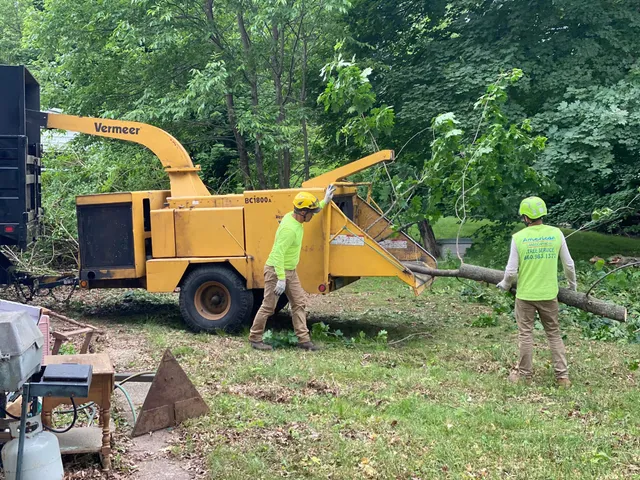
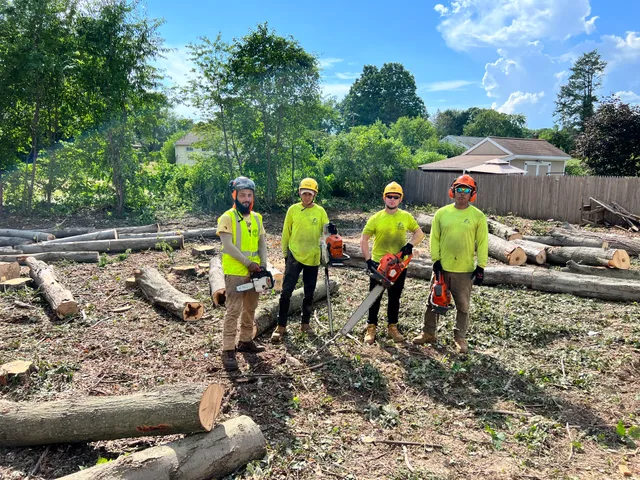
Connecticut's Home Improvement Act defines home improvement to include landscaping, patios, driveways and fences on a residential property, for any job above $200 (CGS Sec. 20-419). The Department of Consumer Protection then carves out routine upkeep. Its registration page says no home improvement registration is needed for property maintenance such as mowing, snowplowing and cleaning, or for tree and stump work.
In practice that sorts landscapers into two groups:
- Maintenance: weekly mowing, leaf cleanup, pruning, mulching, snow removal. No home improvement registration is required.
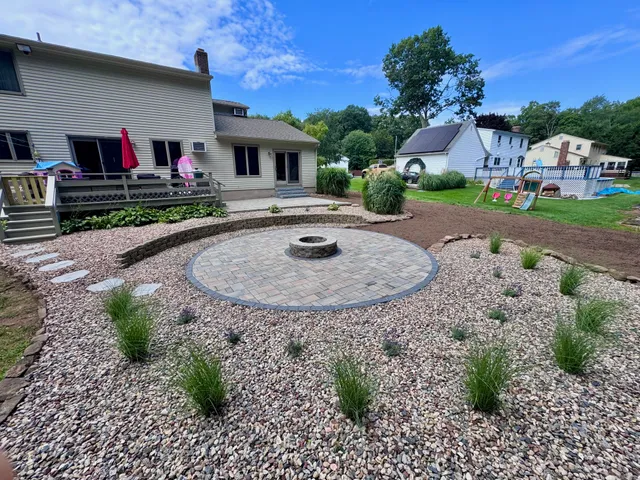
- Construction: a new patio, a stone wall, a walkway, regrading, a planting plan built as a project. This is the kind of work the Act was written for, and a company doing it should be able to show a Home Improvement Contractor registration on eLicense.
If one company does both for you, the patio contract needs to meet the Act's rules even though the mowing doesn't: written, signed and dated, with the registration number, a start and finish date, and notice of your right to cancel.
Sprinkler systems need a licensed irrigation installer
Irrigation sits outside general landscaping. DCP's fact sheets, linked from its home improvement consumer page, say that installing an irrigation system needs a DCP license, and that landscape lighting needs an electrical license. A landscaper may sell you the system, but the person connecting it to your water supply and running the controls should hold the right credential. Look the name up on eLicense like any other.
Ask the irrigation installer:
- how the system is protected against backflow into your drinking water;
- where the controller gets power, and who wires it;
- how and when the lines will be blown out each fall, and what that costs.
Who may spray your lawn: DEEP's registration
Tick, grub and weed treatments are pesticide applications, and in Connecticut that brings in the Department of Energy and Environmental Protection. A business that applies pesticides for hire must hold a pesticide application business registration, renewed every year on a September 1 to August 31 cycle, and the person doing the work must be a certified supervisor or operator under the state's pesticide law (CGS chapter 441). DEEP explains the business registration on its site, and the credentials appear on eLicense.
A mowing crew that offers to "throw down some weed control" while it's there needs the same registration. Ask before you agree.
Wells, dry summers and what you plant
About 23% of Connecticut's population drinks water from roughly 342,000 private wells, according to the Department of Public Health, and in the Litchfield Hills and the quiet corner a well and septic system are the norm rather than the exception. In Washington, Goshen, Pomfret or Canton, the water that would feed a sprinkler is the same water the house drinks.
That shapes good landscaping advice in those towns:
- Plant for the site, with species that need little watering once established, rather than designing around an irrigation system.
- Ask how a proposed irrigation system would draw on the well, and whether the well's yield can support it in August.
- Keep fertilizer, pesticide and heavy equipment away from the wellhead.
- Know where the septic tank and leach field are before any planting bed, tree or patio goes in.
DPH also reminds well owners that testing the water is their own job. If a landscaper is regrading near the well, it's a good year to test.
Digging deeper than a flower bed
A patio base, a retaining wall footing or a new tree all mean excavation, and Connecticut requires notice to the one-call center first. Dial 811 or file online with Call Before You Dig. Agree in the contract which side files the notice. Utility marks don't cover private lines such as an irrigation main, landscape lighting cable or the pipe to a septic tank, so point those out to the crew yourself.
Retaining walls over a certain height often need a building permit, and towns set the threshold. Call your building office in Woodbridge, Orange or Granby before a wall is designed, not after it's built.
What a paver patio quote should spell out
Two patio quotes for "about 300 square feet of pavers" can be very different jobs underneath. The base is what fails in a New England winter, so ask each contractor to write down:
- Excavation depth and base material. How deep they dig, what gravel goes back in, and how it's compacted, in lifts or all at once.
- Drainage. Which way the patio pitches, and how water gets away from the house foundation instead of toward it.
- Edge restraint. What holds the outside pavers in place so the edges don't creep apart.
- Paver or stone. The product, color and thickness, and whether natural stone is set on gravel or on concrete.
- Steps and walls. Whether any are included, and their height.
- Restoration. Who repairs the lawn where machines drove and soil was stockpiled.
- Warranty. How long the contractor will come back to reset settled pavers.
On older lots in Hartford's suburbs and in towns like Simsbury and Canton, ask what happens if they dig into an old buried oil tank, a dry well or a pile of construction debris. A contractor who has seen it before will say how it would be priced.
Snow contracts and the off-season
Many landscapers in the state run plows in winter. Snow removal is property maintenance, so no home improvement registration is needed, but a written agreement still protects both of you. It should say when the plow comes (a set snowfall depth, or at the end of the storm), whether walks and steps are shoveled, whether the price is per push or for the season, and who pays if a plow blade damages the lawn edge, a fence or a mailbox.
Planting and patios on the shoreline
In Guilford, Madison and other shoreline towns, salt spray and storm surge decide what survives. A landscaper who works the coast should know which plants tolerate salt and which hardscape materials hold up to freeze and saltwater. Projects close to the water may also need coastal or wetlands review before regrading, so check with the town.
Mowing visits versus patio projects on the price sheet
The state calculator's default for a typical maintenance visit is $50 to $70, for a modest lot. Price a season, a cleanup or mulch on the Connecticut landscaping cost page. Construction work is priced as a project, so get two or three written quotes with the materials, square footage and base depth spelled out.