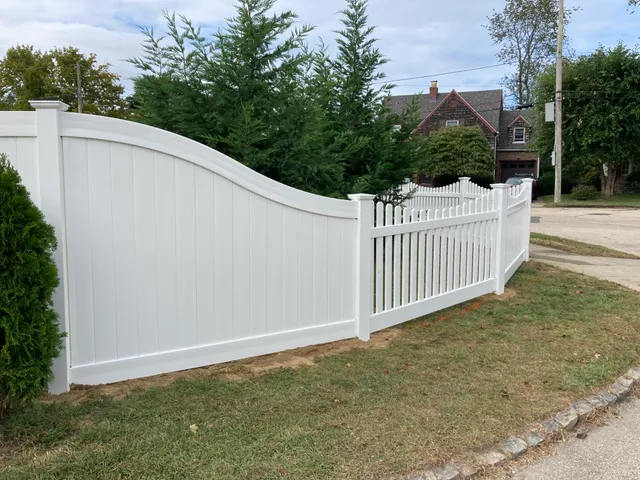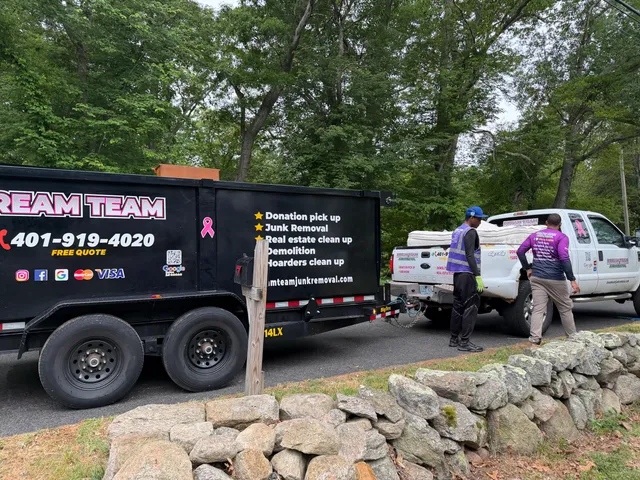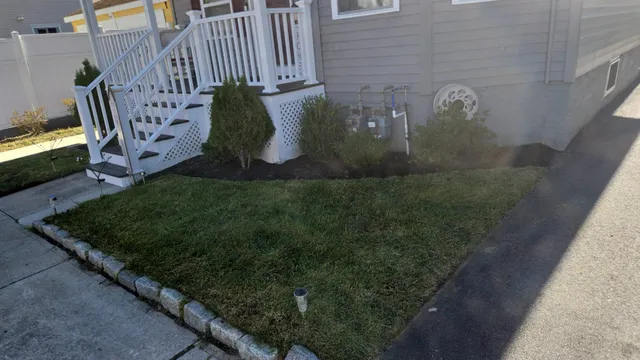
Landscaping covers jobs that are regulated in very different ways. Mowing a lawn in Cranston is unregulated work you can hire anyone to do. Building a patio in East Greenwich puts the installer under the state's contractor registration law. Spraying a lawn in Barrington for grubs requires a state pesticide license. Clearing a view to the bay in Jamestown can need a coastal permit. Sorting out which of these your job is tells you what to ask.
Patios, walls and walkways: when a landscaper becomes a registered contractor
Rhode Island's contractor law lists "hardscape installers" by name, alongside masons and concrete installers, as trades that must hold their own registration unless they work as a registered contractor's employees (RIGL 5-65-3). A company that only mows and plants is generally outside that registration. Once it builds a paver patio, a retaining wall, steps or a stone walkway, it is doing work the law expects a registered contractor to do. Search the name on the CRLB contractor search.
For hardscape jobs, ask:
- What base goes under the patio, and how deep is it compacted?
- How will water drain off the patio, and away from the house?
- For a retaining wall, how tall is it, what is behind it for drainage, and does its height mean the town wants an engineered design or a permit?
- Who handles Dig Safe before excavation?
A paver patio that sinks after two winters almost always failed in its base. Price the base carefully, not just the stone.
Grub control, weed killer and the DEM applicator license
Commercial pesticide application in Rhode Island is licensed by the Department of Environmental Management. The Pesticide Control Act, in RIGL 23-25-12, lets a company spraying for hire treat a lawn only when a licensed or certified applicator does the spraying or directly oversees it. That covers lawn care companies that spray for weeds, grubs or insects, and tree companies that treat for pests. The state does not offer a public online lookup, so you have to ask:
- Who on the crew holds the applicator license, and what is the number?
- What products will you apply, and when?
- When is it safe for kids and dogs to use the lawn again?
Confirm the license with DEM directly. If you have a well, as many homes do in Glocester, Foster and Scituate, ask how the company handles application near the wellhead. If you prefer no chemicals at all, say so; many companies offer organic or mechanical programs.
Buffers along the bay and the ocean
Waterfront properties in Jamestown, Little Compton, Charlestown and South Kingstown fall under the Coastal Resources Management Council, the state agency that issues permits for the coastal zone and also handles freshwater wetlands applications. Coastal buffers, the strips of natural vegetation between a property's lawn and the shore, are often protected, and clearing them for a view or a lawn can require approval.
Before you hire for any of the following, ask CRMC or your building official whether a permit applies:
- cutting or thinning shrubs and trees along a bluff or marsh edge;
- extending a lawn toward the water;
- building a path, steps or a wall down to the shore;
- adding fill or changing grades near a wetland.
A landscaper who works on the shore regularly will know the rules and the people. Ask about their CRMC experience, and who would prepare an application.
Digging for trees, drainage and irrigation
Planting a large tree, installing a drainage trench or laying an irrigation line is excavation. RIGL 39-1.2-5 requires anyone digging within 100 feet of a utility to give Dig Safe at least 72 hours' notice, weekends and holidays excluded. The company doing the work files the request, through 811. On a Providence or Pawtucket city lot, where gas services run from the street to the house through the front yard, this is not optional caution.
Irrigation also touches the plumbing code where it connects to your water supply, and a licensed plumber may be needed for the connection and the backflow device. Ask who makes the tie-in.
Big trees and storm cleanup
Late-summer tropical storms and winter nor'easters bring down limbs across the market, and after a big one every crew with a chainsaw is busy. Tree removal near a house or wires is a different job from lawn care. Before you let anyone climb:
- Ask for a certificate of insurance that covers tree work specifically; many general landscaping policies exclude it.
- Never let a crew cut near a power line. Call the utility for anything touching or close to wires.
- Get the price for removing the wood and grinding the stump in writing, separate from the cut.
Big oaks and maples over old houses in Providence's East Side or along Barrington's streets are often worth an assessment before a storm rather than after. A crew that prunes deadwood in the off-season is cheaper than one that pulls a limb off your roof in September.
Design first, or straight to installation?
A landscape design is worth paying for when the job involves grading, drainage, walls or a full planting plan. Some companies design and install; others only install from someone else's plan. If you get a design, ask whether it comes with plant lists and quantities you can take to more than one installer. A free design from a company that will only build it themselves is fine, but you lose the ability to compare installation prices on equal terms.
Seasonal maintenance and what a contract should say
Most maintenance in this market runs from April into November, with spring and fall cleanups at each end. A clear maintenance agreement says:
- how many visits, and what happens in a dry August when grass barely grows;
- what each visit includes: mowing, trimming, edging, blowing, bed weeding;
- the price of cleanups and mulch as separate lines;
- whether leaves are removed from the property or mulched in place;
- how billing works: per visit, monthly or a season price.
Shore communities add a summer wrinkle. In Narragansett, Charlestown and Westerly, seasonal homes and rentals want crews on fixed days that fit around guests. Ask how the company handles a rain-delayed visit when the house is rented.
For larger installation projects over $1,000, Rhode Island requires a written contract with the board's disclosures and the mechanic's lien notice. Stone and plant suppliers who are not paid can file liens, so ask whether materials are paid for before installation.
Per-visit mowing rates and season totals
The Greater Providence calculator puts routine maintenance at about $50 to $60 a visit; run your lot size and service level through the landscaping cost estimate for this market. A small city lot in Lincoln or Smithfield on a mow-only plan sits at the bottom. An acre in Warwick with full-service care, cleanups and mulch costs several times as much over a season.