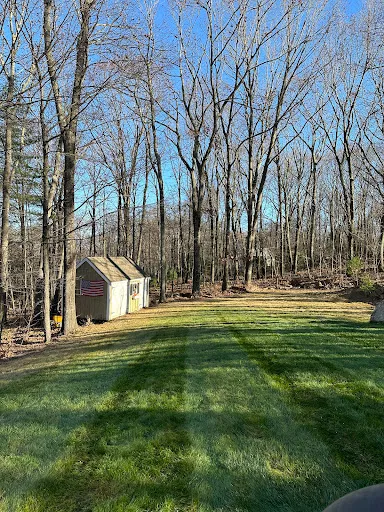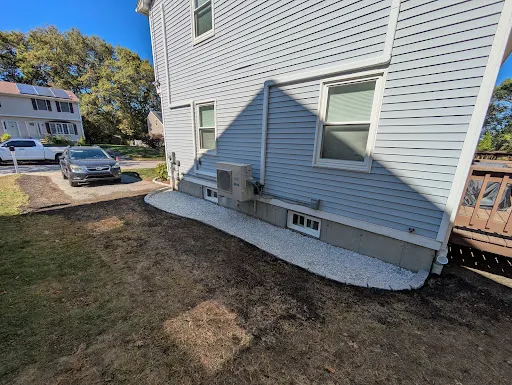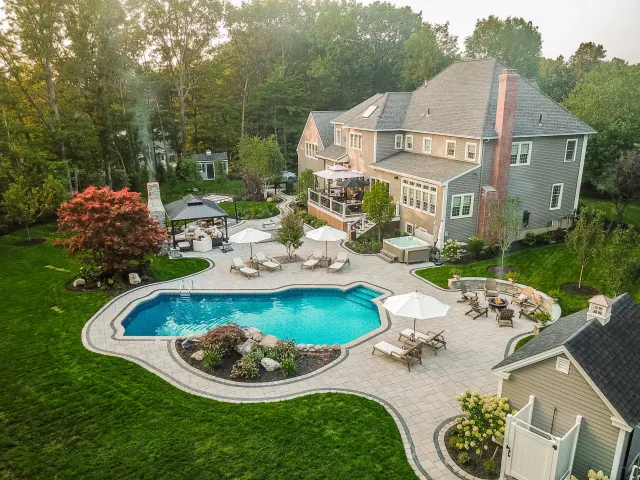
Yard work in Greater Worcester covers more ground than in most of the state. Inside the city, it is small lots behind two-families and three-deckers, with a strip of grass, a few shrubs and a driveway. In the ring towns, Shrewsbury, Auburn and Paxton, it is the classic suburban half acre. And past them the lots get big: wooded acreage in Princeton, hayfields gone to lawn in Spencer, lakeside lots, stone walls and long driveways in Charlton and Ashburnham. A landscaper who suits one of those may not suit another.
This guide covers what to check before you hire, and the two local rules most likely to catch a homeowner out.
Who may spray for ticks and mosquitoes
Ticks are why many Greater Worcester homeowners call a landscaper in the first place, especially on wooded lots. Mowing, trimming, planting and mulching need no state license. Spraying does. Anyone applying pesticides or herbicides commercially in Massachusetts must hold a pesticide license from the Department of Agricultural Resources, and that includes tick and mosquito treatments and weed control on a lawn.
The state runs a pesticide license lookup. It searches the licensing system directly; an active applicator shows a status of "Decision Rendered Active." Ask the company for the name and license number of the person who will actually spray, not just the company owner, and search that name.
If your landscaper does mowing and subcontracts the spraying, ask who the subcontractor is and look them up too. On a lot served by a private well, which is common in the hill towns, ask what products will be used near the wellhead and how far away they will stay.
Building and grading in the Wachusett watershed
The Wachusett Reservoir supplies drinking water to much of eastern Massachusetts, and the land around it is protected. Under the state's Watershed Protection Act, run by the Department of Conservation and Recreation, properties in certain towns near the reservoir and its tributaries face limits on what can be built, paved or altered. The state's list of affected towns for the Wachusett watershed includes Boylston, Clinton, Holden, Paxton, Princeton, Sterling, West Boylston and parts of Worcester itself.
For landscaping, that matters when the job is more than planting: a new patio, a retaining wall, regrading, a driveway extension, a shed, or clearing near a stream. Work in the zones closest to the water can need a determination from the state or a variance before it starts. The state is clear that compliance is the property owner's responsibility, not the town's and not the contractor's.
Before you sign for hardscape in one of those towns, check whether your parcel is affected. The state publishes a parcel list, and DCR's watershed office can answer questions. A landscaper who has worked in the watershed before will usually raise the issue unprompted. If yours does not, raise it yourself.
Digging for trees, walls and drainage
Planting a tree, setting a retaining wall, burying a drain line or digging a garden bed deeper than a trowel all count as excavation. Massachusetts requires notice before any of it. Under MGL c.82 §40A the locating system must hear from you a minimum of 72 working hours in advance (Saturdays, Sundays and holidays don't count toward the clock), and a call placed more than a month early is too soon.
The state's Dig Safe page explains the routine. Outline the digging area in white paint or stakes, call 811 or 888-344-7233, and wait for the utilities to mark their lines. Dig by hand near the marks. There is no charge.
Utilities mark only their own lines. On a country lot in Hubbardston or Oakham, the well pipe, septic tank and leach field, and any wire to a barn or lamp post are yours to locate. Show the crew where they are before machines arrive.
April-to-October contracts versus paying by the cut
The Greater Worcester calculator default for a standard mowing visit is about $50 to $70. You can price your lot and services with the local estimate. Most lawn care is sold either per visit or as a season contract, roughly April through October. Ask each company:
- How many visits are included, and what happens in a dry August when the grass stops growing?
- Are spring and fall cleanups in the contract or extra?
- Is edging and trimming included each visit?
- How is a missed week handled after heavy rain?
- Does the price change for a steep or wooded lot?
Compare written proposals with the same list of services. A low per-visit price that leaves out cleanups often ends up costing more over the season.
Stone walls, slopes and runoff on hill-town lots
Much of the band is hilly, glacial ground. Old stone walls run through yards in Rutland and Westminster, lawns slope toward the road, and spring melt moves a lot of water across a property in a short time. Landscaping choices can make that better or worse.
Before a crew regrades or adds a patio, ask where the water goes now and where it will go afterward. A new hard surface sheds water instead of soaking it up, and if it tips toward the house, the basement may be the first to know. Ask whether the plan includes a swale, a dry well or a drain line, and who is responsible if water starts pooling against the foundation after the work. Ask too whether any old stone wall will be moved or rebuilt, and how; a dry-laid wall taken apart carelessly rarely goes back the same.
On a lot near a wetland or stream, your town's conservation commission may have a say over work close to the water. That is a separate local review from the reservoir rules above. Ask the landscaper whether the job is near a resource area and whether they have filed with the commission in your town before.
Checking a landscaper you have never used
Most lawn care is informal, and plenty of good crews work from a truck and a phone number. A few basic checks still help. Ask for a certificate of liability insurance that names the company, because a mower that throws a stone through a window or a tree limb dropped on a car is a real risk. Ask whether the crew members are employees or day laborers, since that affects who carries workers' compensation if someone is hurt on your property. And ask for two current customers in your town whose yards you can drive past.
When yard work becomes a construction project
A large hardscape job can cross into home improvement territory, especially when it involves a structural retaining wall, steps to the house or a deck footing. For residential contracting over $1,000, c.142A §2 requires the agreement in writing, with dates, materials, a price and a payment schedule, and keeps the up-front deposit to a third of the total. Ask whether the company is registered as a home improvement contractor if the project goes beyond planting and lawn care, and get a written scope for anything beyond regular maintenance.
Fall cleanups and winter work
Leaf season in the wooded towns is heavy, and many crews book fall cleanups weeks in advance. Some landscapers also plow in winter. If you want both, ask whether the company offers a combined contract and what the snow terms are: the trigger depth, whether walks are included, and how they protect lawns and stone walls from plow damage.