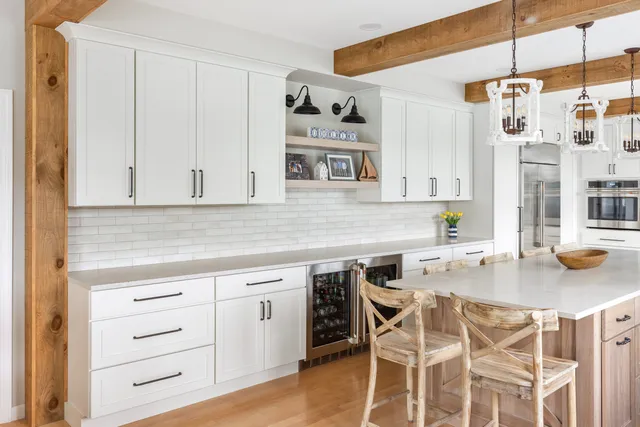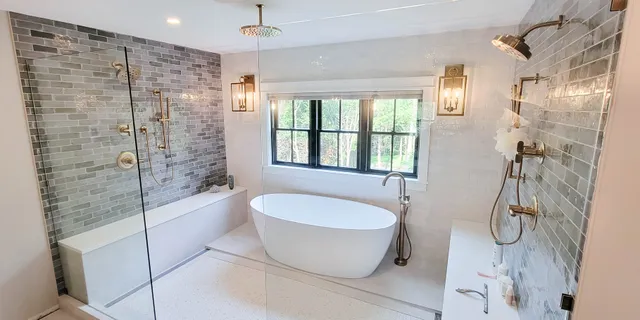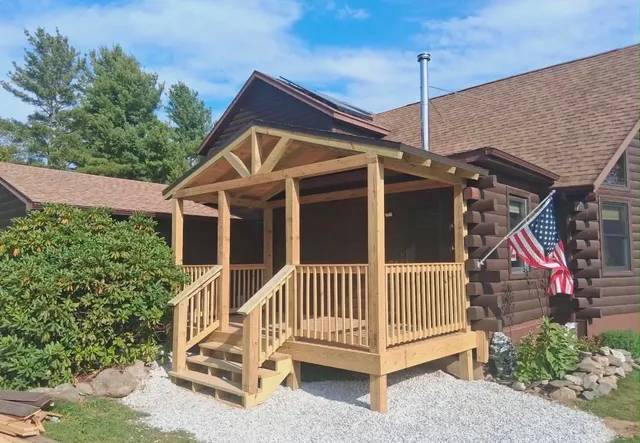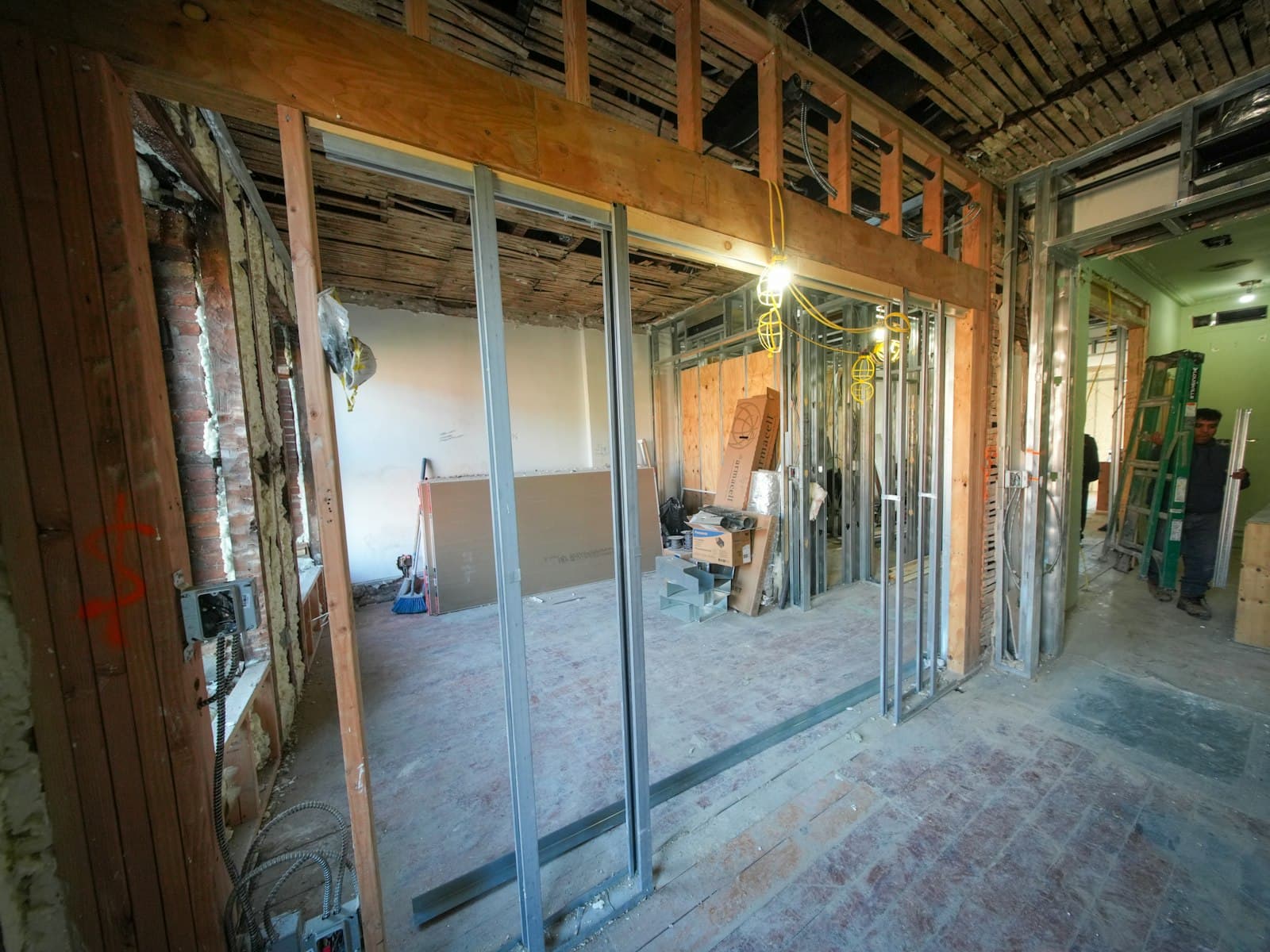
A general contractor in Vermont is often the one person holding a whole project together across a small and scattered set of trades. The plumber may be coming from Barre, the electrician from Morristown and the excavator from the next valley over. That coordination is the value you are paying for, and since 2023 the state has put a floor under it: registration, insurance and a written contract on every residential job over $10,000.
Checking a general contractor against the state register
The registration rule lives in 26 V.S.A. chapter 106. It covers anyone who contracts with a homeowner for residential construction worth more than $10,000 in labor and materials, on a building with up to four units. "Residential construction" is defined broadly: renovation, repair, painting, paving, roofing, weatherization, heating, plumbing, solar, electrical, and water and wastewater work. A general contractor running a renovation in South Burlington or a kitchen and bath gut in Newport is squarely inside it.
The register is public. Search the OPR lookup by the business name on the quote and by the owner's name, since a contractor may register as an individual or as a business. OPR's FAQ sets the fee at $75 for an individual and $250 for a business. A contractor who has not paid that to work on your $30,000 project is a contractor you should not hire.
The subcontractors matter too. Employees of a registered business do not need their own registration, and licensed plumbers and electricians working within their licenses are exempt. But an unregistered sub taking a separate contract with you directly is not covered by the general contractor's registration.
The insurance the statute requires, and why to read the certificate
Section 5509 of the chapter sets a minimum that is higher than many homeowners expect: liability coverage of at least $1,000,000 per occurrence and $2,000,000 in the aggregate. Ask for a certificate of insurance issued to you, check the policy dates against your project dates, and confirm the named insured matches the business on your contract. Lapsed insurance is one of the grounds on which OPR can discipline a registrant.
Ask separately about workers' compensation for the crew. A worker hurt on a job site in your house is a problem you do not want to inherit.
What the written contract has to say on a big Vermont job
Above $10,000, the contract must be in writing before the contractor takes a deposit or starts. The statute requires it to state one of three price bases (a maximum price, time-and-materials with a cap, or time-and-materials with no cap), estimated start and finish dates, the scope and materials, and a process for changes, with every change set down in a signed writing.
The price basis is the choice that shapes everything else. A maximum price puts the overrun risk on the contractor. Capped time-and-materials shares it. Uncapped time-and-materials leaves it with you, and it is also the one contract type where the statute sets no ceiling on the deposit. On the other two, the down payment may be no more than half the labor cost or half the materials price, whichever is greater. The Attorney General's home repair checklist suggests aiming lower, ideally 10 to 30 percent.
After the deposit, how the rest of the money moves is up to the contract. A schedule tied to milestones (framing inspected, mechanicals roughed in, drywall finished, final walkthrough) keeps payment in step with work. A schedule tied to dates does not. Hold back a final payment until the punch list is done and any permit is closed out with the town.
Rebuilding after a flood that ranks with Irene
The July 2023 storm is the reason many Vermont general contractors have spent the last three years on repair work. The National Weather Service's flood summary puts it alongside Tropical Storm Irene in 2011, with only the Great Flood of November 1927 worse in the past century. In Montpelier and along the Winooski and Lamoille, a rebuild means more than drywall: foundations, mechanicals, septic and wells.
If your house sits in a river valley, ask the contractor how the rebuild reduces the next loss. Raising the mechanicals and electrical panel, choosing materials that tolerate getting wet, and grading water away from the foundation are all questions to price. The state's disaster recovery site is the starting point for assistance programs; ask whether your contractor has worked on a job paid that way before, since the paperwork can shape the schedule.
Permit paperwork beyond the town zoning office
Most Vermont towns issue zoning permits and little else, so the general contractor carries more of the code responsibility than in a city. Some state permits come up often:
- Energy code. The Residential Building Energy Standards cover new homes and additions, alterations and repairs on houses of three stories or less. The RBES page describes the certificate and the owner and builder disclosure statement. Since July 14, 2026, a project may comply with the 2020 or 2024 edition.
- Septic and wells. Adding a bedroom can change a septic system's design flow. DEC's wastewater and potable water program permits those changes from five regional offices.
- Lakeshore. A project within 250 feet of a lake over 10 acres, from Shelburne Bay to a pond in the Kingdom, may need a DEC shoreland permit.
- Act 250. Large developments need a state land-use permit from the Land Use Review Board. A single-house project rarely does.
Lead-safe work on a renovation of an older house
A general contractor opening walls in an older Vermont house is very likely working on painted surfaces that predate 1978. The Health Department's lead rules presume lead paint is present in any house of that age and require licensed lead-safe practices once the disturbed area passes small limits: a single square foot inside any room, or twenty on one face of the building when the owner lives there. Every window replacement in such a house counts, however small.
Ask who on the crew holds the RRPM license, how the work area will be sealed and cleaned, and whether the contractor's price includes that setup. For a gut renovation in an older Rutland or Burlington house, ask too about asbestos in old flooring, pipe wrap or siding; Burlington's permit office notes that demolition usually calls for asbestos testing.
Burlington's permit fees, worked out in advance
Burlington publishes its schedule. On the city's permit fees page, construction permits run $8.50 per $1,000 of construction cost plus a $15 recording fee, and the city's own example puts a $50,000 project at roughly $915 to $925 in fees. Zoning approval comes before the building permit. Your contract should say whether permit fees are in the price or billed on top.
Which general contractor fits which corner of the state?
The market is not one place. A contractor in Middlebury or Charlotte may work mostly on farmhouses and additions; one in Waitsfield or Warren may do a lot of second-home work; one in Manchester or Dorset may specialize in high-end renovations. On the Connecticut River, a contractor in Norwich or Hartford may also work across the state line in New Hampshire, where the rules differ. Ask for two or three recent projects like yours, with owners you can call.
The Vermont calculator default for a typical general contracting project is about $20,200 to $30,800, and the Vermont general contractor cost page shows how scope changes it.