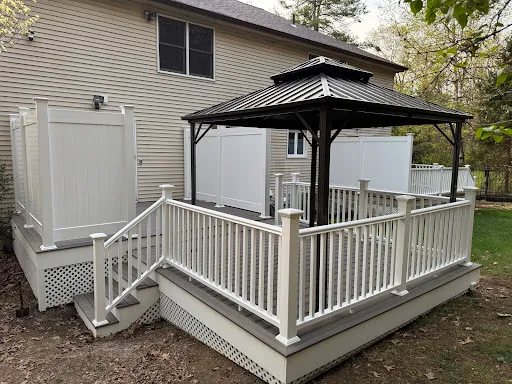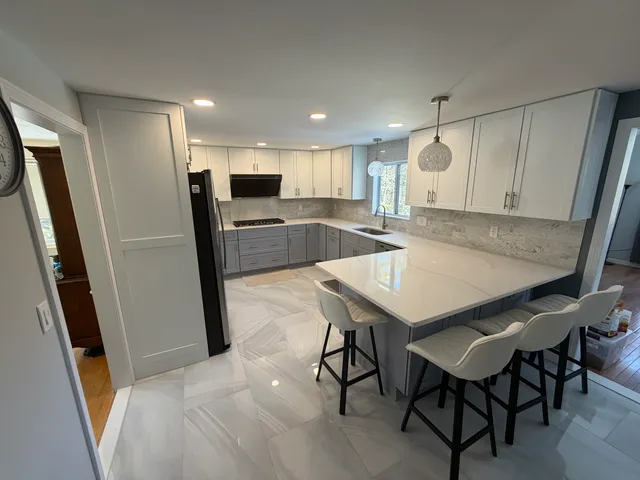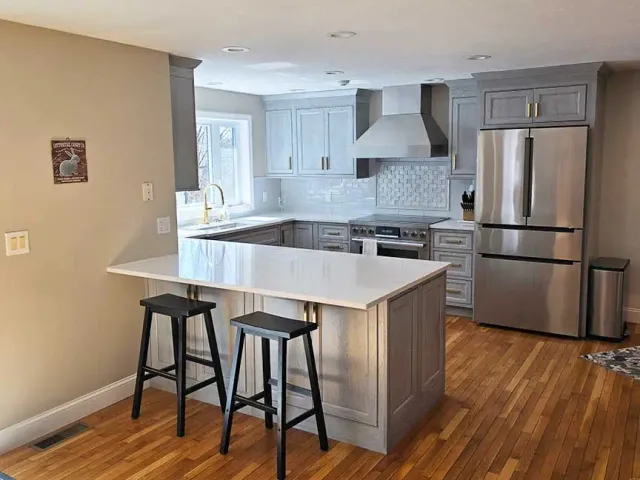
Greater Worcester has a lot of house that needs a lot of work. In the city, most housing was built before 1960, and only a small slice, roughly 7 to 8%, has gone up since 2000, according to the Worcester Regional Research Bureau's May 2026 housing report. The bureau points to "the scale of deferred maintenance across triple-deckers and mid-century housing." That is the general contractor's market here: porches and stairs on three-deckers, kitchens and baths in 1950s capes in Auburn and Shrewsbury, additions in Grafton and Northborough, and old farmhouses in Barre or Petersham that need almost everything.
Is there a general contractor license in Massachusetts?
No. Massachusetts does not issue a license called "general contractor." What it has instead are two different credentials that a homeowner should keep straight.
The first is the Home Improvement Contractor registration, which the state consumer affairs office (OCABR) keeps. It applies to residential contracting on an existing owner-occupied building of one to four units, which is why the statute's definitions frame Guaranty Fund claimants as owners who live in such a building. Search the company or the owner on the Contractor Hub.
The second is the Construction Supervisor License, an individual license from the state's building regulators for whoever supervises permitted structural work. The state's CSL page explains when one is required.
A company can have one without the other. A contractor rebuilding a three-decker's rear porches or adding a family room needs both: the registration for the contract with you, and a licensed supervisor whose number goes on the building permit. Ask for both numbers in the first meeting.
Old buildings and the change order
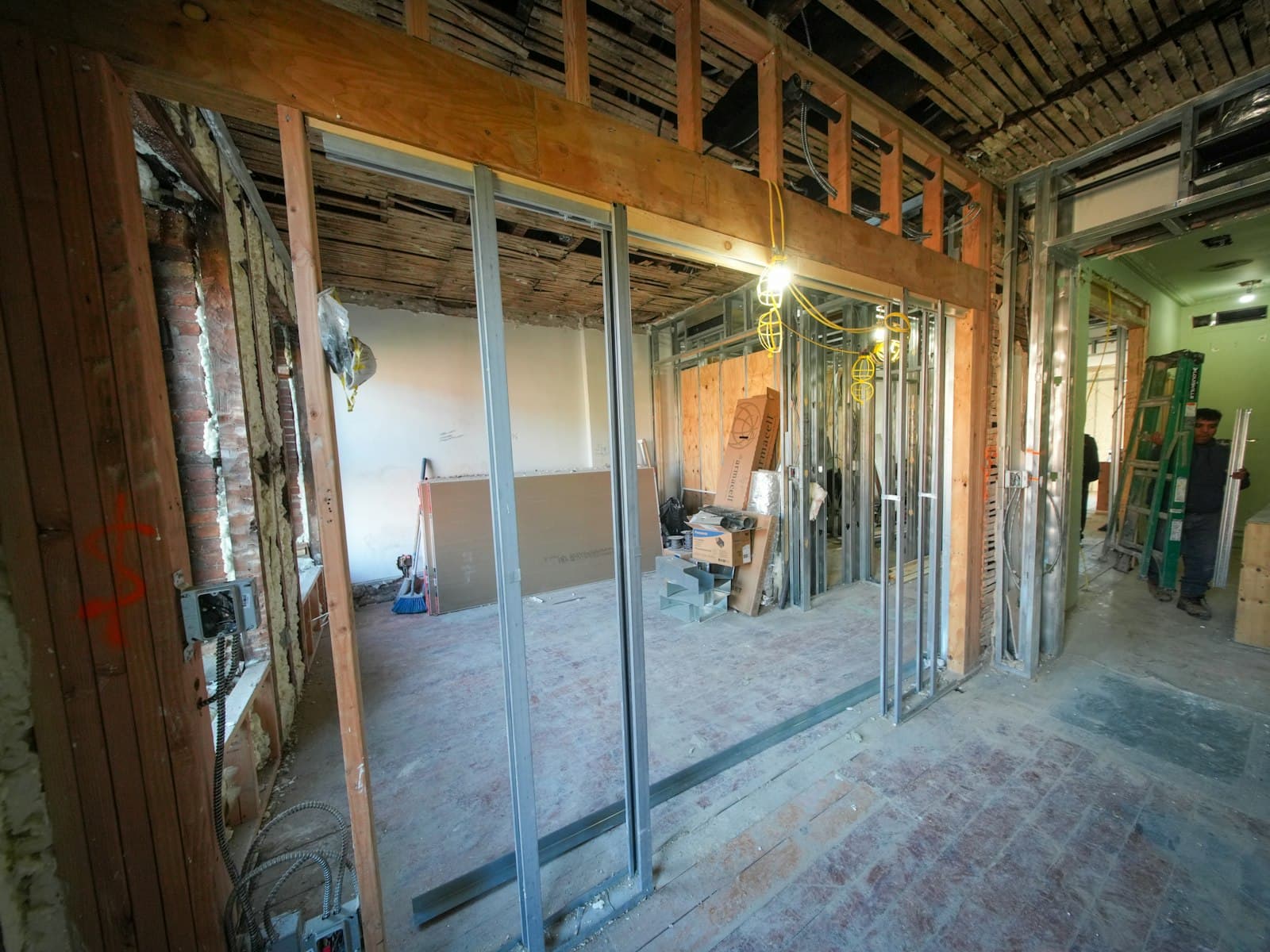
In houses this old, the quote you sign is a starting point, not a promise. A Worcester two-family may have balloon framing that lets fire and air travel between floors, sills softened by a century of wet springs, and wiring and plumbing that nobody has documented. A farmhouse in Hardwick or New Braintree may have hand-hewn beams that need a different kind of repair.
A good contractor plans for that in writing. Ask for:
- A clear line between what is included and what is excluded.
- An allowance for hidden conditions, with a stated amount.
- A change-order process: a written description and price signed by both sides before extra work starts.
- Unit prices for common surprises, such as replacing rotted sill per foot.
If a bid has no such language, the first surprise will become a negotiation with your walls already open.
What the written contract has to carry
For any residential job above $1,000, c.142A §2 makes a paper contract mandatory and spells out its contents. Think of it as a checklist you can hold the contractor's draft against. Who you both are and where you live. The state registration number. When the crew starts and when the job will be substantially done. What gets built, room by room, and with which products. What it all costs, and when each payment falls due.
The money rules ride along. Before work begins, a contractor can ask for one-third of the contract price at most; the lone exception is custom-ordered stock whose real cost exceeds that third. The last check waits until both of you agree the job is complete. The document must also flag whatever three-day cancellation right applies to your situation.
Why the permit should carry the contractor's name
The same statute requires the contract to state that the contractor will obtain the permits. It then adds a sentence every homeowner should know: owners who secure their own permits are excluded from the Guaranty Fund.
Some contractors suggest the owner take out the permit, saying it is faster or that a homeowner permit is simpler. What it really does is shift responsibility for the work, and the state's backstop, off the contractor. In Worcester, permits for new construction, repairs, additions, alterations and demolition are issued by the city's Building & Zoning division, and contractors apply online. In each of the other 52 towns, the town's own building inspector does the same job.
What the Guaranty Fund pays, and when
The Residential Contractor's Guaranty Fund sits within the Office of Consumer Affairs. Under c.142A §7 it pays each claimant the smaller of $25,000 or the actual loss, and it caps payouts at $150,000 per registered contractor in any 12-month period. You first need a court judgment or an arbitration award against the contractor that has gone unpaid.
Two practical points follow. The fund only works if the contractor was registered, so check the Hub before signing, not after a dispute. And for large projects, $25,000 does not cover everything, so payment schedules that keep your money in step with finished work still matter more than any fund.
From the city to the north county: how distance changes a bid
The local calculator's default for a typical general contracting project is roughly $22,100 to $33,600, and you can model your project against the Greater Worcester estimate. The band runs a little below Greater Boston on labor, but the spread inside it is wide. A contractor based in Worcester will price a job in Athol or Winchendon with travel in mind, and many north-county owners hire from Gardner instead. Blackstone Valley towns such as Uxbridge and Millville draw contractors from both Worcester and Rhode Island.
Ask each bidder the same questions so their prices are comparable: how many weeks on site, who is the supervisor of record, what subcontractors they use for plumbing and electrical, and how the payment schedule lines up with milestones.
Accessory apartments and the 2025 change
Since February 2, 2025, state law has required Massachusetts towns to allow one accessory dwelling unit by right on a single-family lot, with no requirement that the owner live on the property. The change came in the Affordable Homes Act, Chapter 150 of the Acts of 2024. For Greater Worcester homeowners with a deep lot in Holden or a large basement in Millbury, that opens a project that used to need special permission.
An ADU is a full general contracting job: foundation or conversion work, framing, a kitchen, a bathroom, separate egress and often a separate utility plan. Ask any contractor who bids one how many they have built under the new rules, which town offices they have worked with, and whether the price includes the plumbing and electrical permits. Your town still sets dimensional and design rules, so the building inspector's office is a good first call before anyone draws plans.
Five questions for the first site visit on an old house
- What is your HIC registration number, and whose CSL will be on the permit?
- Who will be on site day to day?
- Which trades do you subcontract, and are they licensed?
- How do you handle hidden conditions and change orders, in writing?
- Can I speak with an owner whose house is as old as mine?