A Maine roof lives through more than most. Nor'easters drive rain sideways into the shingles on the York County coast, wet snow sits for weeks on roofs in Norway and Houlton, and the freeze-thaw cycle works at every nail hole. When a roof starts to fail, homeowners from Old Orchard Beach to Camden usually find out the same way: a stain on a bedroom ceiling in late winter.
Who stands behind a roof when the state licenses no roofer?
Nobody at the state level. The Attorney General's office says so in plain terms: general contractors, and trades such as roofing and framing, are not licensed or regulated in Maine (AG home construction and repair). There is no roofing board, no registration number and no state fund to claim against.
That pushes three things to the front:
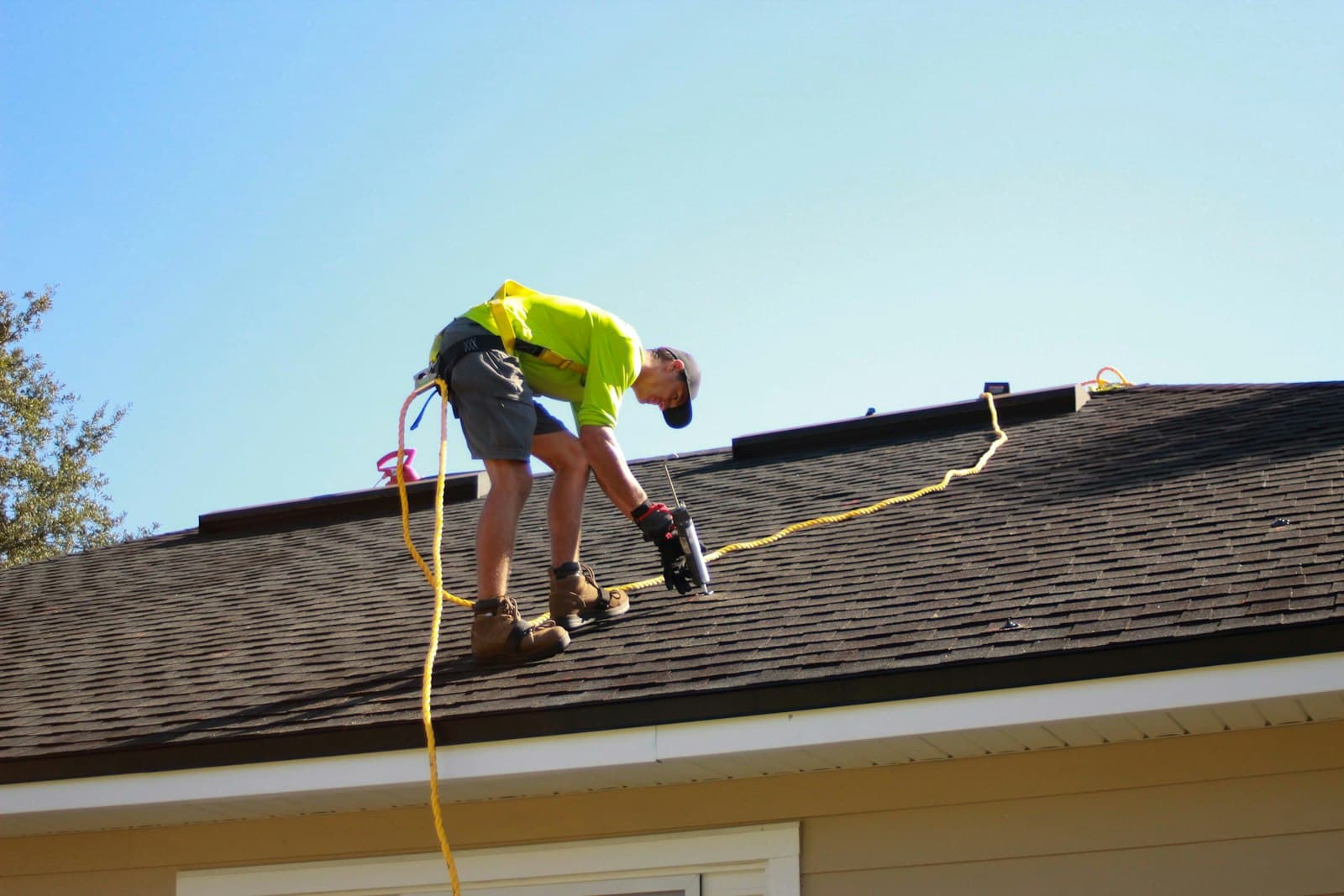
- Insurance. Ask for a certificate of liability insurance, and a workers' compensation certificate if the roofer has employees, issued by the insurer to you directly. A crew falling off a two-and-a-half-story roof in Saco is the risk you are covering.
- The written contract. Covered below; on a roof replacement it is required.
- Local track record. A roofer who has been working around Rockland or Bangor for years has roofs you can drive past. Ask for addresses of jobs that are five or more years old, because a roof that looks good in its first winter proves little.
How does Maine's contract law shape a roof job?
A roof replacement is home construction under Maine law, and almost every one costs well over the Act's $3,000 trigger. Above that amount, 10 M.R.S. §1487 requires a contract in writing, signed by you and the roofer, and each of you has to get a copy before any work happens. Among the parts the statute lists:
- the names, addresses and phone numbers of both parties, and the property's location
- an estimated start date and an estimated date of substantial completion
- the total price, and how it will be paid, with the down payment no more than one-third of the total
- a general description of the work and the materials
- a warranty statement in the exact words of the law
- a choice of dispute-resolution method
- the AG's consumer protection information, attached as an addendum
For a roof, the "description of the work and materials" line is where to be specific. Write in the shingle brand and line, the underlayment, whether ice-and-water membrane goes along the eaves and in the valleys, how many existing layers come off, and how damaged deck boards will be priced (per sheet, per board, or included up to a number).
The one-third cap matters because roofers often ask for a materials deposit. One third of a $12,000 job is $4,000. A roofer asking for half before the dumpster arrives is asking for something the statute does not allow on a contract it covers.
Why does the leak start at the eave every February?
Usually because of an ice dam, and usually because of the attic. Efficiency Maine's insulation page describes the mechanism: heat escaping into the attic warms the roof deck, snow on the upper roof melts, and the water runs down to the overhang, which is cold because it sits outside the house. There it refreezes into a ridge. Meltwater pools behind the ridge and backs up under the shingles. Efficiency Maine's air sealing page treats ice dams as a symptom of attic air leaks.
So a roofer who answers ice dams only with heat cables or a new roof may be treating the symptom. Ask what they see in the attic. A good roofer in Cape Elizabeth or Bangor will tell you if the fix is air sealing and insulation rather than shingles, even if that work goes to someone else.
Efficiency Maine pays rebates for that attic work through its insulation program: $300, $225 or $150 for sealing attic leaks depending on income, and up to $4,000 for insulating a large zone, with a lifetime limit of $8,600 per home. The work has to be done by one of its Registered Vendors. If you are re-roofing anyway, ask whether it makes sense to do the attic first, while the roof deck is easy to reach from above.
Does your town want a permit for a new roof?
That depends on the town's size as much as on the job. Maine's building code, MUBEC, must be enforced by any municipality with more than 4,000 residents; a town at or under that size may skip enforcement, though if it adopts a code at all it has to be MUBEC (10 M.R.S. §9724). York, Wells, Saco and Bangor fall on the enforcing side. Many of the small towns around Houlton or on the Midcoast peninsulas do not.
A straight shingle-for-shingle replacement may need no permit even in a larger town, while replacing rafters, adding a dormer or changing the roof's shape usually does. Call the code enforcement officer before you sign, and write into the contract who pulls any permit. The AG suggests a contract line saying the work will be done in accordance with MUBEC; on a roof, that gives you something concrete to point to if the underlayment or fastening is skimped in a town with no inspector.
What should you do about a roofer who knocks after a storm?
After a big wind or ice storm, crews sometimes go door to door in the hardest-hit towns. Storm knocks tend to follow the forecasts that the weather service's Gray office issues for southern and central Maine.
If you sign a roofing contract with a salesperson who came to your door, Maine's solicitation sales law gives you the right to cancel by written notice within three full business days (32 M.R.S. §4664). The Home Construction Contracts Act also expects a door-to-door contract to describe those cancellation rights. Use the three days to get a second price from a roofer you found yourself.
What does a Maine re-roof cost?
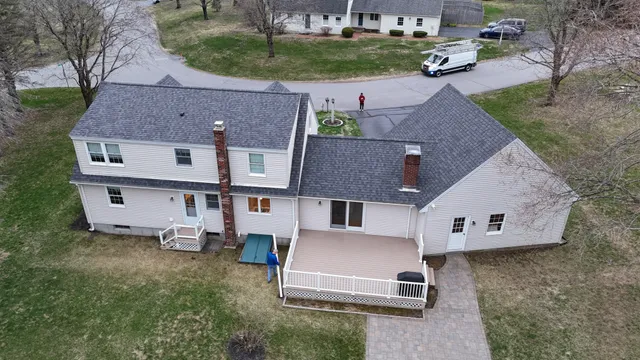
The Maine calculator default for a typical re-roof is about $8,100 to $16,700; the Maine roofing cost estimate lays out what it assumes. A cape with a simple gable sits toward the low end. A connected farmhouse, with its separate roofs on the house, the ell and the barn, has more valleys, more flashing and more transitions, and it climbs.
Season changes the schedule more than the price. Roofing runs roughly May through October in most of the state, and the good crews book up by spring.
How do you avoid paying twice through a lien?
The AG's page raises a risk many homeowners don't know about: a supplier or subcontractor who isn't paid by your roofer can file a mechanic's lien on your house. You could end up owing for shingles you already paid the roofer for. The AG suggests asking for lien waivers. Ask the roofer for a written release from the shingle supplier, and from any subcontracted crew, before you make the final payment.
If the roof fails within its first seasons and the roofer won't come back, the statutory warranty in your contract is the standard: work free from faulty materials and done in a skillful manner. Disputes under $10,000 can go to small claims court.