Tavlee
Coverage map
  • Explore
  • Saved
  • Log in
Tavlee
Coverage map
Tavlee

A trustworthy directory of home contractors — every claim sourced, licenses verified, rankings that can't be bought.

Trades in Greater Hartford

  • Plumbers in Greater Hartford
  • Electricians in Greater Hartford
  • HVAC Contractors in Greater Hartford
  • Roofers in Greater Hartford
  • General Contractors in Greater Hartford
  • Bathroom Remodelers in Greater Hartford
  • Kitchen Remodelers in Greater Hartford
  • Window, Siding & Gutter Contractors in Greater Hartford
  • Fence Contractors in Greater Hartford
  • Landscapers in Greater Hartford

Hiring guide · Connecticut

Hiring a Roofer in Connecticut: HIC Registration, Door-Knock Deals and the Saturday Rule

By Tavlee · Published November 3, 2026

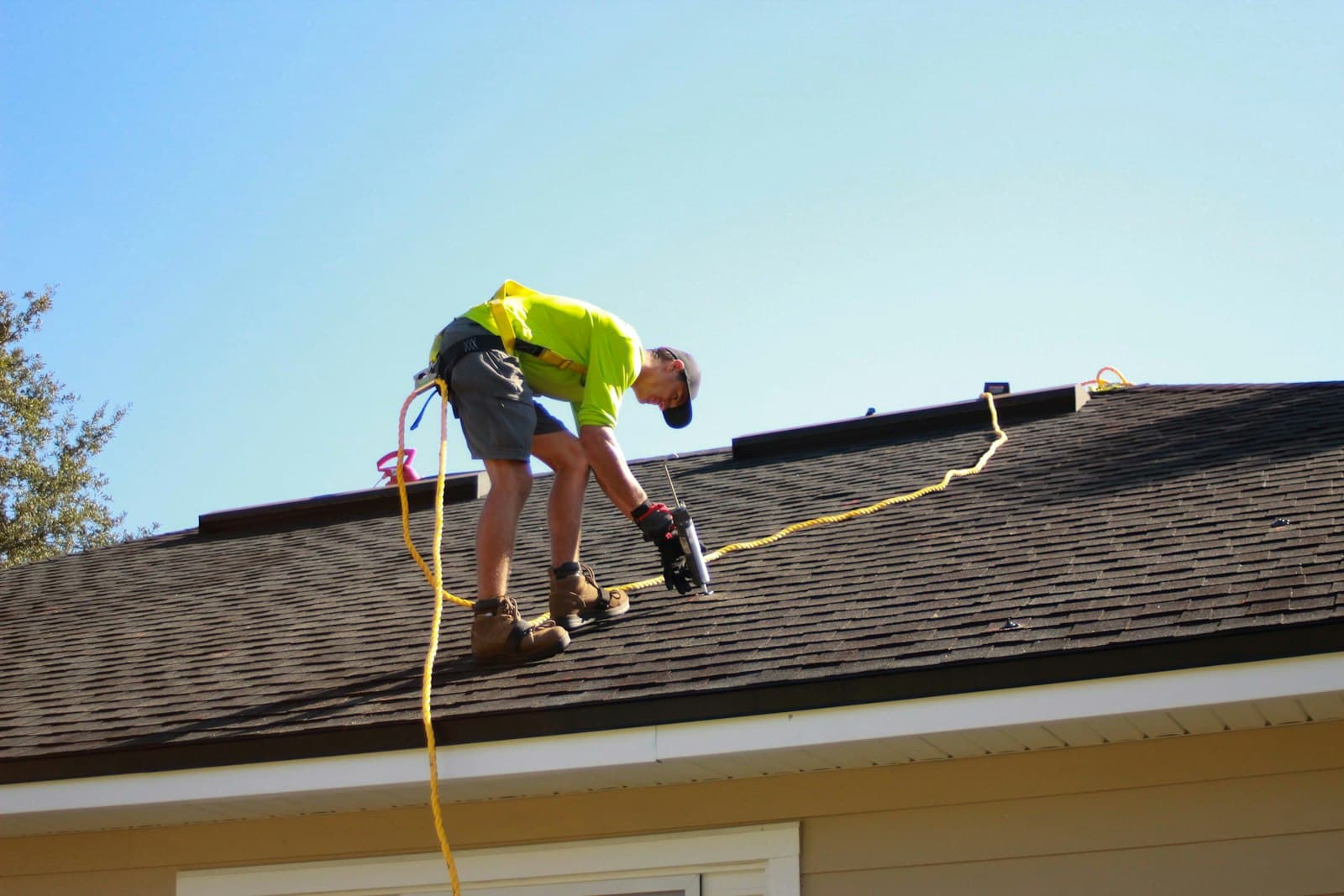
A roofer fastening shingles with a drill
Photo: Raze Solar on Unsplash

The short answer

A typical Connecticut roof replacement runs about $8,450 to $17,500. There is no roofing license, but a roofer must hold an active Home Improvement Contractor registration on eLicense. Every home improvement contract is treated as a home solicitation sale, so you get three business days to cancel, and in Connecticut Saturday counts as one of them.

Credential
Home Improvement Contractor registration (no separate roofing license)
Cancel window
Three business days after signing; Saturday counts
Typical roof
About $8,450 to $17,500 (Connecticut calculator default)
Typical cost
$8,450 – $17,500
Tracked on Tavlee
513 roofers in Greater Hartford

Roofs are named by name in Connecticut's Home Improvement Act. The definition of home improvement in CGS Sec. 20-419 lists roofs alongside siding, windows and driveways, and the law reaches any job on a home priced over $200. That puts nearly every roofing job in the state, from a leak repair in Norwalk to a full tear-off in Torrington, under the same set of rules.

No roofing license, so the registration is what you check

Connecticut has no roofing trade license. What a roofer must have is an active Home Improvement Contractor (HIC) registration from the Department of Consumer Protection. Search the company or owner's name on eLicense and look for an active HIC record whose name matches the contract.

The registration is not a skill test. It shows the contractor has told the state who they are, carries at least $20,000 of general liability insurance (the application requires proof of it), and pays into the Guaranty Fund each year. That's the floor, not the ceiling. You still want references from roofs in your town and a certificate of insurance sent to you directly by the insurer.

A roofer knocked after the storm: what the sales rules give you

After a nor'easter or a summer squall, crews arrive in neighborhoods from Shelton to Manchester offering to "take a look". Some are local and legitimate. Some aren't.

DCP's May 2026 warning to homeowners describes a door-to-door roof sold for $9,000 that the contractor later said would cost $47,000 once holes had been cut in it. In 2025 the department logged 1,266 home improvement complaints. Its advice, in short: hire local, look the contractor up on eLicense, agree in writing who pulls the permit, and ask for proof of liability insurance.

Connecticut law gives you leverage here. Under Sec. 20-429(e), a home improvement contract is treated as a home solicitation sale no matter where you sign it, which brings in the cancellation rights of the Home Solicitation Sales Act.

Counting your three days to cancel, Saturdays included

You have three business days after signing to cancel. The detail that trips up contractors from out of state: in Connecticut, Saturday is a business day. Sign on a Wednesday and the window closes at midnight on Saturday, not on Monday.

DCP's page on contracting adds that the cancellation notice must appear near your signature and that you should receive a separate Notice of Cancellation form. No work should start during those three days. If there is a genuine emergency, such as an open roof before rain, the owner can sign a waiver, but a roofer pressing for a waiver on a roof that isn't leaking is a reason to slow down.

What the signed roofing contract has to carry

A Connecticut home improvement contract can't be enforced against you unless it meets a list of requirements. For a roof, the ones to check before signing are:

  • It's written down, it holds the whole agreement, and you both sign and date it.
  • It shows the roofer's name, address and HIC registration number.
  • It gives a start date and a completion date.
  • It contains the cancellation notice.

Change orders count too: every one must be written and signed. That matters on a roof, where the scope often changes once shingles come off and the decking is visible.

DCP suggests keeping an initial payment to no more than about a third of the price, paying in three or four stages tied to progress, and never paying cash. That is guidance, not a statutory limit. For a roof, sensible stages are deposit, materials on site, and completion with the final inspection signed off.

Do you need a permit to reroof?

The building official in each town decides that. State law says no building may be altered until a permit is issued, that the application has to come from you or someone you've authorized, and that a permit can't go to a contractor who must be HIC-registered and isn't (CGS Sec. 29-263). Most towns want a permit for a full replacement, and some for repairs above a certain size. Call your town's building department.

The permit is your protection as much as the town's. An inspector looks at the ice-and-water barrier, the ventilation and the flashing before they disappear under shingles.

Roof types from Stonington to Cheshire

The state's housing shapes the work:

  • Colonials and capes. Most of the shoreline and the suburbs, from Groton and Stonington to Wallingford and Cheshire. Valleys, dormers and chimney flashing are where leaks start.
  • Low-slope porch and addition roofs. Common on city two-families in Bridgeport and New Haven. These need membrane, not shingles.
  • Hill-town roofs. In the Litchfield Hills, around New Milford and Torrington, long winters and snow loads make ice-dam protection and ventilation the main conversation.
  • Older slate and wood. Antique homes in the Connecticut River towns may still carry slate or cedar, which calls for a specialist, not a shingle crew.

What separates two shingle quotes that look the same

Two quotes for "architectural shingles, full tear-off" can differ by thousands of dollars and both be honest. The gap usually hides in a handful of lines, so ask each roofer to put these in writing:

  • Layers coming off. One layer or two. A second layer adds labor and disposal, and you only learn the real count once the tear-off starts unless someone checks at the edge or in the attic first.
  • Decking allowance. A per-sheet price for replacing rotten or delaminated plywood or boards, and a cap on how much can be replaced without calling you.
  • Ice-and-water barrier. The distance it extends upslope past the eaves, and whether it goes in the valleys and around every chimney and skylight.
  • Ventilation. Ridge vent, soffit vents, or both. A roof that can't breathe is one reason ice dams form on older capes.
  • Flashing. New step flashing and chimney counter-flashing, or reusing the old metal.
  • Gutters and skylights. Whether they're removed, reset or replaced, and who pays if one cracks.
  • Cleanup. Magnetic sweeps for nails, protection for shrubs and the driveway, and when the dumpster leaves.
  • Warranty. The manufacturer's warranty on the shingles and the roofer's own warranty on the workmanship are two different things. Ask for the length of each.

Lay the quotes side by side on those lines and the lowest number is often no longer the cheapest roof.

Roof prices, and the Guaranty Fund if a roofer walks off

The calculator's default for a typical roof is $8,450 to $17,500, set slightly below Boston-area prices. Enter your roof's size and pitch on the Connecticut roofing cost page. Fairfield County, especially around Fairfield, Trumbull and Norwalk, tends to sit at the top; Windham County and the Northwest Hills at the bottom.

If a registered roofer takes your money and walks away, the state's Guaranty Fund can pay up to $25,000 toward an unpaid court judgment or court-confirmed arbitration award. You have to apply within two years of the judgment. The fund covers registered contractors only, which is one more reason to check eLicense before you sign.
What does a roof replacement cost in Connecticut?

Most roofing projects in Connecticut run $8,450 – $17,500. Adjust the estimate for your job in the roofer cost guide.

Top-rated roofers in Greater Hartford

These are the strongest roofers on the evidence: reviews and public mentions weighed across sources, every claim linked to where it was found. Rankings can't be bought.

Keith Gauvin Roofing work photo
License verified

Keith Gauvin Roofing

Follow-up visit on a concern eight years later5.0

Slavin Home Improvements work photo
License verified

Slavin Home Improvements

No-pressure inspection that found the roof not yet due5.0

Epic Exteriors LLC work photo
License verified

Epic Exteriors LLC

One-day roof replacements5.0

See all 513 roofers in Greater Hartford

Hiring roofers in Connecticut: your questions

Do roofers in Connecticut need a license?
Most home-improvement work in Connecticut calls for a registered home-improvement contractor. Ask for the license number and look it up with the Connecticut Department of Consumer Protection (www.elicense.ct.gov) before you sign. Connecticut's Home Improvement Act (CGS 20-429) makes a contract unenforceable against you unless it is in writing, signed by both sides, dated, shows the contractor's registration number, a start date and a completion date, and your cancellation rights; the Home Improvement Guaranty Fund pays up to $25,000 per claim to a homeowner harmed by a registered contractor.
How much does a new roof cost in Connecticut?
The calculator default for a typical roof in Connecticut is about $8,450 to $17,500. A simple ranch in eastern Connecticut lands near the low end; a steep colonial with several valleys in Fairfield County, or a tear-off of multiple layers, lands near or above the top.
When should I schedule a roof replacement?
Late spring through early fall gives shingles the warmth they need to seal. Crews book up after big storms, so if the roof is merely old rather than leaking, get quotes in winter and sign for a spring slot before the season fills.
What if the roofer finds rotten decking after tear-off?
Ask that the contract price decking replacement per sheet in advance and require a photo before any is replaced. Connecticut also requires every change to the job to be written and signed by both sides, so a verbal add-on on the roof is not enough.
Can I get money back if a registered roofer walks off the job?
Possibly, through the state's Home Improvement Guaranty Fund, but only after you win a court judgment or a court-confirmed arbitration award. The fund pays up to $25,000 and DCP says most qualified claims are paid within about 24 weeks.

Sources

  • CT eLicense: license and registration lookup
  • CGS chapter 400: Home Improvement Act
  • CGS chapter 740: Home Solicitation Sales Act
  • CT DCP: contracting and working with a home improvement contractor
  • CT DCP, May 12, 2026: Consumer Protection warns homeowners planning remodeling projects
  • CT DCP: Home Improvement Guaranty Fund
  • CGS chapter 541: building permits

More guides

In other states: Greater Boston · North Shore · Greater Worcester · South Shore · Cape Cod · Western Massachusetts · Maine · New Hampshire · Vermont · Greater Providence

Other trades in Connecticut: Plumbers · Electricians · HVAC Contractors · General Contractors · Bathroom Remodelers · Kitchen Remodelers · Window, Siding & Gutter Contractors · Fence Contractors · Landscapers · Painters · Waterproofing Contractors · Handymen · Carpenters · Flooring Contractors · Exterminators · Home Inspectors · Movers · House Cleaners · Pool Cleaners · Masonry Contractors

All Connecticut hiring guides →

  • Painters in Greater Hartford
  • Waterproofing Contractors in Greater Hartford
  • Handymen in Greater Hartford
  • Carpenters in Greater Hartford
  • Flooring Contractors in Greater Hartford
  • Exterminators in Greater Hartford
  • Home Inspectors in Greater Hartford
  • Movers in Greater Hartford
  • House Cleaners in Greater Hartford
  • Pool Cleaners in Greater Hartford
  • Masonry Contractors in Greater Hartford
  • Roofers nearby

    • Roofers in Greater Boston
    • Roofers in Merrimack Valley
    • Roofers in North Shore
    • Roofers in MetroWest
    • Roofers in Greater Worcester
    • Roofers in South Shore
    • Roofers in Southeastern Massachusetts
    • Roofers in South Coast
    • Roofers in Cape Cod
    • Roofers in Greater Nashua
    • Roofers in Greater Providence
    • Roofers in Greater Springfield
    • Roofers in Greater Portland
    • Roofers in Greater Manchester
    • Roofers in The Berkshires
    • Roofers in Seacoast
    • Roofers in Lakes Region & Central NH
    • Roofers in Monadnock & Upper Valley
    • Roofers in North Country
    • Roofers in South County
    • Roofers in East Bay & Newport
    • Roofers in Greater Hartford
    • Roofers in Greater New Haven
    • Roofers in Fairfield County
    • Roofers in Eastern Connecticut
    • Roofers in Litchfield Hills
    • Roofers in Southern Maine
    • Roofers in Lewiston-Auburn & Western Maine
    • Roofers in Midcoast & Mid-Maine
    • Roofers in Bangor & Downeast
    • Roofers in Aroostook County
    • Roofers in Champlain Valley
    • Roofers in Central Vermont
    • Roofers in Northeast Kingdom
    • Roofers in Southern Vermont
    • Roofer cost in Greater Hartford
    • Guide to hiring roofers in Connecticut
    © 2026 Tavlee Inc. All rights reserved.AboutPress & MediaGuidesBlogPrivacyTermsSupport Center

    Ratings weighed across every source · state-license verified · citations you can open.