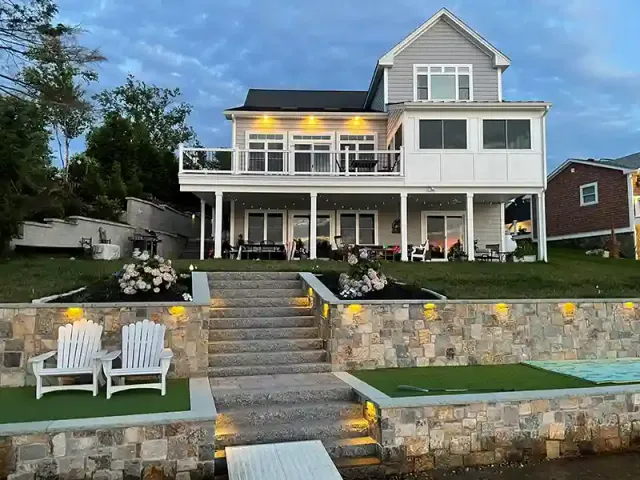
Electrical work in Greater Worcester splits along the same line as the housing. In the city, the calls are about old services in old buildings: a three-decker with three meters on the back wall, a pre-war two-family whose panel has been added to by four owners, a basement with more extension cords than outlets. In the newer suburbs east of the city, such as Northborough and Westborough, the work leans toward additions, finished basements and EV chargers. In the oil-heated towns to the north and south, a growing share of jobs is the wiring that comes with a heat pump.
Whose license is on the wiring permit?
Massachusetts licenses electricians under MGL c.141, and wiring in your home is not something a general contractor or a handyman can do on their own registration. The electrician files the permit with their own license number on it, which makes them answerable for the work at inspection.
Before booking, look the person up on eLIPSE, the state's license search. The electricians' board moved onto that system in October 2026, so a search there shows the current record. Two points are worth checking. First, the license is active. Second, the master or journeyman license belongs to the person doing your job, or to the company's master who will sign the permit.
If a company sends an apprentice for most of the day, that can be normal. Ask who the licensed supervisor is and whether they will be on site for the rough wiring.
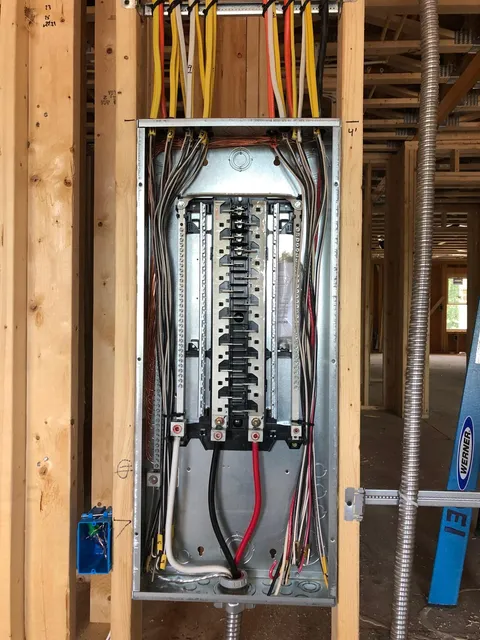
Panel swaps and service upgrades inside the city
Worcester's Building & Zoning division issues electrical permits alongside building, plumbing, gas and sheet metal permits. Applications go through the city's online portal after the contractor sets up an account. A panel replacement, a new circuit for a range or dryer, a service upgrade or a generator transfer switch all go through it.
For a three-decker, ask the electrician to explain the plan for each unit. Replacing one unit's panel is a different job from consolidating all three services, and the second usually involves the utility and a longer outage. If tenants live in the other floors, agree on the shutoff window ahead of time.
In the rest of the band, the electrician files with the town. Holden, Grafton, Spencer and Gardner each have their own wiring inspector, and the inspection schedule depends on that office.
Why a heat pump often starts with the electrical panel
Outside the city, a lot of Greater Worcester still heats with oil or propane. That is why the oil towns, from Sutton and Douglas down in the Blackstone Valley to Barre and Hardwick in the Quaboag hills, are where heat pump conversions concentrate.
A whole-home heat pump adds a serious electrical load. Before anyone signs a heat pump contract, ask the installer whether your panel and service can carry it, and get the electrician's part priced separately. Mass Save publishes its 2026 heat pump rebates on its heating rebates page: a whole-home system earns $2,650 per ton, capped at $8,500, if it is installed during 2026. The rebate is paid on the heat pump; ask the installer and Mass Save directly whether any of your panel work counts toward an offer before you assume it does.
The timing matters. Equipment has to be installed by December 31, 2026, for the current amounts, and the paperwork is due by February 28, 2027. From January 2027 the whole-home rate drops to $2,350 per ton. If an electrician's schedule is the bottleneck, book them early.
Small jobs a handyman should hand off
A lot of Greater Worcester homeowners call a handyman for the small stuff: a ceiling fan, a light over the sink, a bathroom exhaust fan. In Massachusetts, the wiring part of those jobs belongs to a licensed electrician. A handyman can do the carpentry and patching around them. If someone offers to "just swap the fixture," ask whether they hold an electrician's license, and if not, split the job.
The same goes for smart thermostats and doorbells that run on line voltage, hot tub hookups and anything that adds a circuit.
Reading an electrician's quote
Expect most ordinary electrical visits here to land somewhere around $500 to $1,050, which is the Greater Worcester calculator's starting range. Check how your job compares with the local estimate before calling around. A few local conditions move the price:
- Old wiring. In a 1910s or 1920s building, opening a wall can show cloth-covered cable or past splices that nobody documented. Ask what the electrician will do if they find more than they expected, and how that changes the bill.
- Plaster walls. Fishing wire through plaster and lath is slower than drywall, and the patching afterward may be a separate charge.
- Distance. A Worcester-based shop will price a trip to Winchendon or Athol differently from one across town. North-county homeowners often do better with an electrician from Gardner.
- Permit and inspection. Ask whether the permit fee is included and who meets the inspector.
When wiring is part of a renovation over $1,000
When the electrical work is part of a larger renovation on an owner-occupied home of one to four units, it falls under the state's home improvement rules. A project above $1,000 needs a signed written contract under c.142A §2 listing the work, the price, the schedule and the contractor's registration number, and the deposit can't exceed one-third of the total unless special-order materials cost more. The general contractor's registration covers the contract; the electrician still needs the state license for the wiring.
EV chargers and finished basements in the newer suburbs
East of the city, along Route 9 and I-495, the work looks different. Westborough, Northborough and Berlin have the band's newest housing, much of it subdivision colonials with attached garages, and the typical call there is a 240-volt circuit for a car charger, a subpanel for a finished basement, or wiring for an addition.
These jobs are simpler than a city rewire, but the same rules apply. The charger circuit needs a permit, and the electrician should confirm the existing service has room for it before quoting. If the house already carries central air, an electric range and a dryer, a load calculation is the honest first step. Ask to see it. For a finished basement, ask the electrician to coordinate rough wiring with the framing crew, so the inspector sees the wiring before the drywall goes up and nobody has to cut it back open.
Five things to pin down before the power goes off
- Which license number will be on the permit, and is that person on site?
- Is the permit fee in the price, and when is the inspection?
- If the panel is being replaced, how long will the power be off, and who calls the utility?
- What happens to the price if the walls hold older wiring than expected?
- For a heat pump, has the installer checked that the service can carry the load?