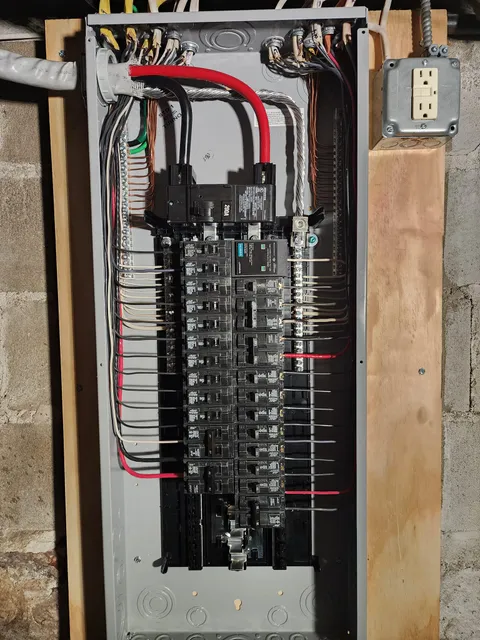
The wiring in a Connecticut house tells you when it was built. A 1920s two-family in Hartford's West End may still have cloth-covered wire in the attic. A 1950s cape in Newington or Wethersfield often has a 60- or 100-amp panel that was fine for a range and a washer but not for a heat pump, an induction cooktop and a car charger. A 1990s colonial in Avon or Ridgefield usually has room to spare. The electrician you hire should know which of these you have before quoting.
What an E-1 on the truck tells you
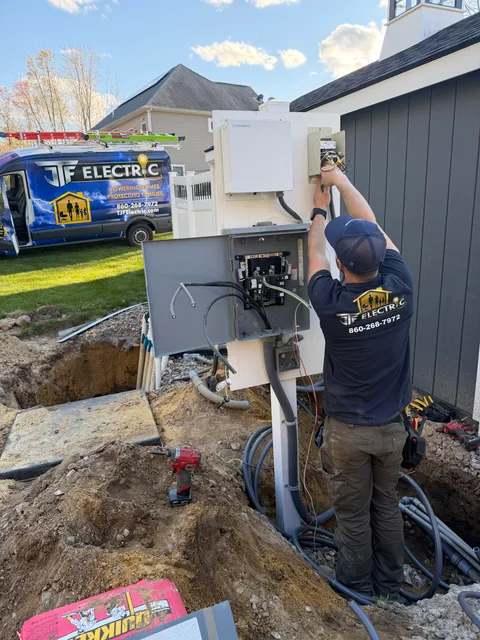
Connecticut licenses electrical work through the Department of Consumer Protection's Electrical Work Board. The contractor class you will see most often is the E-1, an unlimited electrical contractor license, which appears in the occupational licensing chapter of the statutes, CGS chapter 393. Journeyman and limited classes also exist; the limited ones cover narrower kinds of work.
Look the license up on eLicense before anyone opens your panel. Match the name on the record to the company on the quote, and check that the status is active. If the person in your basement isn't the license holder, ask who is and how they're related. A crew working under an E-1 is normal. A crew with no license holder anywhere on the job is not.
Because electrical work sits inside a trade license, an electrician doesn't also need a home improvement registration for it. If the same company offers to frame a wall or replace the drywall, that part is home improvement work, and the registration question comes back.
Who files the electrical permit at town hall
Connecticut has no state electrical permit desk. The building official in each town issues permits, and a permit can be issued only to the owner or the owner's authorized agent (CGS Sec. 29-263). The official has 30 days to act on an application.
In practice:
- The electrician files as your agent and pays the fee, then bills it back. Make that explicit on the quote.
- Ask how many inspections the job needs. A service upgrade usually means the utility has to disconnect and reconnect, so the town inspection and the utility visit have to line up.
- Keep the final inspection sign-off. You'll want it when you sell.
Victorian wiring on Hartford's West End and in New Haven
Mark Twain lived and wrote in his house on Farmington Avenue, now a museum,, at the edge of Hartford's West End. The blocks of Victorians and two-families around it, like the older streets of New Haven, Hamden and Waterbury, are where an electrician most often meets wiring that predates grounding.
Things to ask about in a pre-war house:
- Knob-and-tube or cloth-sheathed cable. Whether it's still live, where it runs, and what replacing it would take.
- Ungrounded outlets. Three-prong receptacles on two-wire circuits are a common shortcut.
- Shared services in a two- or three-family. Which meter feeds which unit, and whether common areas have their own.
- Plaster walls. Fishing new wire through plaster and lath takes longer and costs more than drywall. The DPH lead page for homeowners is worth reading too, because cutting into painted plaster in a pre-1978 house can release lead dust.
Smoke and CO alarms during a permitted renovation
One state rule surprises people. If you live in a one- or two-family home while it's being altered inside under a permit, the home must have a battery-powered smoke detector, and a carbon monoxide detector if there's a fuel-burning appliance. DCP summarizes the rule, from Public Act 12-184, on its home improvement consumer page.
The battery units satisfy the rule, but while walls are open it's the cheapest moment to have the electrician install hard-wired, interconnected alarms. Ask for a line item.
Outdoor lighting and other jobs that look like someone else's
Some work looks like landscaping or remodeling but is electrical. DCP's fact sheets, linked from the same consumer page, say landscape lighting needs an electrical license. That covers low-voltage path lights that run off a new outdoor circuit, as well as the transformer and any new outdoor receptacle. A landscaper in Glastonbury or New Canaan can set the fixtures, but the connection belongs to a licensed electrician.
The same goes for:
- A hot tub or pool equipment circuit.
- A generator transfer switch.
- A dedicated circuit for a heat pump that a heating company is installing.
Panels, heat pumps and the Energize CT angle
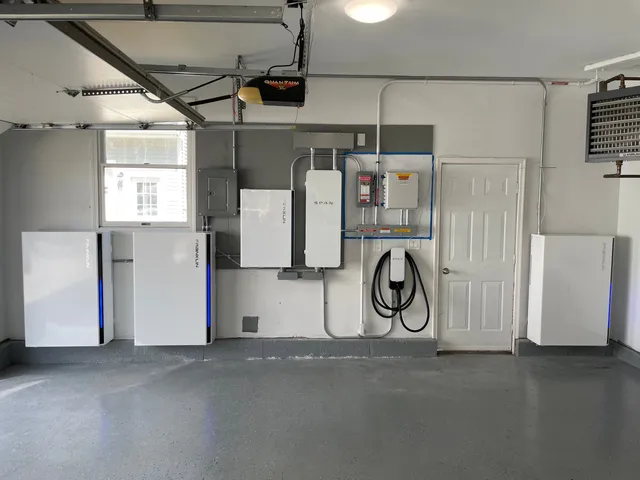
About 35% of Connecticut homes heat with oil, and more than half do in the Northwest Hills and the northeast corner. When an owner in Torrington, Norwich or Enfield replaces an oil boiler with a heat pump, the electrician is often the one who decides whether the panel can carry it.
Energize CT offers per-ton rebates for qualifying heat pumps, with higher amounts for whole-home systems. The program's rules change by year, so confirm the current terms on its page before you count on a figure. A Home Energy Solutions visit, which Eversource lists at a $40 copay since April 1, 2026, is a useful first step: it shows where the house loses heat before you size equipment and the panel behind it.
Service size, plaster and distance: what moves the electrician's number
Expect a typical electrical job here to land around $490 to $1,050, the default in the state's calculator; set your own job's details on the Connecticut electrical cost page. Stamford, Greenwich and Westport quotes tend to be higher; Windham County and the Litchfield Hills tend to be lower.
What moves an electrical quote:
- Service size. Going from 100 to 200 amps is a different job than adding a circuit.
- Wall type: plaster, brick and old-growth framing slow the work.
- Distance. A detached garage in Old Saybrook or a barn in Danbury's hills means trenching.
- Permit and inspection count.
Get two written quotes for anything over a few hundred dollars, and compare what each includes, not only the total.
Walking a Meriden or Bristol two-family with the electrician
Multi-family houses are common in Connecticut's older small cities, from Meriden and New Britain to Bristol and Norwich, and they raise questions a single-family owner never faces. Before the electrician writes anything down, walk the building together and cover these:
- Which meter feeds what. Hallway lights, a basement laundry or an outdoor light sometimes run off one tenant's meter. Fixing that is a common, cheap job that also settles arguments.
- Who is affected by the outage. A service change in a two-family shuts off power to both units. Agree on the day and the hours, and tell the tenants in writing.
- Panel locations. Each unit should be able to reach its own breakers. Panels hidden behind a tenant's storage are a fire-safety problem.
- What the inspector will want. When an old circuit is touched, the town inspector may ask for current safety features, such as arc-fault or ground-fault protection, on that circuit. Ask the electrician to tell you in advance what a permit will pull into the scope.
- The written scope. List every circuit, fixture and device by room, so a change halfway through is a written change, not a surprise on the bill.
A good electrician will also tell you what they would leave alone. Not every old circuit has to be replaced at once, and a staged plan, done room by room as other work opens the walls, is often the cheapest honest answer in a house from the 1920s.