Pest control is one of the few home-service trades Maine regulates closely. A roofer, a painter or a general contractor can work here without any state license, but a company that sprays your yard for ticks or treats your foundation for carpenter ants cannot. That makes the license the first question with an exterminator, and it is easy to answer.
How do you confirm a pest control company is licensed?
Maine's Board of Pesticides Control licenses commercial pesticide applicators and the companies that employ them. The person treating your home needs a commercial applicator license, at the Master or Operator level, and the business needs its own company license. The Board publishes a list of licensed commercial applicators.
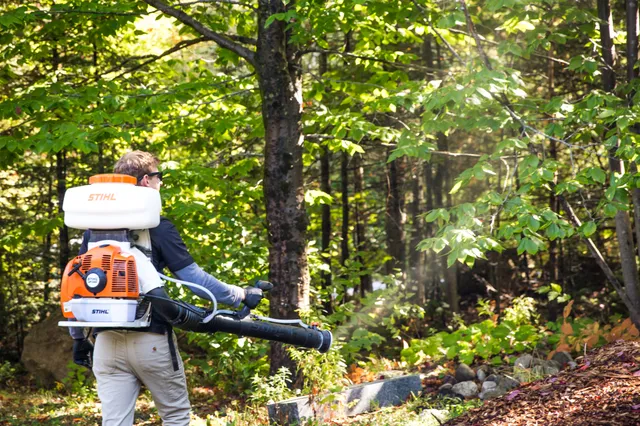
Before a first visit, look up both the company and, if you can get it, the name of the technician who will come. The license covers more than the obvious exterminator work. Tick and mosquito yard sprays, lawn grub treatments, wasp nest removal with insecticide, and tree treatments for browntail caterpillars are all pesticide applications when someone is paid to do them.
This is the clearest contrast with most other trades in Maine, where the Attorney General's guide notes there is no license to check. Here there is, so check it.
Is a tick spray worth it, and who is allowed to do it?
Ticks drive more pest-control calls in Maine every year. The Maine CDC calls Lyme disease the state's most common tickborne illness, and says cases rise each year as the deer tick spreads into every part of the state. Ticks are active from spring through fall, which is when yard-spray companies book their programs.
If you hire one, ask:
- Which product will be applied, and is it a synthetic or a botanical?
- Where exactly? Most programs treat the edges of the yard, stone walls and brush lines where ticks live, not open lawn.
- How many applications in a season, and how far apart?
- How much notice will you get before each one, so children and pets can stay inside?
- How close to a vegetable garden, a pond or a stream will they spray?
A spray program reduces ticks in the treated area; it doesn't make the yard tick-free. Clearing brush and leaf litter along the lawn's edge helps, and Maine CDC's guidance on personal protection still applies.
When does browntail moth become a pest-control job?
Browntail caterpillars are the other spring call, especially in mid-coastal Maine and the capital region around Augusta. The Maine Forest Service says the caterpillars emerge in mid-April, and their tiny hairs cause an itchy rash similar to poison ivy. It recommends steering clear of heavily infested areas from April to August.
There are two windows for action:
- Winter, October to March. Clipping and destroying the winter webs is often the most effective step, and it uses no pesticide. Tree crews and some pest companies do this.
- Spring. Once caterpillars are active, a licensed applicator can treat infested trees. Ask what product will be used, how it reaches the canopy, and how drift will be controlled near neighbors' yards.
The Forest Service also has practical tips for the household during an outbreak, such as not drying laundry outside and using a HEPA vacuum indoors. A company working in Bath, Rockland or Belgrade should know the local situation and be able to tell you whether your trees are worth treating.
What should you ask about pests inside the house?
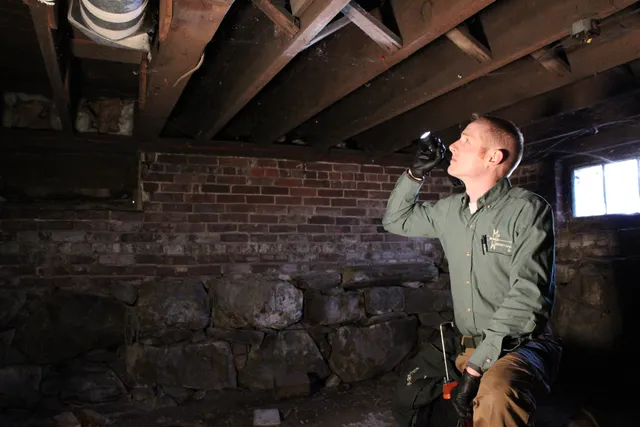
Inside, Maine's common calls are carpenter ants in damp wood, mice moving in each fall, and wasps under the eaves in late summer. A good exterminator inspects before quoting and tells you the cause, not only the treatment.
- Carpenter ants. They nest in wood softened by moisture. A treatment without fixing the leak, the rotted sill or the gutter that dumps against the wall will need repeating.
- Mice. Exclusion, which means sealing gaps around pipes, sills and foundations, usually matters more than bait. Ask whether sealing is included or priced separately.
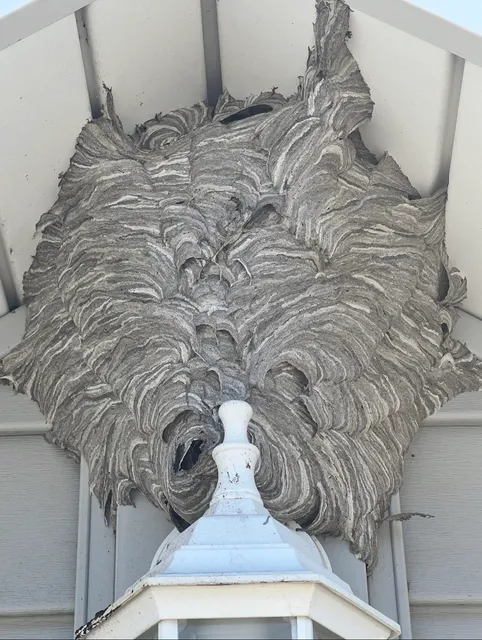
- Wasps and hornets. Nests in walls or under siding need care; sealing the entry with live insects inside can push them into the house.
If you have a private well, mention it. Maine CDC already recommends regular well testing, and you should know what is being applied near the well head.
What should the technician leave you in writing?
A pesticide application is one service where the paperwork is worth keeping. After each visit, ask for a written record that shows:
- the date and the name of the licensed applicator who did the work
- the product's name and its EPA registration number, which lets you read the label yourself
- where in or around the house it was applied, and how much
- how long people and pets should stay off treated areas, and whether windows should stay open
- when the next visit is due, if you're on a plan
If anyone in the house has asthma, is pregnant, or keeps bees or chickens, tell the company before the first visit and ask what they would do differently. A good company changes the product or the method; a poor one repeats its standard script.
For yard work, ask the company to mark treated areas with flags until they're dry, and to tell your neighbors if the edge of the spray zone runs along a shared boundary. In tightly built neighborhoods of Portland, Biddeford or Waterville, a yard spray reaches the property line fast.
What if a treatment doesn't work?
Ask before you pay what the company promises. Many offer a free return visit if pests come back within a set period; others charge for every visit. Get that in writing on the plan or the invoice.
If you think an application was done wrong, drifted onto your property from a neighbor's treatment, or was done by someone without a license, the Board of Pesticides Control, which licenses applicators, is the agency that regulates them. Write down the date, the time, the company, and what you saw, and take photos while the evidence is fresh.
How is pest control priced in Maine?
For a single treatment visit, the Maine calculator starts from roughly $130 to $340; the Maine pest-control cost estimate explains the assumptions. Many companies sell seasonal plans, a fixed number of visits a year, and those are priced as a bundle.
Before you sign a plan:
- Read how it renews. Some renew automatically each year.
- Find out what is covered between visits if the problem comes back.
- Ask whether the price depends on lot size, which matters for yard sprays on a rural acre in Farmington or Houlton.
In smaller towns like Kennebunkport, York or Oakland, a local company may serve a wide area with a few trucks, so book spring tick and browntail work during the winter.