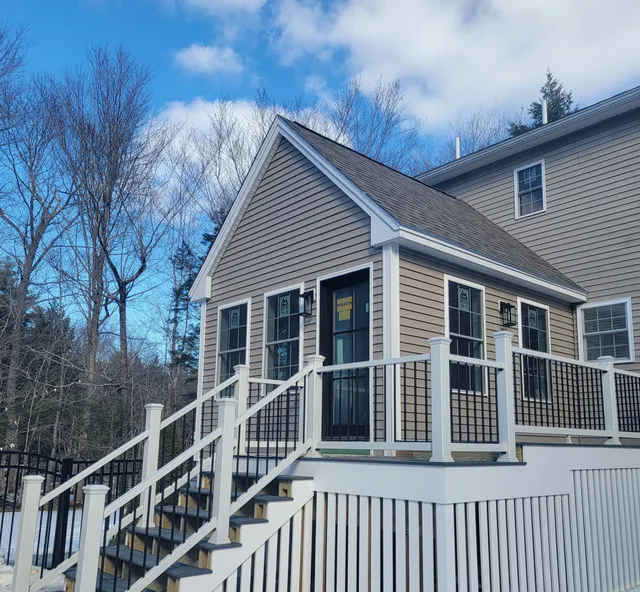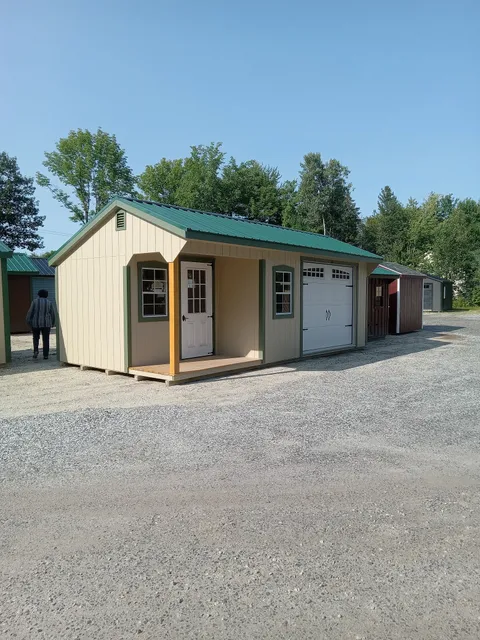
Carpentry is the backbone of most Maine house work: decks, porches, stairs, built-ins, window and door trim, the connected-farmhouse ell that needs new sills, the camp porch that has settled toward the lake. Maine also has a deep tradition of timber framing and log building that turns up in new houses from Harpswell to Kingfield. A carpenter's skills show in the joints. The rules that apply show in which town you live in.
Does your deck need a permit, or is there no one to ask?
It depends on your town's population. Maine's building code, MUBEC, has to be enforced in municipalities with more than 4,000 residents. A town at or below 4,000 can choose not to enforce any code, though it may not adopt a different one (10 M.R.S. §9724).
So a deck in Brunswick, Freeport or Hampden goes through the town's permit office, usually with a plan review and a footing or framing inspection. A deck in a small town such as Bowdoinham, Woolwich or Rangeley may need no building permit at all. "No permit" does not mean "no standard": the code is still how a well-built deck is measured, and a contract that commits the carpenter to it gives you a way to hold them to it. The Attorney General suggests writing that the work will be done in accordance with MUBEC.
Footings mean digging. Before the auger goes in, the carpenter has to notify Dig Safe at least three business days ahead and not more than thirty calendar days ahead, under 23 M.R.S. §3360-A. On a lake or the coast, also check the shoreland zone, which reaches 250 feet back from great ponds, rivers and tidal water (38 M.R.S. §435); a new or larger deck there usually needs the town's sign-off.
Why are timber-frame and log houses outside the code?
The same statute names its exceptions: houses built of logs, factory-built manufactured homes, and buildings framed with heavy timbers, whether called timber frame or post and beam. That reflects Maine's building traditions, and it means a timber-frame addition in Bethel or a log home near Carrabassett Valley isn't built to the state code's requirements.
That puts more weight on the carpenter. If you're hiring a timber framer, ask:
- Who engineered the frame, and will you see the drawings?
- How are snow loads accounted for in the roof?
- What wood species and moisture content do they use, and how do they handle shrinkage?
- How will the frame be enclosed and insulated, and to what energy standard?
The energy code is a separate question. Maine's baseline has been the 2021 IECC since April 7, 2025, according to Efficiency Maine, and a contract for new construction or an addition has to say whether the work will meet the state's energy standards. Ask about it, even on an exempt frame.
What does Maine's warranty clause say about carpentry?
For any home construction contract over $3,000, 10 M.R.S. §1487 requires a warranty in specific words. Paraphrased, the contractor promises that, beyond any warranties the two of you add, the work will be free from faulty materials, built to the standards of the building code that applies at your location, done in a skillful manner, and fit for habitation or its intended use, and that the Uniform Commercial Code's warranty remedies apply.
For carpentry that matters in concrete ways:
- Faulty materials. Untreated lumber in ground contact, or fasteners that corrode in pressure-treated wood, fail this promise.
- Building code. Even in a town that doesn't inspect, the warranty ties the work to the code standards that apply there.
- Skillful manner. Joists that bounce, stairs with uneven risers and railings that move when you lean on them are what this is about.
Read the clause when you sign, and keep the contract.
What should you ask about snow on a deck or porch roof?
Maine winters load decks and porch roofs with heavy, wet snow, and much more of it in Aroostook and the western mountains than on the coast. A good carpenter will tell you how the deck is designed to carry snow, and whether the ledger attachment to the house is bolted and flashed. A porch roof should be framed for your area's snow, not copied from a plan built somewhere warmer. If you plan to shovel the deck, say so; it affects the surface material and the railing design.
Ask, too, about the gap between the deck and the house siding, and how water is kept out of the band joist. Rot at the ledger is the slow failure that brings decks down.
Repair or rebuild: what should a carpenter tell you about an old porch or sill?
Older Maine houses, and especially farmhouses with an ell and a barn attached, often need carpentry that is closer to surgery than to new building. Sills that sat on fieldstone for a century rot where they meet the ground. Porch floors and posts take the weather on three sides. A carpenter's first visit should end with an honest view of whether the piece can be repaired or has to come out.
Questions that help:
- How far does the rot go? A good carpenter probes with an awl or drills a test hole, rather than guessing from the surface.
- If you jack the house to replace a sill, how will you support it, and what might crack inside?
- Can the original posts, brackets or trim be saved and reinstalled, or copied?
- What will you do if you find more damage once things are opened up, and how will that be priced?
The last answer should become a unit price in the contract: per foot of sill, per joist, per post. Under Maine's change-order rule, any change that alters the contract price must be agreed in a signed, written change order that shows the old and new totals, so having the unit prices settled in advance keeps that step quick.
Carpenters who do this work well are booked months out in most of the state. Call in winter for a summer job, and ask for the estimated start date in writing.
How should a carpentry job be priced?
The Maine calculator default for a typical carpentry project is about $7,000 to $13,100, and the Maine carpentry cost estimate explains the range. Material choices move the number most: pressure-treated pine, cedar, composite decking and hardwood all price differently, and so do railings.
On a job over $3,000, the contract must be in writing with both signatures, give an estimated start and completion date, describe the work and the materials, and keep the first payment to a third. A carpenter working near Wiscasset or Bangor who can show you a deck or porch they built ten years ago, still tight and level, is the best reference you will get.